
Download
3D Flyover
Add to list
More
4.0 km
~51 min
33 m
Out and Back
“A breezy Iona wander threads sacred ruins, ancient stones, and wide Atlantic light.”
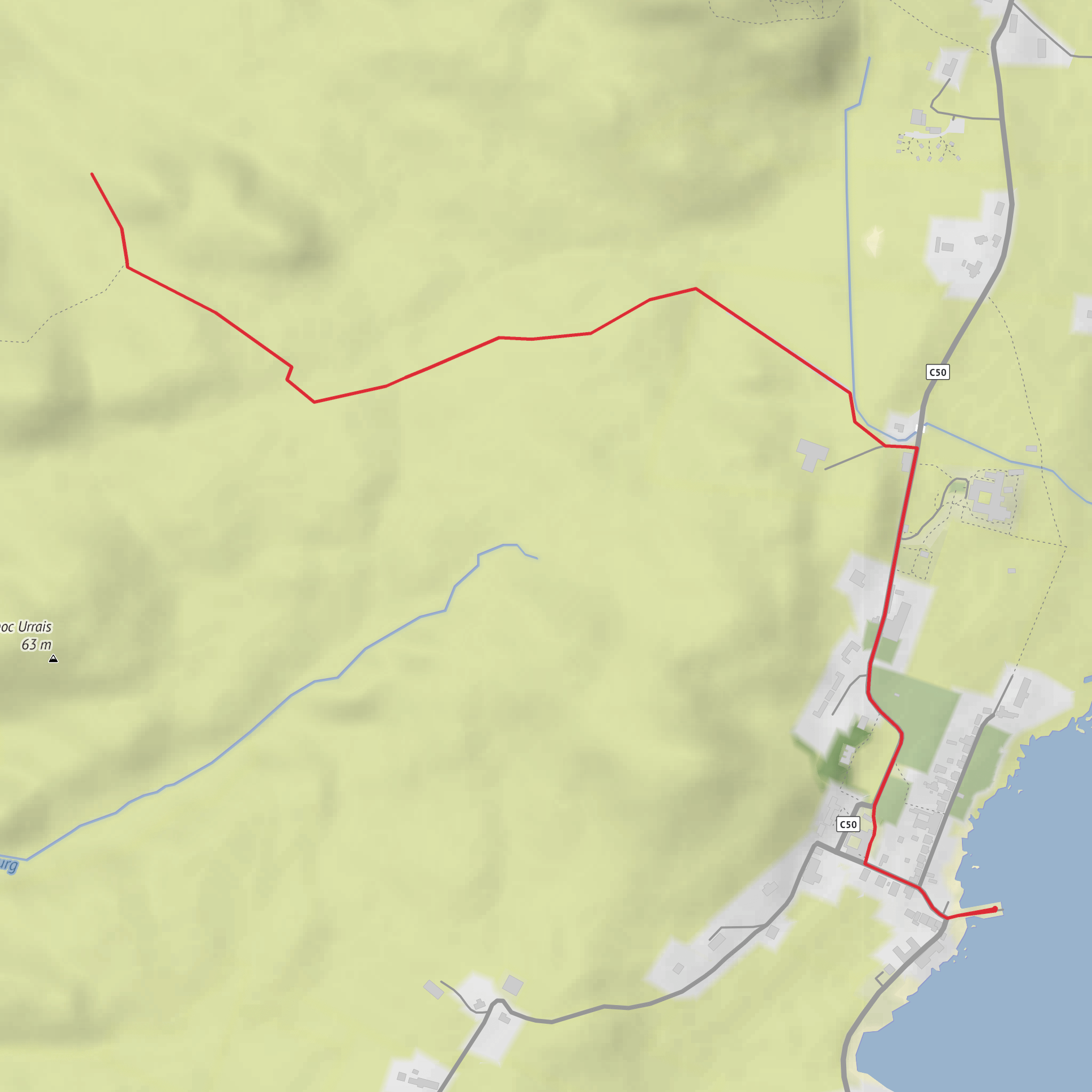
This easy walk of about 4 km (2.5 miles) with very little overall ascent—roughly 0 m / 0 ft, though there are a few gentle undulations—explores one of Iona’s quieter and more atmospheric corners. The route links the Hermit’s Cell with the nearby Stone Fort on the Isle of Iona, west of the main settlement around Baile Mòr / Iona Village, with the start most practically described as near Iona Ferry Terminal, Baile Mòr, Isle of Iona, Argyll and Bute, Scotland. The terrain is generally straightforward, making it suitable for most walkers looking for a short outing with a strong sense of history and open coastal scenery. The island itself is small, exposed, and deeply significant in Scottish religious history, so even a short walk here can feel much bigger than the mileage suggests. (visitmullandiona.co.uk)
From the ferry terminal at Baile Mòr, the usual approach is along minor island roads and clear grassy or earth paths heading west and southwest away from the abbey area. Because the island is compact, landmarks come quickly: croft land, low stone walls, open pasture, and broad views over the Sound of Iona and the Atlantic. The walking is not strenuous, but underfoot conditions can vary with weather. After rain, grassy sections may be slick and boggy in patches, while short rocky stretches can become polished and slippery. Good walking shoes are usually enough in dry conditions, but waterproof footwear is a smart choice if the ground has been wet.
What to expect on the route
The first part of the walk is gentle and easy to follow, with the landscape opening almost immediately. Expect a mix of grazed grassland, rough pasture, and low rocky knolls rather than forest or enclosed trail corridors. This gives the route a wonderfully open feel, but it also means there is very little shelter from wind. On Iona, even a calm-looking day can feel much cooler once you are out on the exposed ground, so an extra layer and a waterproof shell are worth carrying.
The Hermit’s Cell lies in a secluded hollow southwest of Dùn Ì and is traditionally associated with St Columba, although there is no firm evidence proving that connection. What survives today is modest rather than monumental: low remains and a circular stone setting that invite a slower look. This is the kind of site where the atmosphere matters as much as the archaeology. Nearby is the ancient Well of the North Wind, another small but evocative feature that adds to the sense of an old sacred landscape rather than a single isolated ruin. (visitmullandiona.co.uk)
A little farther on, the Stone Fort adds another layer of antiquity. On Iona, these stone-built defensive or enclosed sites connect the island not only to early Christianity but also to much older settlement patterns in the Hebrides. The fort remains are not likely to feel dramatic in the way of a castle ruin; instead, look for the shape of the enclosure, the use of stone in the landscape, and the commanding position chosen by earlier inhabitants. This is a walk where subtle features reward attention.
History and significance
Iona is one of the most important historic islands in Scotland. St Columba arrived here in AD 563, and the island became a major center of early Christianity, pilgrimage, learning, and monastic life. Iona Abbey and its surrounding religious sites remain among the most important historic monuments in western Europe, and the wider island landscape still carries traces of that long sacred tradition. (historicenvironment.scot)
That broader context matters on this walk. The Hermit’s Cell reflects the island’s long association with prayer, retreat, and solitary devotion, even if the exact origin of the structure is uncertain. The Stone Fort points to an even older human story, tying Iona into the prehistoric and early medieval pattern of defended enclosures and stone-built occupation found across the west of Scotland. Together, the two sites make this short route especially rewarding for hikers interested in archaeology, early monastic landscapes, and the overlap between sacred and domestic history. (visitmullandiona.co.uk)
Nature, wildlife, and conditions
Although the route is short, the natural setting is a major part of the appeal. Expect machair-like grassland, rocky outcrops, sea views, and changing light across the water toward Mull. Birdlife can be excellent, with common coastal and farmland species likely, and in quieter moments you may notice seabirds moving offshore. Grazing animals
Surfaces
Unknown
Asphalt
Paved
Comments and Reviews
User comments, reviews and discussions about the Hermit's Cell and Stone Fort, Scotland.
average rating out of 5
0 rating(s)

