
Download
3D Flyover
Add to list
More
14.9 km
~3 hrs 4 min
53 m
Loop
“Big skies and shell-white bays make this Coll loop feel wonderfully wild, airy, and quietly reflective.”
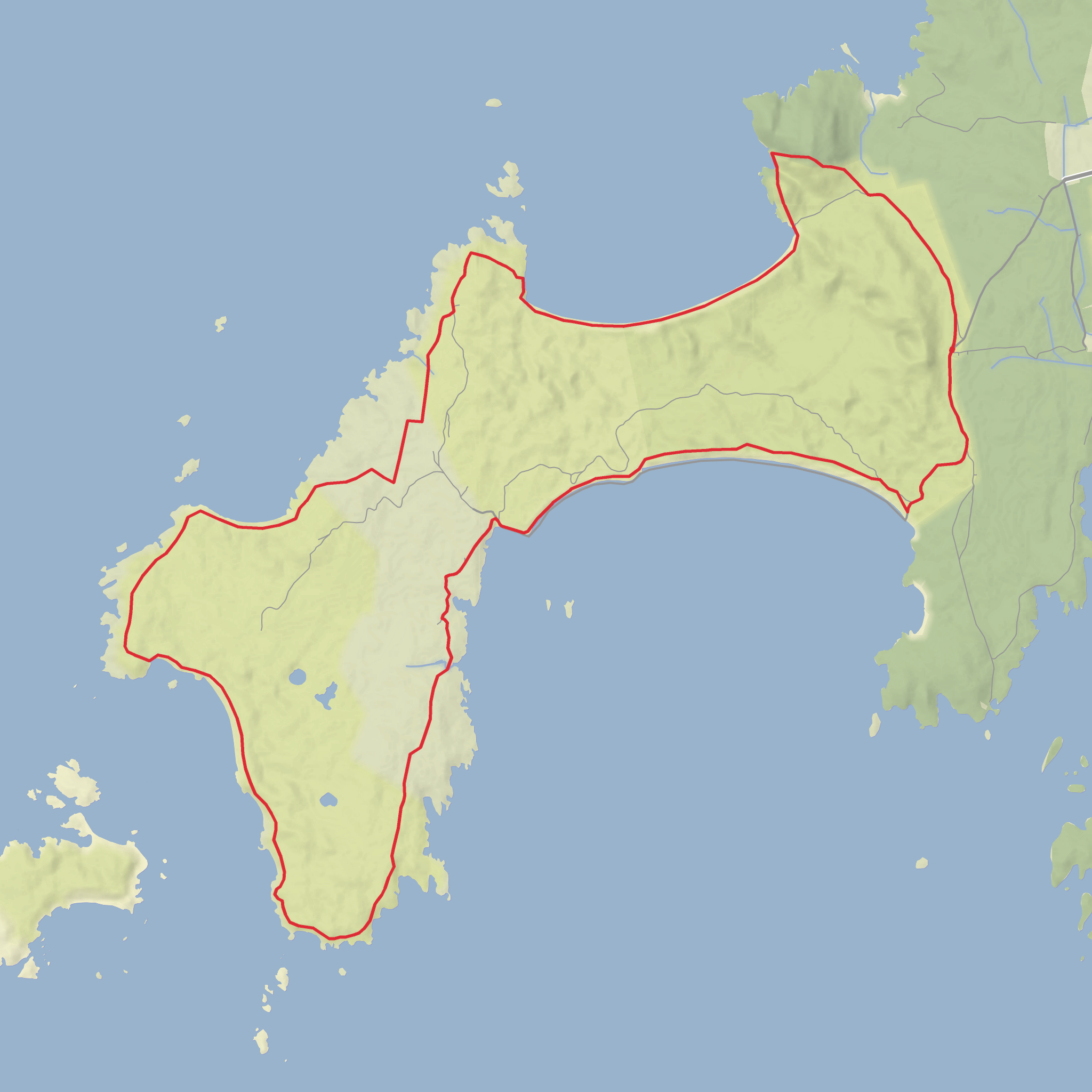
This easy-going loop explores the wild west end of the Isle of Coll, linking broad white-sand bays, low dunes, machair grassland, and open moor in a route of about 15 km / 9.3 miles with only around 100 m / 330 ft of ascent. Although the elevation gain is modest, the walk feels wonderfully expansive because the terrain is so open and the sea views are almost constant. Expect a mixture of sandy beach, cropped grass, faint trods, and some wetter or boggier ground between the bays, so even on an easy-rated outing it helps to wear waterproof footwear and be ready for soft patches. The route begins near the RSPB parking area at the western end of the public road on Coll, close to the Coll Nature Reserve and the approaches to Feall Bay and Crossapol Bay. (walkhighlands.co.uk)
Getting to the start is part of the planning on Coll. The island is reached mainly by CalMac ferry from Oban, with the crossing typically taking about 2 hours 45 minutes, and there are also scheduled flights between Oban and Coll operated via the island air service listed by Argyll and Bute Council. Once on Coll, there is no regular public transport to the trailhead, so walkers without a car should plan on cycling or walking in from Arinagour; the west-end reserve parking area is roughly 9.5 km / 5.9 miles from the village. If driving on the island, expect single-track roads with passing places and allow extra time. (calmac.co.uk)
The opening section usually feels gentle and airy, with the route heading out across the reserve toward Feall Bay. This part of Coll is low-lying, so climbs are short and gradual rather than sustained. If the loop includes the slight rise of Ben Feall, that detour adds one of the best viewpoints on the walk, giving a wider look over Tràigh Feall, the surrounding machair, and the sea toward neighbouring islands. Even without that extra rise, the landscape has a big-sky character that makes the walk feel larger than the numbers suggest. (walkhighlands.co.uk)
Terrain and route character
Feall Bay is one of the major highlights: a broad, pale beach backed by dunes and open grassland, with the kind of shell-white sand Coll is known for. From there, the route works north and east through the reserve, crossing ground that can alternate between firm grassy walking and wetter, less-defined sections. Caolas Ban adds a narrower, more intimate coastal feel before the route opens again toward Crossapol Bay, where the dune system becomes more prominent and the sense of space returns in full. Crossapol is often described as the island’s largest beach, and it gives the latter part of the loop a very open, coastal finish. (rspb.org.uk)
Because much of the route is on machair, beach, and lightly trodden ground, navigation can be less obvious than the easy grading suggests. In clear weather the terrain is readable, but in mist or poor light the low relief can make junctions and direction changes less distinct. Checking the route carefully on HiiKER before setting out is sensible, especially where faint tracks split or disappear into grass. Tides are also worth noting for any beach walking, even though this is not a technical coastal route. (walkhighlands.co.uk)
Wildlife and sensitive habitats
This walk passes through one of Coll’s most important wildlife areas. The reserve contains a mosaic of farmland, wetland, beach, dunes, moorland, bog, and machair, creating habitat for a remarkable range of species. Ground-nesting birds are especially significant here, including corncrakes and skylarks, and the area is managed with conservation very much in mind. That means walkers should tread carefully, avoid disturbing nesting areas, and keep dogs under very close control; on this route, a lead is the responsible choice. (rspb.org.uk)
Birdwatchers should keep an eye out not only for smaller species of the machair and grassland, but also for larger raptors and coastal birds. Across Coll more broadly, sightings can include white-tailed eagles, swans and geese in winter, cuckoos in summer, and a wide variety of marine life offshore. Along these bays and headlands, seals are a realistic possibility, and the surrounding waters are known for dolphins, whales,
Surfaces
Unknown
Grass
Comments and Reviews
User comments, reviews and discussions about the Coll Nature Reserve, Feall Bay, Caolas Ban and Crossapol Bay Loop, Scotland.
average rating out of 5
0 rating(s)


