Search a hike or location

search
Best rock formations hikes in Staffordshire
Share:

Best rock formations hikes in Staffordshire

Ready for some outdoor fun? These hikes offer everything you could want for an unforgettable adventure!

Here are some great hikes to explore in Staffordshire.

Most popular hikes


Reviews for rock formations hikes in Staffordshire

David Dixon avatar

Cannock Chase Geo Trail

David Dixon · reviewed over 3 years ago

star star star star star

excellent walk. Good stone and gravel paths through the beautiful Cannock chase. Eventually borders the outskirts of Rugeley where there is some road walking... parts of the trail are slightly overgrown, but I walked early August, so to be expected! some slight inclines, but nothing to worry about..


Rachel Cooley avatar

Peak Pilgrimage

Rachel · reviewed over 2 years ago

star star star star star

This is a fantastic trail. Ideal for anyone who is keen to get into multi day hikes. I completed the low route via Curbar, August 2023. However, do buy the official guidebook. https://www.peakpilgrimage.org.uk/ The Hiiker GPX file is NOT entirely correct. I compared it to the official guidebook. First error - when leaving Milldale, follow the gravel road up to Alstonefield, no need to backtrack to the footpath. The trail’s blue and yellow way-markers also highlight this. Second error, the official route does NOT go into Froggatt village, stay by the River Derwent. There is no stamp or sticker for Froggatt either. Third error, the section between Stoney Middleton and Eyam. The GPX footpath between the villages should be the lower one through the fields, not woodland. The correct path should take you by the infamous plague Boundary Stone. Quite an important feature on the pilgrimage. There maybe more errors, but these are the ones I noticed. The GPX will still get you to your end locations but potentially could miss some important points. My friend and I completed this over three days (two nights). Day 1 - Ilam to Hartington (continued onto Biggin, Waterloo Inn campsite, a short diversion as the campsite in Hartington was full). £10 a night for a small tent, basic facilities including showers. Lots of B&B options in Hartington but we wanted to camp. Mostly low level walking with the exception, of a steep incline on the road from Milldale to Alstonefield, nothing too terrible. Just take your time. There is a sharp descent down Gypsy Bank into Wolfscote Dale, again take your time, it is doable. Cattle present in fields. Well waymarked. Amenities - National Trust Dove Dale has a mobile cafe and public toilets (20p entry or hop the barrier). This is near the beginning of the trail. Milldale has public toilets and a take away cafe. St Peter’s Church, Alstonefield, has self-service refreshments. The pub in Alstonefield called the George is closed on Mondays. Hartington, a big village, many options for food and drink, pubs and shops. Day 2 - Hartington to Over Haddon. Stayed at a B&B called the Lathkil Hotel, price included breakfast. Lovely place. There was a campsite at Monyash village but this would have made day 2 too short and day three too long. Mostly low level walking with gentle undulating farmland in places. The only steep section is walking up out of Lathkill Dale to Over Haddon, it is only a short upwards section, nothing terrible and on a road. Lathkill Dale is an attractive Dale to walk through however the first section is uneven and rocky underfoot, be cautious of the slippery limestone. Amenities - Two cafes with toilets and an honesty box along the Tissington Trail section. Pub and cafe in the village of Monyash. The Lathkill Hotel is a cozy pub & B&B in Over Haddon. We didn’t book, just turned up and we’re able to accommodate us. Day 3 - Over Haddon to Eyam, via Bakewell. Potentially could spend the second night in Bakewell as there’s lots of B&Bs and hotels however Over Haddon was cheaper. Mostly low level walking with the exception of a steep walk out of Bakewell up to Calton Pastures, nothing treacherous but take your time. Some undulating fields later on, but nothing overly difficult. Amenities - Bakewell has everything, it’s a big town in the Peaks. It has two pharmacies. We stopped at the Granby cafe for food, cheap and cheerful. Granby Café, Granby Arcade, Bakewell DE45 1EG. Also, visit the Bakewell Pudding Shop!!! You can’t visit Bakewell without sampling it’s pudding. There is a cafe in Edensor and Baslow (the Pavilion). A pub in Curbar called the Bridge Inn. A fish and chip shop in Stoney Middleton. Eyam has a pub, off licence shop and tearooms, public toilets opposite the museum.


No reviews available for Gradbach - Danebridge - Hanging Stone and Lud's Church.


William Walshaw avatar

The Manifold Valley - Wetton and Dovedale from Ilam

Bill · reviewed over 1 year ago

star star star star star


gianni alessandrino avatar

The Roaches and Lud's Church

Gianni1987 · reviewed 10 months ago

star star star star star


Frequently asked questions for hikes in Staffordshire

What is the climate like for hiking in England?

In England, hiking in the spring (March to May) sees milder temperatures and flourishing wildlife, however trails may be muddy due to showers. Summer (June to August) offers the most stable weather with longer daylight hours but trails can be crowded, especially in national parks. Autumn (September to November) can be wetter but displays vibrant fall colours.

Winter hiking (December to February) is more challenging due to short days and colder, often unpredictable weather. Snowfall can make some trails inaccessible. Always check the weather forecast and equip accordingly. Experienced hikers may enjoy the tranquility and stark beauty of the winter landscape. 

Ultimately, the best time to hike in England depends on personal preferences and preparedness. England's official tourist site (https://www.visitengland.com/) provides in-depth information about various hiking trails and their seasonal characteristics. Be sure to research specific areas as climate can vary across the country.

Do I need a permit to hike in England?

In England, the "Right to Roam" allows hikers access to certain public lands without a permit. Some areas like national parks or Sites of Special Scientific Interest may have specific rules. Before hiking, check with the landowner, National Trust, or local council. Information on access rights can be found on the Natural England website (https://www.gov.uk/guidance/open-access-land-management-rights-and-responsibilities).

Is wild camping allowed in England?

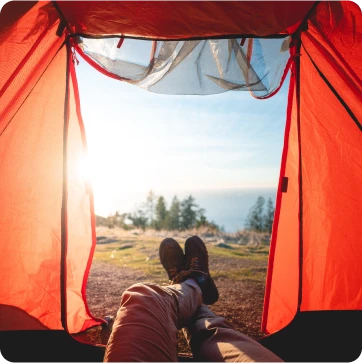
Wild camping in England is generally not allowed without landowner permission, except in some parts of Dartmoor National Park. Breaching this can result in fines. It's advised to use official campsites or seek landowner consent for a more immersive experience. For more, visit the Dartmoor National Park's website (https://www.dartmoor.gov.uk/visiting/planning-your-visit/camping).


Are there mountain rescue services in England?

In emergencies while hiking in England, dial 999 and ask for the police, then request Mountain Rescue. The Mountain Rescue England and Wales (MREW) is a volunteer-run organization that provides assistance in upland and lowland areas. More information can be found on their website (https://www.mountain.rescue.org.uk/).


Are there dangerous plants in England?

England's diverse hiking trails present a range of flora. Expect bluebells in ancient woodlands, gorse on coastal paths, and heather on moorlands. In protected areas, refrain from picking or damaging plants. The Woodland Trust provides more details on the UK's native species (https://www.woodlandtrust.org.uk/trees-woods-and-wildlife/plants/).


What wildlife should I be aware of when hiking in England?

While hiking in England, you may encounter a variety of wildlife including deer, foxes, badgers, and numerous bird species. Beware of ticks in tall grass and midges in damp, shaded areas. The Royal Society for the Protection of Birds (https://www.rspb.org.uk/) offers useful information on encountering wildlife responsibly.