
Download
3D Flyover
Add to list
More
2.0 km
~25 min
20 m
Loop
“Wander a gentle creekside ribbon—watch for birds, slick roots, and shifting mud after rain.”
I’m missing a few key details needed to make this accurate (there are multiple “Devils Creek Trail” routes in different regions, and your “Hike head: near” line is incomplete). If you paste either the trail’s coordinates (lat/long), a HiiKER link, or the nearest town/park/state, I’ll convert the coordinates to the nearest known address/landmark and tailor the transport + hazards + landmarks precisely.
Until then, here’s a planning-grade description that matches what you provided (≈ 2 km / 1.2 mi, ≈ 0 m / 0 ft gain, Easy) and fits the most common “creekside nature-walk” profile—then I’ll tighten it to your exact location once you confirm where it is.
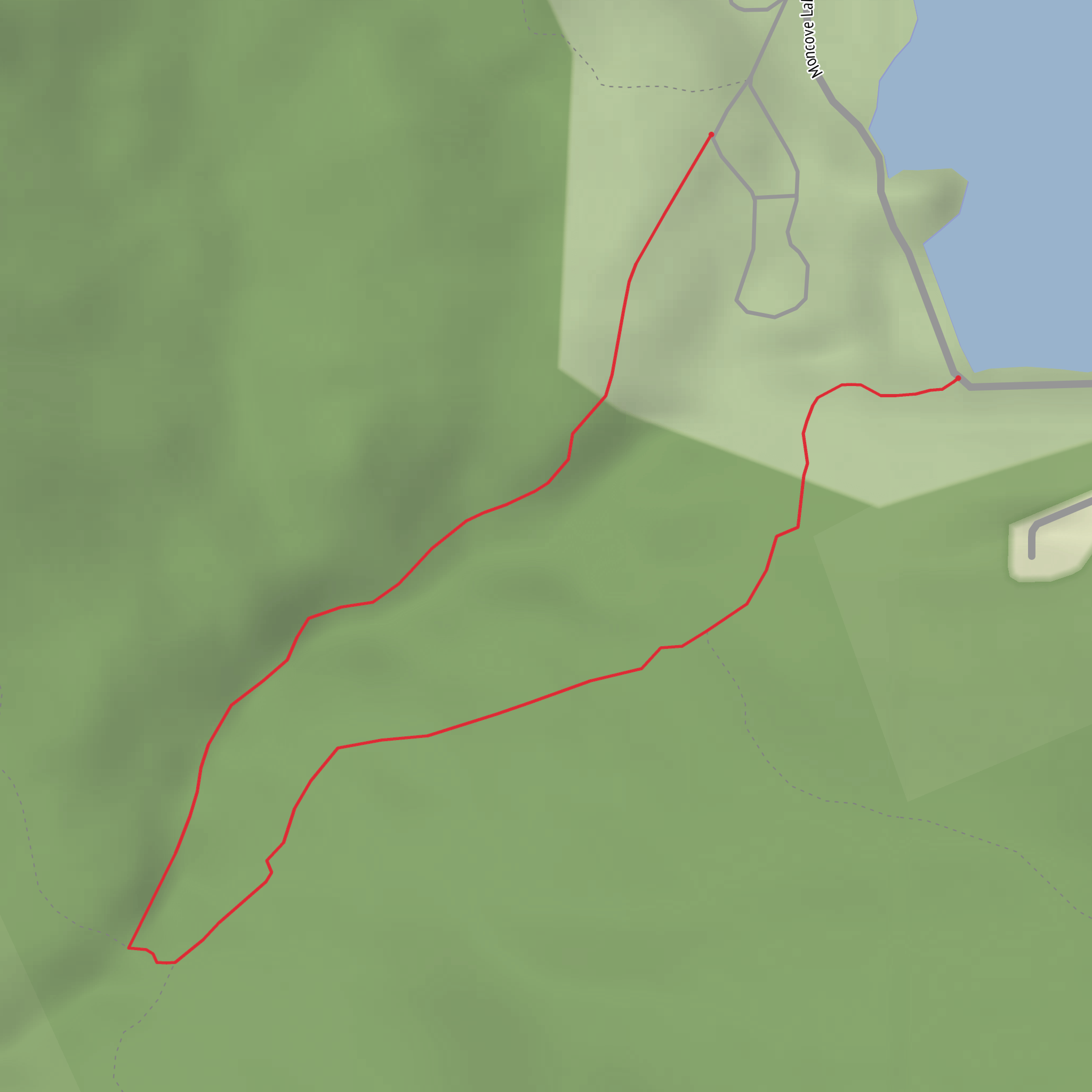
You’ll be on a short, mostly level out-and-back or small loop that follows a creek corridor—ideal for a quick leg-stretcher, birding walk, or a low-commitment family outing. At ~2 km (1.2 mi) total, most hikers finish in 30–60 minutes depending on stops. With essentially no sustained climbing (≈0 m / 0 ft), the main challenges tend to be surface conditions (mud, slick roots, sand, or boardwalk transitions) and water proximity rather than fitness.
Expect the trailhead to be a small pull-off, park access point, or day-use area rather than a major trail complex. If you’re using HiiKER for navigation, download the route for offline use before you arrive—creek valleys and wooded corridors can be patchy for reception.
Getting to the trailhead (car + public transport)
By car: Plan for a short access road and limited parking. On trails like this, parking is often unmarked gravel, a small paved lot, or roadside shoulder near a bridge or park sign. Arrive earlier on weekends if it’s near a popular picnic area or swimming hole.
By public transport: If this trail is near a town or park with transit service, the usual pattern is:
- Take a bus/train to the nearest town center or park-and-ride
- Use a local bus (if available) toward the park boundary
- Walk the final 0.5–3 km (0.3–1.9 mi) on shoulders or park roads
Once you tell me the location (or share coordinates), I’ll give you the most realistic stop-to-trailhead plan and walking distances.
What the walk feels like underfoot
With near-flat elevation, the “difficulty” comes down to tread: - Creekside mud: After rain or snowmelt, low trails can hold water. Waterproof shoes help, but even in trail runners you can manage if you’re okay stepping around puddles. - Roots and slick leaves: In shaded riparian zones, leaf litter can hide roots; take care if it’s damp. - Short bridges/boardwalks: Many easy creek trails include small footbridges—watch for algae or frost in colder months. - Sand/gravel bars: If the route skirts the creek closely, you may step onto loose gravel near bends.
If the trail is truly “0 m gain,” it may also be wheel-friendly in dry conditions, but that depends entirely on surface width, cross-slope, and any gates/boardwalk lips.
Landmarks and nature to look for
Creek corridors pack a lot into a short distance. Even on a 2 km (1.2 mi) walk, you’ll often pass through distinct micro-habitats:
- Riparian vegetation: Look for willows, alders, cottonwoods, or other water-loving trees depending on region. These areas stay cooler and greener longer into summer.
- Creek bends and undercut banks: These are prime spots for fish habitat and for seeing how water shapes the landscape—especially after high-flow events.
- Beaver sign (where present): Chewed sticks, small dams, or flooded side channels can appear even close to developed areas.
- Birdlife: Expect songbirds in the shrubs and, if the creek is open enough, kingfishers, herons, or ducks. Early morning is best.
Because it’s short and easy, it’s also a great trail for slowing down: scan muddy edges for tracks, check downed logs for fungi, and look for insect activity around still pools.
Wildlife + safety considerations (common on easy creek trails)
Even “easy” creek walks deserve a quick risk check: - Ticks: Especially in brushy edges and tall grass near water. Use repellent, do a post-hike check, and consider light-colored clothing to spot them. - Mosquitoes/biting flies: Often worst at dusk/dawn and after rain. A head net is rarely necessary for 2 km, but repellent can make the walk far more pleasant. - Snakes: In many parts of the U.S., snakes use creek edges for hunting and thermoregulation. Watch where you place hands/feet near logs and rocks. - Poison ivy/oak/sumac (region-dependent): Creekside trails often have it right at ankle-to-knee height along narrow tread. - High water: If there are stepping stones or a low bridge, turn around if water is up—short trails aren’t worth a risky crossing.
What to pack for a 2 km / 1.2 mi easy walk
For something this short, you can keep it simple: - Water (even a small bottle), especially in warm weather - Light rain layer if conditions are changeable - Bug/tick protection in warm seasons - Shoes with decent grip (mud
Surfaces
Ground
Comments and Reviews
User comments, reviews and discussions about the Devils Creek Trail, West Virginia.
average rating out of 5
0 rating(s)
