
Download
3D Flyover
Add to list
More
4.6 km
~1 hrs 13 min
189 m
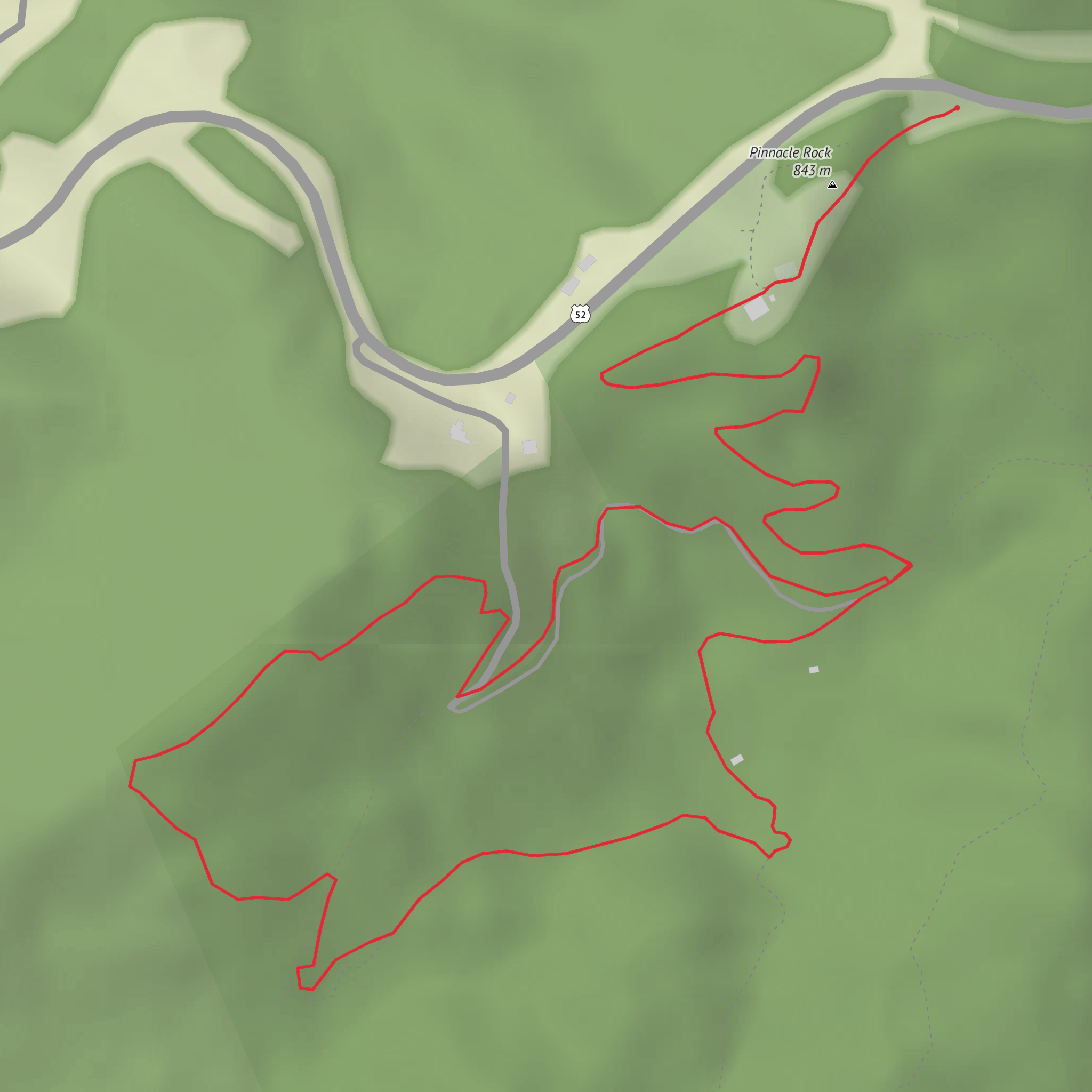
Loop
“Climb through forest to a turkey-shaped outcrop, minding slick rock, wind, and sudden drop-offs.”
I’m missing a few key specifics to make this accurate (there are multiple “Turkey Rock Trail” routes in different places), and you left the start location blank (“Hike head: near …”). Share either a HiiKER link, a GPS coordinate (lat, lon), or the park/trailhead name + state/country, and I’ll convert any coordinates to the nearest known address/landmark and tailor the route description, access, and hazards.
To keep things moving, here’s a medium 5 km / 3.1 mi, ~200 m / ~656 ft out-and-back style plan you can use as a template—once you send the location, I’ll replace the placeholders with the real landmarks, transit options, and local history.
You’ll typically start from a signed trailhead pull-in or small parking area near the closest maintained park road. Aim to arrive early if it’s a popular weekend spot—small lots fill fast, and roadside parking is often restricted to protect vegetation and emergency access.
Expect a steady climb overall: ~200 m (656 ft) over ~2.5 km (1.55 mi) to the high point, then the same back. That averages out to a moderate grade, but it usually comes in two or three steeper pitches separated by flatter benches where the trail traverses.
Getting to the trailhead (car + public transport)
By car: Most Turkey Rock-style trailheads are accessed via a paved park road with the last short segment sometimes on well-graded gravel. If you’re using HiiKER for navigation, download the route for offline use before you lose signal (common in valleys and under dense canopy).
By public transport: If the trail is near a town or regional hub, the usual pattern is: bus/train to the nearest transit stop, then a rideshare/taxi for the final few miles/km to the trailhead. Many trailheads have no direct service, and weekend schedules can be limited—once you provide the location, I’ll identify the closest stop and realistic last-mile options.
What the hike feels like underfoot
The first 0.8–1.2 km (0.5–0.75 mi) is often the “warm-up” section: packed dirt or mixed gravel with roots and occasional rock steps. You’ll likely gain ~40–70 m (130–230 ft) here, weaving through lower forest or scrub depending on region.
From roughly 1.2 km to 2.2 km (0.75–1.35 mi), the trail commonly narrows and steepens. This is where you’ll notice:
- Erosion channels (ankle-twisting ruts) on fall-line sections
- Loose rock on switchbacks or short scrambles
- Slippery surfaces after rain—especially on smooth bedrock or clay soils
Plan for the steepest sustained effort in this middle band, gaining ~90–130 m (295–425 ft).
The final 0.3–0.6 km (0.2–0.4 mi) to the viewpoint/feature is usually on more exposed rock or a ridgeline path. Wind can pick up here, and footing can change quickly from dirt to bare stone.
Landmarks, scenery, and the “Turkey Rock” feature
On trails with this name, the highlight is typically a distinctive rock outcrop—often a rounded or perched formation that resembles a turkey’s profile from certain angles. The best views are usually found: - At the main outcrop near the turnaround (around 2.4–2.6 km / 1.5–1.6 mi from the start) - On a nearby open slab or short spur that provides a wider panorama
If there’s a spur, it’s often short (e.g., 0.1–0.3 km / 0.06–0.2 mi each way) but can be steep and less maintained—worth it for views, but only if conditions are dry and you’re comfortable with exposure.
Nature and wildlife to look out for
Without the exact region, the safest planning approach is to assume a mix of forest-edge wildlife and rocky-outcrop specialists:
- Birdlife: raptors riding thermals near cliffs; songbirds in the understory.
- Mammals: deer are common in many regions; smaller mammals (squirrels/chipmunks) near rocky areas.
- Reptiles/insects: sunny rock slabs can attract basking reptiles; ticks can be present in brushy sections—wear long socks and do a check after the hike.
If you tell me the state/park, I’ll narrow this to the species hikers actually encounter there and the seasons when they’re most active.
Hazards and what to prepare for
- Slips on rock: The outcrop area is often the most accident-prone—smooth stone plus sand/grit acts like ball bearings.
- Edge exposure: Viewpoints can have abrupt drop-offs. Keep extra distance from edges, especially in wind or if the rock is wet.
- Heat and sun: Exposed upper sections can feel much hotter than the trailhead. Carry more water than you think you’ll need for a 5 km hike if it’s warm.
- Navigation: Side paths to viewpoints can be confusing. Use HiiKER to confirm you’re on the intended line, especially if multiple social trails braid through the same area.
Historical significance (what I need to tailor it correctly)
Many “Turkey Rock” areas sit in landscapes shaped by historic logging, quarrying, mining, or long-standing Indigenous presence, and some are within protected lands
Surfaces
Unknown
Ground
Gravel
Comments and Reviews
User comments, reviews and discussions about the Turkey Rock Trail, West Virginia.
average rating out of 5
0 rating(s)
