
Download
3D Flyover
Add to list
More
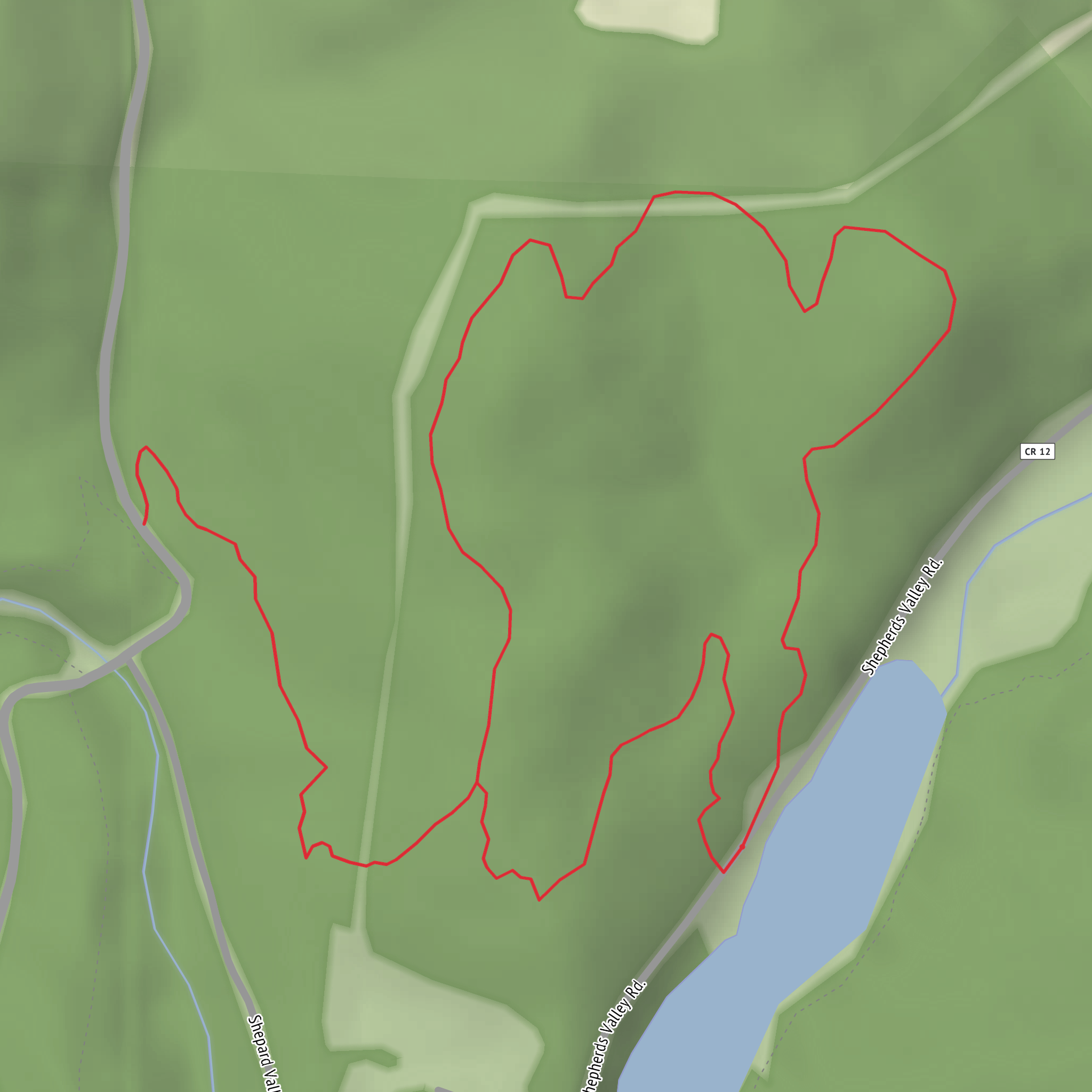
3.7 km
~58 min
141 m
Loop
“A gentle woodland loop of maple glow, mindful footing, and seasonal colour for prepared hikers.”
I’m missing a few key specifics to make this accurate (there are multiple “Maple Loop Trail” hikes in the U.S. and elsewhere), and you left the trailhead location blank (“near …”). If you share either (a) a lon/lat, (b) a HiiKER link, or (c) the park/nearest town/state, I can convert the coordinates to the nearest recognizable address/landmark and tailor the route, access, landmarks, and hazards precisely.
For now, here’s a planning-grade description that fits a typical ~4 km / ~2.5 mi loop with ~100 m / ~330 ft gain and a Medium rating, written so you can prepare; I’ll refine it to the exact place once you provide the location.
You’ll usually start from a signed trailhead kiosk or small parking pullout, then ease into the loop on a wide, well-trodden path that climbs gradually through mixed woodland. Over the first 0.8–1.2 km (0.5–0.75 mi) you’ll gain most of the elevation—expect a steady rise of roughly 60–90 m (200–300 ft) on packed dirt with roots and occasional short, steeper pitches. In wet seasons, this early climb is often where mud forms first, especially where the trail crosses shallow drainages or seeps.
As you crest the high point (commonly around 2.0 km / 1.25 mi into the loop, depending on direction), the grade typically relaxes and the trail begins to contour. This is where many “Maple Loop” routes earn their name: you’ll often pass through stands of bigleaf maple (Pacific Northwest) or sugar/red maple (Northeast/Midwest), with seasonal highlights—spring buds, dense summer canopy, and peak fall color. If the loop includes a viewpoint spur, it’s often short—0.1–0.3 km (0.06–0.2 mi) each way—with a small bench, rock outcrop, or opening in the trees.
On the return leg, the trail generally descends more gently than it climbed, dropping the remaining 100 m / 330 ft over 1.5–2.0 km (0.9–1.25 mi). Watch for loose gravel on hardpack, slick roots, and leaf litter that can hide uneven footing—especially in autumn when the tread can look deceptively smooth.
What the tread is like (and what to look out for)
- Surface: Mostly dirt and forest duff; common root lattices near mature trees; occasional short rocky patches.
- Traction hazards:
- Wet roots and boardwalk edges (if present) are the most common slip points.
- Leaf cover can hide holes and angled roots—slow down on the descent.
- Wet roots and boardwalk edges (if present) are the most common slip points.
- Crowding: Short scenic loops near towns/parks can be busy on weekends; expect faster traffic from trail runners and families.
- Navigation: Even on a short loop, bring HiiKER for confirming junctions—Maple-themed loops often intersect with connector trails that can accidentally lengthen your hike.
Landmarks, nature, and wildlife you’re likely to encounter
- Forest character: A “Maple Loop” is typically designed to showcase a maple-dominant section—look for broad, palmate leaves, mossy trunks, and (in wetter regions) ferny understory. In drier regions, maples may appear in cooler drainages while ridges transition to oak/pine mixes.
- Seasonal highlights:
- Spring: Wildflowers along sunnier edges; amphibians near seeps.
- Summer: Dense shade; mosquitoes near standing water.
- Fall: Peak color can be brief—often a 1–3 week window depending on region and elevation.
- Winter: Freeze–thaw can create slick, hard-packed tread; microspikes may be useful if the area commonly ices.
- Spring: Wildflowers along sunnier edges; amphibians near seeps.
- Wildlife: Common sightings include deer, woodpeckers, songbirds, and squirrels/chipmunks. In many U.S. regions you should plan for ticks in warm months (especially along brushy edges) and practice routine checks. If the loop is in bear country, carry food securely and follow local guidance.
Historical significance (region-dependent, but commonly relevant)
Many short forest loops in the U.S. sit on land with layered history: long-standing Indigenous stewardship, later logging or homesteading, and eventual designation as parkland or working forest with recreation access. If you tell me the exact location, I can name the relevant nations/tribes and any specific logging-era remnants (old grades, skid roads, stone walls, or historic structures) that hikers can still spot along the route.
Getting to the trailhead (car + public transport)
Because the exact trailhead isn’t specified, use this as a checklist and I’ll tailor it once you share the location:
By car
- Aim for the signed trailhead lot/pullout; many 4 km loops have limited parking (often 5–30 spaces).
- Arrive early on weekends, especially during fall color season.
- Bring small bills or a card if the area uses day-use fees or pay stations.
By public transport - If the loop is near a town/metro area, the usual pattern is: bus/train to the nearest transit hub, then a local bus plus a **short walk (0.5–2.0 km / 0
Comments and Reviews
User comments, reviews and discussions about the Maple Loop Trail, West Virginia.
average rating out of 5
0 rating(s)
