Download
3D Flyover
Add to list
More
15.1 km
~3 hrs 6 min
50 m
Point to Point
“Drift beside the Elk River from Duck to Frametown, a steady Appalachian ramble of shade, songbirds, and shifting gravel bars.”
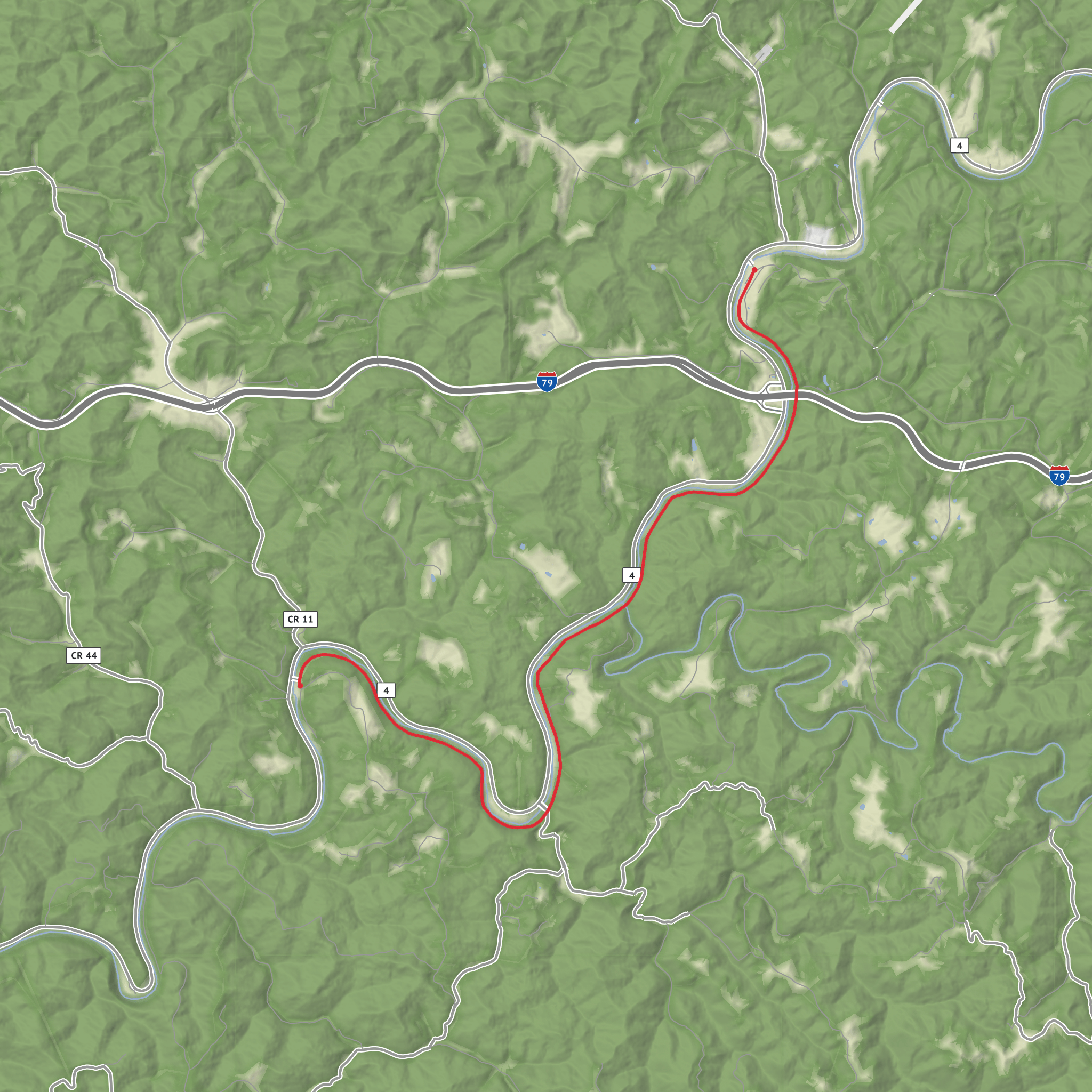
A gentle, mostly riverside walk that links small West Virginia communities through a quiet Appalachian valley, this ~15 km (9.3 mi) point‑to‑point follows the Elk River corridor with only about ~100 m (330 ft) of total climbing. Expect an easy grade, frequent water views, and a mix of shaded woodland edges and open river flats—more “steady ramble” than “workout.”
Getting to the start (Duck, WV) and finishing logistics (Frametown, WV)
Start area (nearest landmark / address): The most practical “pin” for Duck is the Duck, West Virginia 25063 community area along WV‑4 near the Elk River (there isn’t a single universal trailhead sign in many of these river towns, so plan to anchor your start near the town center / river access points). If you’re using HiiKER, set your start at the Duck community on WV‑4 and confirm the exact access point and any parking notes shown for the route.
By car - To Duck: Most drivers approach via WV‑4, which parallels the Elk River through this stretch. From the Charleston area, you’ll typically head northeast toward Clay County and connect to WV‑4; from the north/central WV side, you’ll connect in via regional state routes that feed into WV‑4. - Shuttle plan: Because this is point‑to‑point, the simplest plan is two vehicles (one staged near Frametown, one at Duck). If you only have one car, arrange a local shuttle (taxi/ride service availability can be limited) or plan an out‑and‑back of a shorter segment.
Public transport - This part of central WV is limited for fixed-route transit between small communities. If you’re coming from a larger hub (e.g., Charleston), you may be able to reach a nearby town by intercity bus, but the “last miles” to Duck/Frametown usually require a pre-arranged ride. Check current options before committing; don’t assume same-day service.
Finish area (nearest landmark / address): Frametown is best anchored near the Frametown community along the Elk River in Braxton County, commonly accessed from US‑19 (Frametown sits close to the US‑19 corridor). Use HiiKER to confirm the exact end point and any roadside pull-offs or river access shown.
You’ll spend much of the day close to the Elk River, so the hike’s character is shaped by water: broad bends, gravel bars, and low terraces that can change after storms. The terrain is generally forgiving—short rises where the route leaves the immediate riverbank, then returns to flatter ground. With only ~100 m (330 ft) of gain over ~15 km (9.3 mi), the effort is more about time on feet than climbing.
What the route feels like underfoot (and how it changes)
0–5 km (0–3.1 mi): easy river-valley walking - Expect the easiest walking early: gentle grades, long straightaways, and frequent openings where you can see the river. - Surfaces vary by what this corridor uses locally—often a mix of compacted path/track, short paved or hard-packed connectors near road edges, and occasional rougher patches where water has deposited stones or silt.
5–11 km (3.1–6.8 mi): wooded edges, small hollows, and subtle rollers - The middle portion typically brings the most “texture”: brief undulations (still mild), more shade, and a few spots where the route tucks behind vegetation or rises slightly above the floodplain. - Watch for short, steeper micro-climbs (nothing sustained) where the route navigates around private parcels, creek mouths, or higher ground.
11–15 km (6.8–9.3 mi): approaching Frametown - As you near Frametown and the US‑19 influence, you may notice more signs of nearby infrastructure—clearings, road noise at times, and more frequent crossings/driveway interfaces depending on the exact alignment. - Stay alert for any short roadside segments and be prepared to step aside for local traffic.
Landmarks, nature, and wildlife to look for
Elk River corridor - The Elk River is the constant landmark: look for gravel bars, slow eddies, and cut banks where the river has carved into the outside of bends. These features shift season to season, especially after heavy rain. - In lower, wetter pockets you may see sycamore, river birch, and other moisture-loving trees; slightly higher benches often transition to mixed Appalachian hardwoods.
Birdlife - River corridors are excellent for birds: expect kingfishers, herons/egrets in calmer stretches, and a steady soundtrack of songbirds in the woods. Early morning and late afternoon are best for sightings.
Mammals and reptiles - White-tailed deer are common along field edges and quiet woods. - You may encounter turtles near calm water and non-venomous snakes basking on warm surfaces. In West Virginia, copperheads can occur in rocky/wooded habitats—rarely a problem if you watch foot placement and avoid stepping over logs blindly.
Insects and plants - In warm months, expect mosquitoes and gnats near still water and shaded hollows; bring repellent. - Poison ivy is common along edges and disturbed ground—learn the “leaves of three” look and avoid brushing through viney margins.
Historical context of the region (what you’re walking through)
This
AI Planner
Days planned around your pace, with somewhere to stay each night.
Comments and Reviews
User comments, reviews and discussions about the Elk River Trail from Duck to Frametown, West Virginia.
average rating out of 5
0 rating(s)