Download
3D Flyover
Add to list
More
4.0 km
~54 min
67 m
Loop
“A breezy coastal loop weaving sea views, whitewashed charm, and maritime history around Porth Dinllaen.”
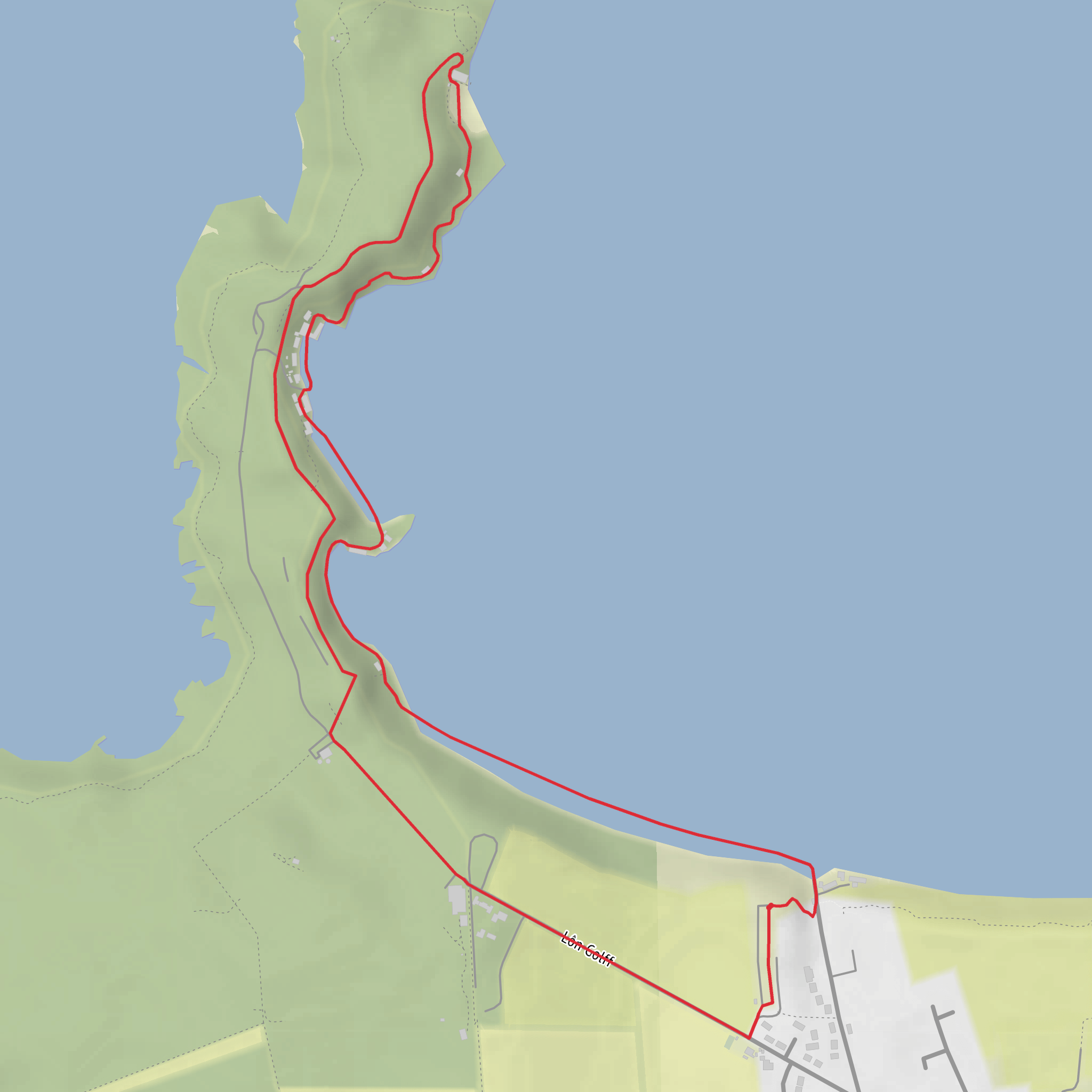
This easy coastal loop on the Llŷn Peninsula packs a lot into roughly 4 km / 2.5 miles, with about 100 m / 330 ft of ascent. The route is short, but it feels varied: beach and bay views, a headland path, a walk past the golf course, and a visit to one of the most distinctive little coastal settlements in North Wales. The usual start point is the National Trust car park at Porthdinllaen, Morfa Nefyn, Gwynedd, LL53 6DA, just above the beach near Morfa Nefyn. Vehicular access into the hamlet itself is restricted, so most walkers begin from here and continue on foot. (nationaltrust.org.uk)
From the start, expect a gentle introduction before the route begins to undulate around the headland. Although the overall difficulty is easy, there are a few short steeper sections, some steps, and uneven coastal ground, so sturdy footwear is still worthwhile, especially after rain. The path can also be exposed to wind coming off Caernarfon Bay, which can make a simple walk feel more demanding than the numbers suggest. National Trust route information describes the full trail as 2.5 miles / 4 km and notes steep sections, steps, and uneven parts of the coastal path. (static.nationaltrust.org.uk)
What the route feels like
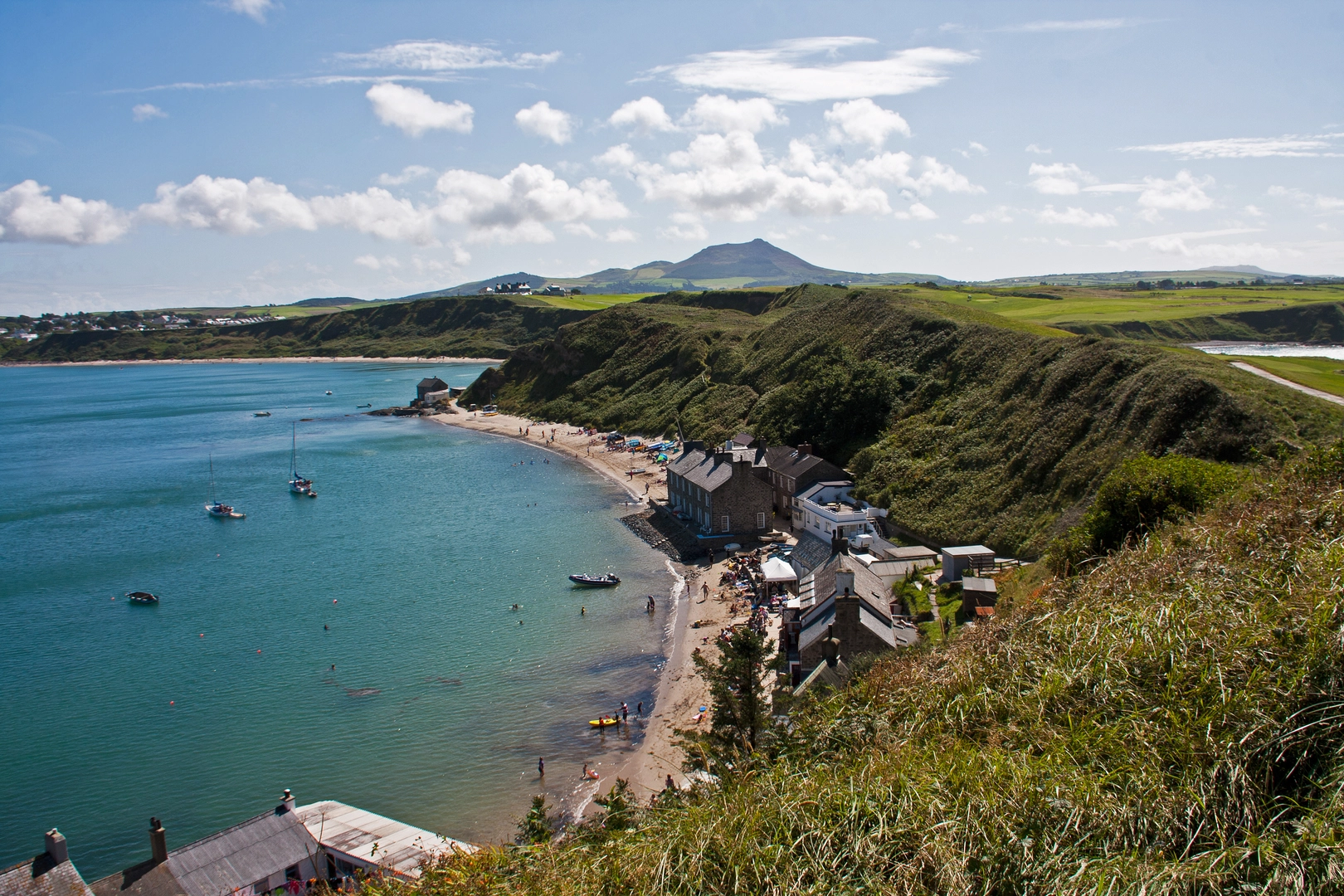
The loop typically heads out from Morfa Nefyn toward the headland above Porth Dinllaen, with wide sea views opening quickly. One of the pleasures of this walk is how fast it becomes scenic: within a short distance, the village drops away behind you and the peninsula begins to feel more remote. The coastline here is shaped by low cliffs, grassy slopes, rocky edges, and sheltered water below, giving the route a classic Llŷn character without requiring a long day on foot. (walescoastpath.gov.uk)
As the route curves around the headland, the hamlet of Porth Dinllaen comes into view. This is one of the key landmarks of the walk: a small cluster of whitewashed buildings gathered around a sheltered bay, with the well-known Tŷ Coch Inn near the shore. The setting is unusually photogenic, and because the village is reached on foot rather than by ordinary through-traffic, it retains a quiet, tucked-away feel even though it is one of the best-known spots on this part of the Welsh coast. (nationaltrust.org.uk)
Depending on the exact line you follow, the return usually comes back via the golf course side of the headland and the club area near Nefyn & District Golf Club, before dropping back toward Morfa Nefyn. This creates a satisfying loop rather than a simple out-and-back, and it also gives a different perspective over the bay on the way back. Walkers should stay alert for golf play where the route crosses or skirts the course and follow any local waymarking and access signs. (nationaltrust.org.uk)
Landmarks, wildlife, and things to look out for
The most obvious landmark is the Porthdinllaen Lifeboat Station, which reflects the area’s long relationship with the sea. The bay itself is sheltered, and the village has deep maritime roots, so it is a place where the working history of the coast is still easy to imagine. The beach, rockier shoreline, and clear water also make this a good route for watching seabirds and scanning the bay for marine life. (mapcarta.com)
This stretch of coast is known for its wildlife-rich setting. National Trust information highlights the area’s coastal scenery and marine interest, and Visit Wales notes the appeal of the beach and rockpools along this walk. Around the shore, hikers should look for intertidal life in the rockpools, while offshore it is worth watching for seabirds moving along the coast. On calmer days, the sheltered water and rocky margins can make wildlife spotting easier than on more exposed cliff walks. (visitwales.com)
The headland also carries historical interest beyond the village itself. Visitors crossing the golf course side pass an area associated with an Iron Age hill fort, a reminder that this prominent coastal position has been valued for centuries. The wider region of the Llŷn Peninsula is rich in prehistoric and maritime heritage, and Porth Dinllaen’s strategic, sheltered location made it significant long before it became a popular walking destination. (en.wikipedia.org)
Porth Dinllaen also has an important place in Welsh lifeboat history. Sources on local walking routes note that the area is associated with the founding of the first lifeboat service in Wales, which adds another layer of significance to what might otherwise seem like a simple seaside ramble. That maritime legacy is part of what gives the walk its character: this is
What to expect?
Surfaces
Sand
Unknown
Asphalt
Gravel
Paved
Concrete
Dirt
Comments and Reviews
User comments, reviews and discussions about the Porth Dinlaen Loop, Wales.
average rating out of 5
0 rating(s)