Download
3D Flyover
Add to list
More
4.8 km
~1 hrs 34 min
369 m
Out and Back
“A steep woodland climb unfolds into Llyn Cau’s brooding glacial amphitheatre, rich with myth and mountain drama.”
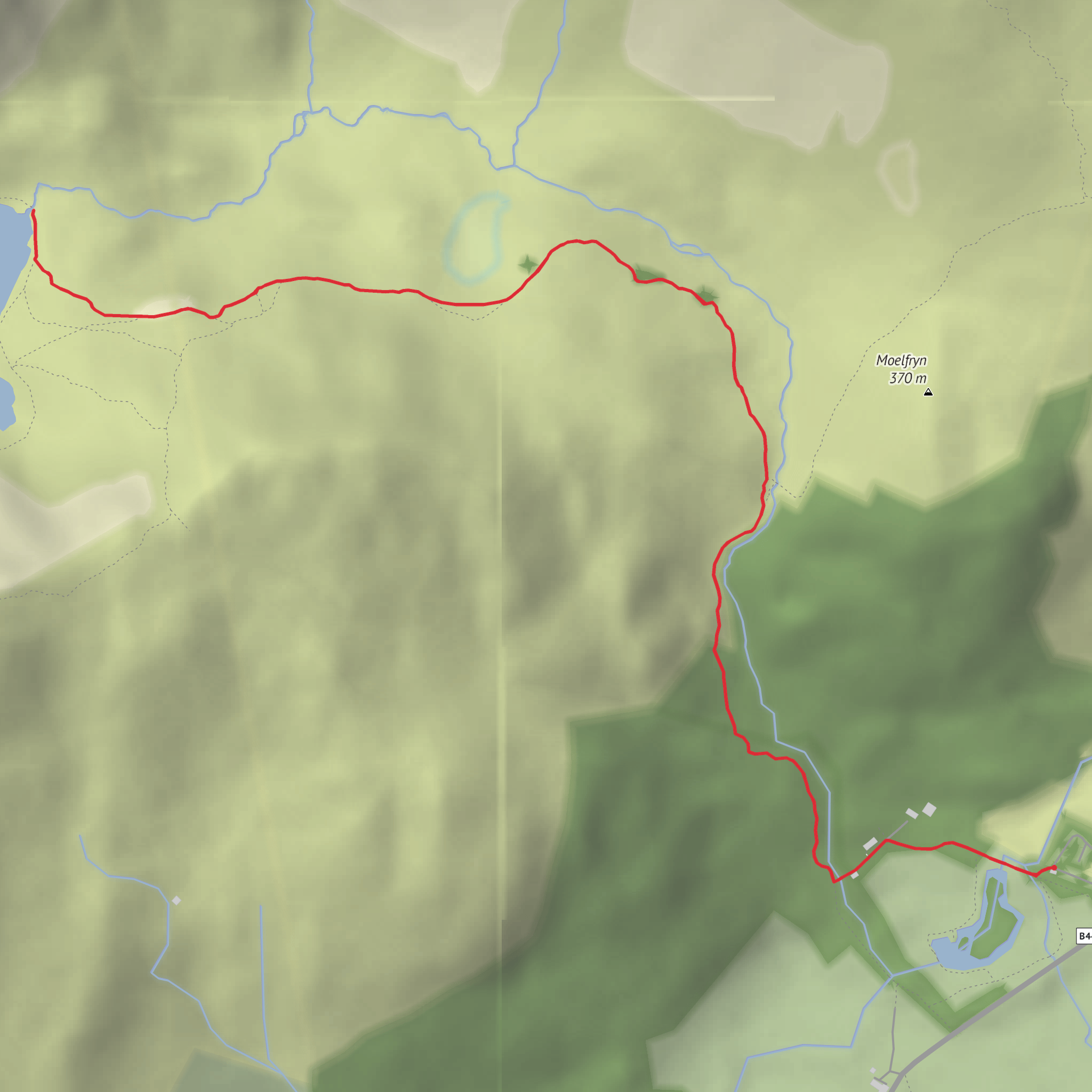
This short but demanding out-and-back to Llyn Cau packs a lot into roughly 5 km / 3.1 miles, climbing about 400 m / 1,312 ft on the lower slopes of Cadair Idris above Tal-y-llyn in southern Eryri (Snowdonia). The usual approach is via the Minffordd Path from the Dôl Idris / Cadair Idris car park near Tal-y-llyn, Tywyn LL36 9AJ, just off the A487 and B4405/B4485 area near the Minffordd Hotel and visitor facilities. Dôl Idris is the main access point used for the Minffordd route, and Dolgellau is the nearest main town. (visitwales.com)
Expect a steep start almost immediately. The path rises through oak woodland and rocky steps beside running water, so even though the distance is modest, the effort level is high for the mileage. A “difficult” rating is fair here: the climb is sustained, the stone pitching can feel relentless, and wet conditions make the route much more serious. Hikers should allow extra time for the ascent and descent, especially if carrying children’s gear, camera kit, or waterproof layers for changeable mountain weather. (snowdonia.gov.wales)
What the route feels like
From the car park, the first section is enclosed and shaded, climbing through broadleaf woodland on a well-used mountain path. Within roughly 1 to 1.5 km / 0.6 to 0.9 miles, most walkers will already have gained a large share of the day’s elevation, and this is where the route begins to feel more mountainous than its short distance suggests. Stone steps, exposed roots, and occasional slick rock are the main underfoot hazards. After rain, water can run directly down parts of the trail. (snowdonia.gov.wales)
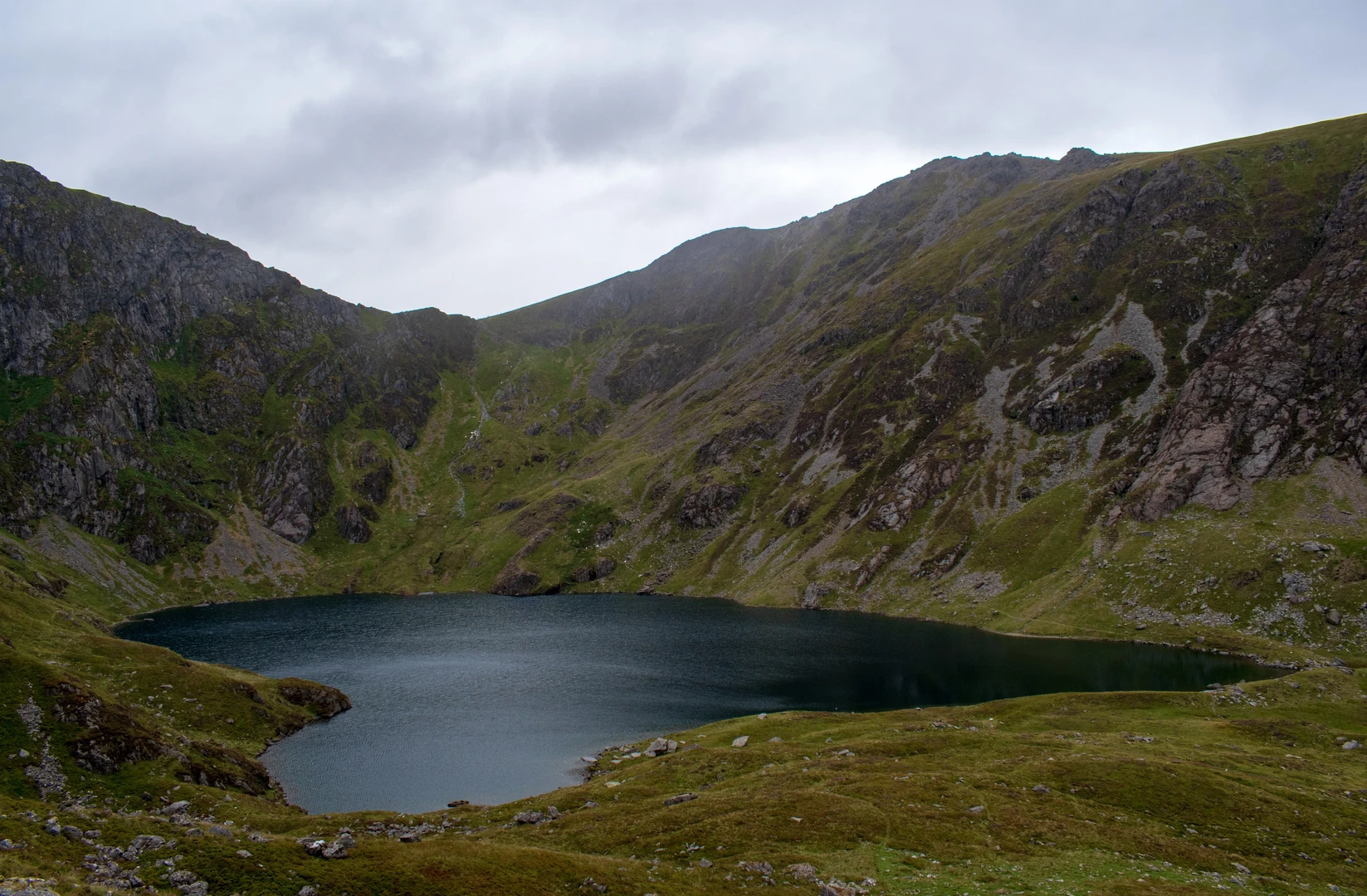
As height is gained, the trees begin to thin and the landscape opens dramatically into Cwm Cau, the great glacial bowl holding Llyn Cau. This is the defining landmark of the walk: a dark mountain lake set beneath the steep enclosing cliffs of Craig Cau, with the higher ridges of Cadair Idris towering above. The lake sits in one of the most striking corries in Wales, and the amphitheatre-like shape is one reason the area leaves such a strong impression even on a relatively short outing. (visitwales.com)
If turning around at the lake, many hikers treat the shoreline or viewpoint above it as the natural objective. The return is by the same route, and the descent deserves as much care as the climb. The stepped sections can be hard on knees and slippery in mist, drizzle, or after leaf fall in the woods. Trekking poles can help, but route-finding should still stay focused on the main path; for navigation, HiiKER is the best tool to have loaded before setting out.
Landmarks, nature, and wildlife
Llyn Cau itself is the standout feature, but the surrounding reserve is just as important. Cadair Idris lies within a protected landscape and national nature reserve known for its rugged geology, glacial landforms, and upland habitats. The cwm around the lake is a classic product of ice erosion, and the mountain is noted for features such as cwms, moraines, and striated rock. (naturalresources.wales)
Lower down, the woodland approach can hold mosses, ferns, and birdlife typical of damp western uplands. Higher up, the reserve is known for scarce Arctic-alpine plants in suitable habitats, reflecting the mountain’s cool, exposed conditions. Wildlife sightings vary with season and time of day, but hikers should watch for upland birds, ravens overhead, and the usual signs of sheep grazing on open ground. Staying on the path matters here both for erosion control and for protecting fragile vegetation. (visitwales.com)
Mist can move in quickly around the lake and cliffs, changing the feel of the route from scenic to serious in a short time. Wind funneling through the cwm can also make the lakeside feel much colder than the valley below. Even on a short hike, waterproofs, warm layers, food, and enough water are sensible essentials.
Historical and cultural significance
Cadair Idris is one of Wales’s most storied mountains, with a long tradition of myth, folklore, and artistic inspiration. The name is commonly linked to the giant Idris, and local legend holds that anyone who spends a night on the mountain may become a poet, a madman, or fail to wake at all. The landscape around Llyn Cau has also inspired artists for centuries; the Minffordd route is specifically associated with the 18th-century painter Richard Wilson of Machynlleth, who climbed to the shores of Llyn Cau. (thegreatoutdoorsmag.com)
The wider region around Tal-y-llyn and Dolg
Surfaces
Dirt
Unknown
Asphalt
Comments and Reviews
User comments, reviews and discussions about the Llyn Cau, Wales.
average rating out of 5
0 rating(s)
