
Download
3D Flyover
Add to list
More
12.6 km
~2 hrs 58 min
282 m
Loop
“Ancient woodland, hidden earthworks and deer-haunted rides make this a rewarding, steady half-day loop.”
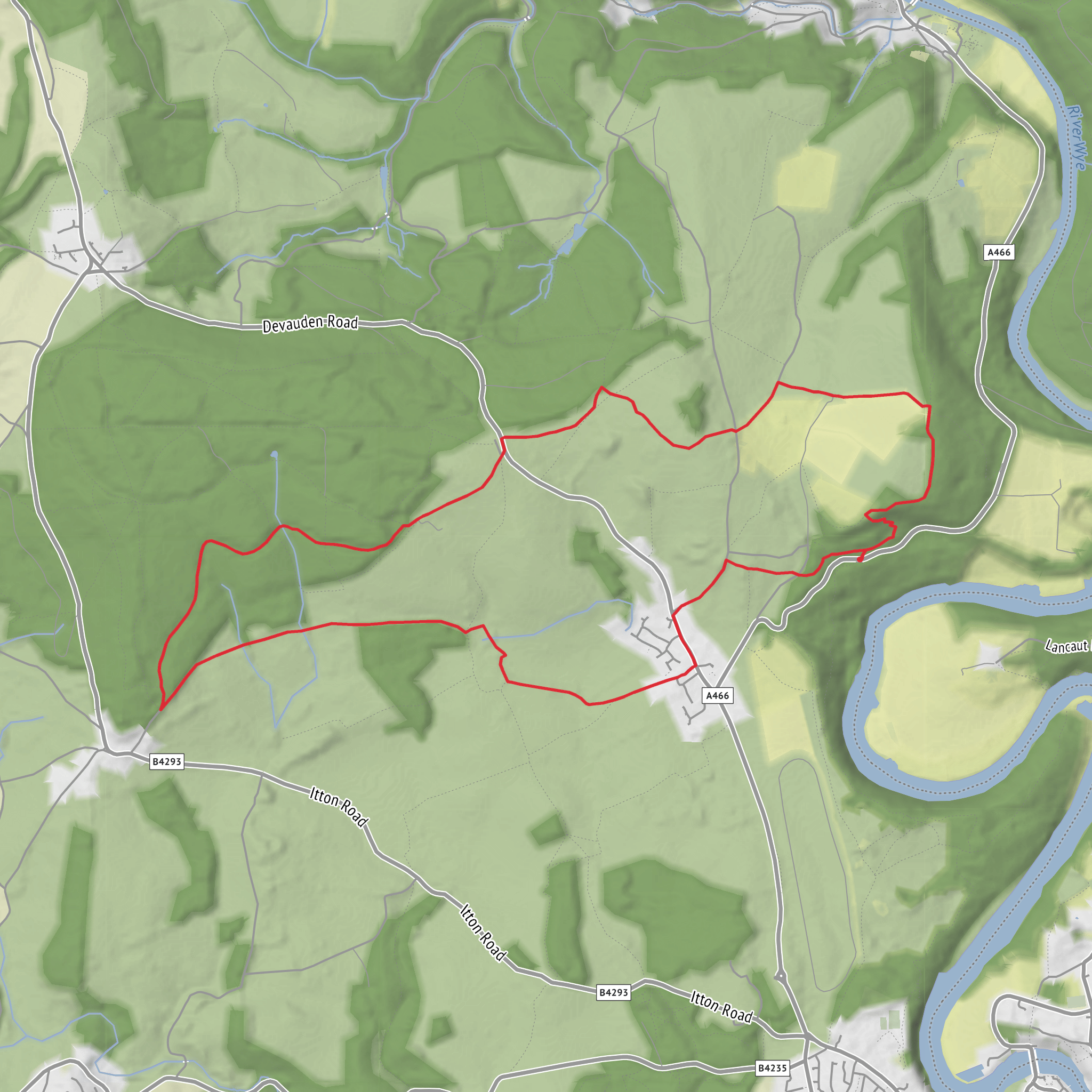
This roughly 13 km / 8.1 mile loop with about 300 metres / 985 feet of ascent is a solid medium-grade woodland walk in the hills above Chepstow, most plausibly starting near Devauden Green, Devauden, Monmouthshire NP16, which is the best-known access point for routes into Chepstow Park Wood from the village side. The route typically combines broad forest tracks, quieter woodland paths, and short stretches of country lane, with enough climbing to feel like a proper half-day outing rather than a gentle village ramble. The terrain is usually most comfortable for hikers with decent fitness, sturdy footwear, and a little patience for muddy or leaf-covered sections after wet weather. (walksinchepstow.co.uk)
From the outset, expect a landscape that shifts between open village-edge views and enclosed forestry. The first few kilometres are often the easiest to settle into, with rolling ground rather than immediate steep climbing, before the route begins to work more decisively into the woods. Forest roads can make progress feel straightforward, but the loop’s cumulative ascent builds gradually, especially where side paths dip into shallow combes and rise back onto the ridge. On a route of this length, 300 metres / 985 feet of gain is enough to make pacing important, particularly if the ground is slick or if you are carrying a full daypack. (walksinchepstow.co.uk)
What the route feels like on the ground
Chepstow Park Wood sits on high ground above the Wye Valley and is part of a larger wooded historic landscape. Much of the walking is through commercial forest and ancient woodland ground that has been replanted over time, so hikers should expect long straight rides, junctions of forestry tracks, and occasional changes in character where conifers give way to mixed broadleaf patches. That mix creates a route with a quieter, more remote feel than the map alone might suggest. Even where gradients are moderate, the enclosed woodland can make distances feel longer, so it helps to keep an eye on progress with HiiKER rather than relying on instinct at track intersections. (coflein.gov.uk)
Pilmoore Wood adds variety to the loop by breaking up the larger plantation feel with more intimate woodland sections and edge-of-field transitions. Depending on the exact line taken, there may be gates, stiles, or narrower rights of way linking one wood to the next. These connectors are often the places where navigation needs the most attention, especially if waymarking is faint or if forestry work has altered the appearance of a junction. In poor visibility, the route can feel more complex than its moderate rating suggests. (walksinchepstow.co.uk)
Landmarks, nature, and wildlife
One of the most interesting features in Chepstow Park Wood is its historic earthwork and associated archaeological remains. Coflein records the wood as part of a former park belonging to Chepstow Castle, around 6.5 km northwest of the castle, and notes features including a circular ditched earthwork, remains of a building, old ponds, a small reservoir, and a raised platform near the park boundary. These are the kinds of details that can easily be missed if you are moving quickly, but they give the walk a strong sense of depth and make this more than just a forestry circuit. (coflein.gov.uk)
Historically, this area formed part of a royal or lordly hunting landscape, tied to the medieval power centered on Chepstow Castle. The wider district around Chepstow and the Wye Valley is layered with Norman and later medieval history, and these upland woods were once managed not simply for timber but also as parkland and hunting ground. That background helps explain the surviving earthworks, boundary features, and managed ponds that hikers may encounter. (coflein.gov.uk)
Wildlife is one of the route’s quieter rewards. Local walking information specifically notes a good chance of seeing deer in Chepstow Park Wood, and Natural Resources Wales also identifies deer, grey squirrel, and wild boar as species relevant to woodland management in this forest block. In practical terms, hikers should look for hoof prints in soft ground, rooting disturbance near path edges, and movement at dawn or dusk along rides and clearings. Birdlife will vary by season, but mixed woodland and edge habitat
Surfaces
Unknown
Asphalt
Unpaved
Dirt
Sand
Gravel
Comments and Reviews
User comments, reviews and discussions about the Chepstow Park Wood and Pilmoore Wood Loop, Wales.
average rating out of 5
0 rating(s)
