
Download
3D Flyover
Add to list
More
747 m
~8 min
0 m
Out and Back
“A gentle forest stroll along the Appalachian Trail, ending in cool mist and thundering cascade.”
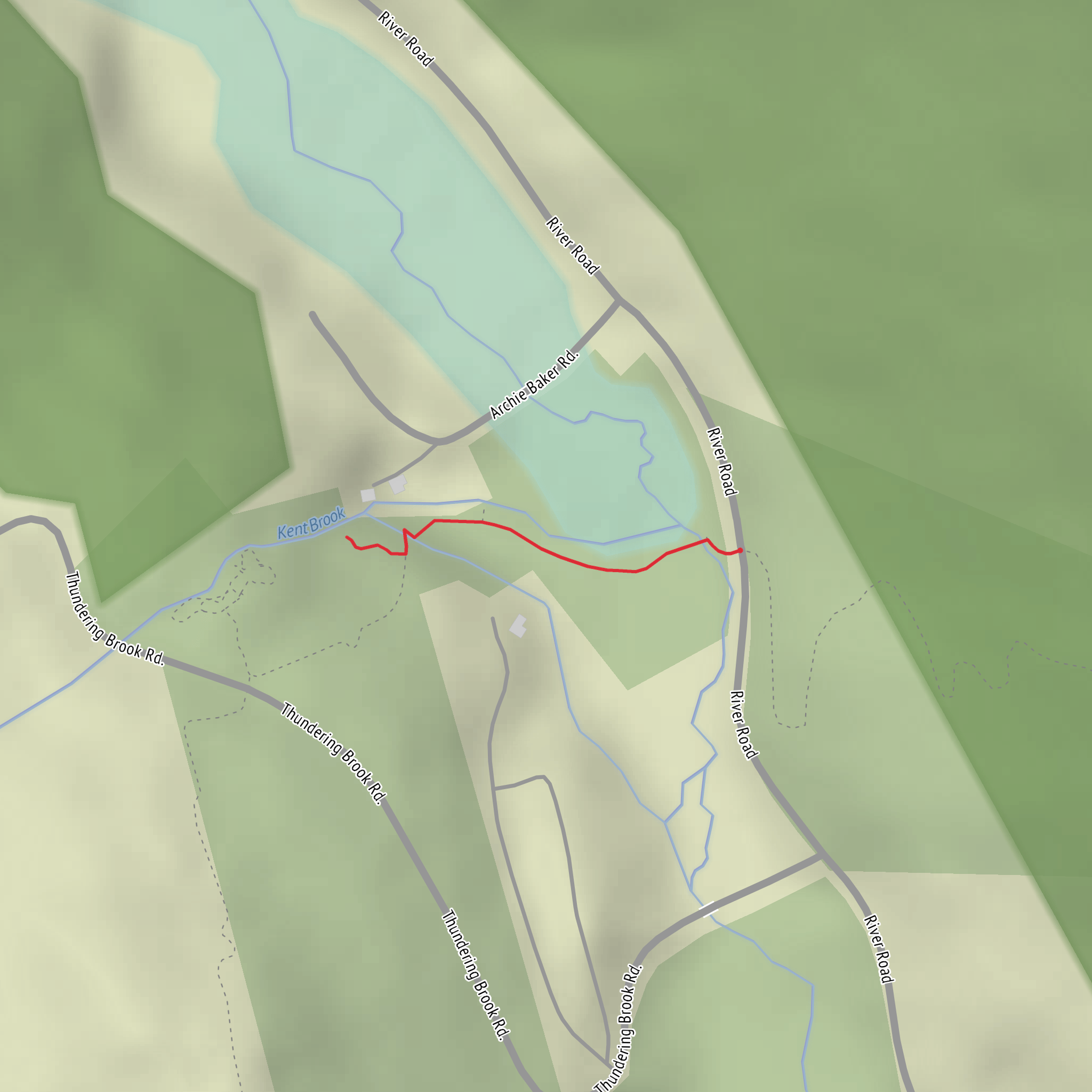
This is a short, mostly level out-and-back walk to one of the White Mountains’ most impressive roadside waterfalls. You’ll be on a well-used section of the Appalachian Trail (AT) almost immediately, with the sound of rushing water building as you approach the falls. Expect a total distance of about 1.0 km (0.6 mi) with essentially 0 m (0 ft) of net elevation gain, though there are a few gentle rises and dips typical of a forest footpath.
Getting to the trailhead (car + public transport)
By car:
The usual starting point is the Appalachian Trail / Thundering Brook Falls parking area on NH Route 302 (Mount Washington Road), in the Crawford Notch area of the White Mountain National Forest. The closest “known place” to navigate to is Highland Center Lodge & Field (AMC Highland Center) on NH-302 in Bretton Woods/Crawford Notch—the trailhead parking is a short drive along the same highway from there. If you’re using HiiKER for navigation, search for “Thundering Brook Falls (Appalachian Trail)” and confirm you’re routing to the NH-302 AT crossing/parking rather than a backcountry junction.
By public transport:
Public transit in Crawford Notch is limited and often seasonal. The most practical approach is to get to the North Conway / Bartlett area (which has more lodging and regional connections) and then use a taxi/rideshare to reach the NH-302 trailhead. In some seasons, excursion rail service runs through Crawford Notch, but it typically doesn’t function like a commuter stop-and-go system for hikers—plan on a road-based transfer for reliability.
What the walk is like underfoot
From the parking area, you’ll step onto a compacted dirt path with roots and small rocks. Because this is a waterfall destination, the tread is usually obvious and frequently traveled. After rain, expect muddy patches and slick roots; in shoulder seasons, lingering ice can form in shaded spots even when the road is clear.
You’ll be walking through classic northern hardwood and mixed forest—think birch, maple, and spruce-fir influences as you near the notch. The route is short, but it feels “wild” quickly because the forest closes in and the brook’s sound becomes the dominant feature.
Landmarks and the main attraction
The highlight is Thundering Brook Falls, a powerful cascade that drops through a rocky channel. The viewing area is close enough that you’ll feel the cool air and mist on humid days. The rocks around the falls can be deceptively slick—especially where spray keeps them wet—so it’s best to enjoy the view from stable, established footing rather than stepping onto angled ledges.
Along the way you’ll cross or closely parallel Thundering Brook, and you’ll notice how the watercourse has carved and rearranged stones over time. In high flow (spring melt or after storms), the brook can look dramatically different from week to week, with louder roar and faster current.
Navigation and staying on track
This is a straightforward hike, but it’s still worth having HiiKER open so you can:
- confirm you’ve started at the correct NH-302 AT access point, and
- avoid accidentally continuing farther along the AT if you intend to keep this to ~1 km (0.6 mi).
Cell service can be inconsistent in notches; download the map in HiiKER before you arrive.
Nature, wildlife, and seasonal considerations
Because this is a short corridor hike in the White Mountains, wildlife sightings are possible but not guaranteed. Common possibilities include: - songbirds in spring and early summer, - red squirrels and chipmunks near the trail edges, - occasional signs of larger mammals (tracks/scat), including moose in the broader region—give any large animal a wide berth if encountered.
Black flies and mosquitoes can be intense in late spring/early summer near water. In autumn, leaf drop can hide roots and rocks, increasing trip hazards.
In winter, the falls area can develop ice bulges and glazed rock. If you go in freezing conditions, traction devices can be the difference between a pleasant walk and a dangerous slip, even on a short trail.
Hazards to look out for (even on an easy hike)
- Slippery rock near the falls: mist + algae = low friction.
- Rooty, uneven tread: easy to roll an ankle if you’re moving quickly.
- Fast water: stay back from the brook’s edge during high flow.
- Crowds and tight viewing space: be patient and avoid stepping off durable surfaces to pass.
Historical significance of the area
This walk sits in Crawford Notch, one of the most storied corridors in the White Mountains. The notch has long been a key passage through the range—first for early travel routes and later for the growth of mountain tourism. The Appalachian Trail itself is part of a much larger conservation and recreation legacy in the eastern U.S., and this section reflects the White Mountains’ long history of trail building, forest management, and outdoor culture centered around the notches and high passes.
Planning notes (what to bring for a 1 km / 0.6 mi outing)
Even though it’s short and rated easy, conditions can change quickly in the White Mountains:
- Footwear: closed-toe shoes with decent tread; waterproof helps after rain.
- Layers: a light shell is useful—the falls area can feel cooler from spray and shade.
- Bug protection: especially late May through July.
- Water/snack: optional for distance
Surfaces
Wood
Unknown
Comments and Reviews
User comments, reviews and discussions about the Thundering Brook Falls via Appalachian Trail, Vermont.
average rating out of 5
0 rating(s)

