Download
3D Flyover
Add to list
More
8.3 km
~2 hrs 31 min
518 m
Out and Back
“A steady forest climb unfolds into breezy summit views, rewarding prepared hikers with classic Green Mountain drama.”
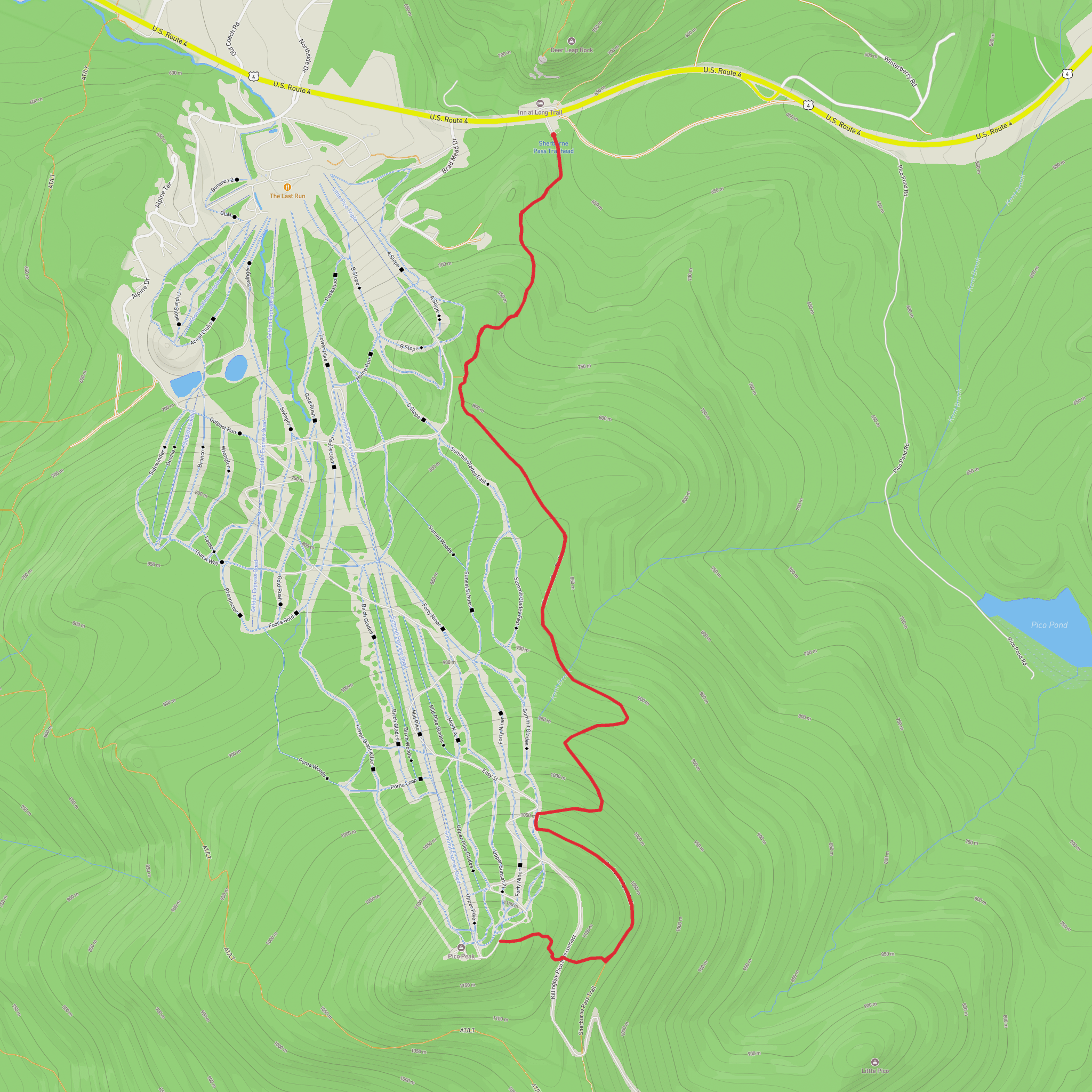
This out-and-back climb to Pico Peak is a short but fairly demanding Green Mountain hike, covering about 8 km to 8.9 km round trip (roughly 5 to 5.5 miles) with around 500 to 567 metres of elevation gain (about 1,640 to 1,860 feet), depending on whether you measure to Pico Camp or continue to the open summit on the Pico Link spur. The route starts from the Sherburne Pass Trail parking area on US Route 4 in Killington, directly across from the Inn at Long Trail near the crest of Sherburne Pass. Public descriptions from the Green Mountain Club and the U.S. Forest Service place the trailhead at the Appalachian Trail/Long Trail parking lot on Route 4, with the Inn at Long Trail serving as the clearest nearby landmark. (fs.usda.gov)
The climb begins on a broad, well-used path and wastes little time gaining height, though the grade is generally steadier than brutally steep at first. Expect a sustained uphill through mixed forest, with roots, rocks, and occasional muddy stretches that can make footing awkward after rain or during spring thaw. This is the kind of hike that feels manageable in distance but tougher in effort than the numbers suggest, especially because the ascent is fairly continuous and the upper mountain can be cooler, windier, and slicker than conditions at the road. The trail is popular, and parking can fill early in the main hiking season. (alltrails.com)
Route and what to expect
From the parking lot, the Sherburne Pass Trail climbs about 4.3 km (2.7 miles) to Pico Camp, a small trailside shelter area used by hikers on this side of the mountain. From there, the Pico Link Trail continues another 0.6 km (0.4 miles) to Pico Peak’s summit. That makes the usual summit trip about 4.4 miles one way? No—the standard route is about 5.5 miles round trip, or roughly 8.9 km total, with the return following the same path back to Route 4. (greenmountainclub.org)
Lower down, the forest is typical northern hardwood terrain for Vermont’s Green Mountains, with a canopy that may include sugar maple, beech, birch, and hemlock in nearby stands. As you climb, the woods begin to open in places, and ski-trail clearings can provide intermittent views before the final push. The summit itself is more open than much of the approach, giving broad views that often include Killington Peak and surrounding ridgelines. The transition from enclosed forest to open summit is one of the defining features of this hike. (greenmountainclub.org)
A key navigation point comes near Pico Camp, where the Pico Link Trail branches off. Hikers continuing straight can head toward the Long Trail/Appalachian Trail system and eventually toward Killington Peak, so it is worth checking your route carefully here. If using a navigation app, HiiKER is the one to rely on for confirming the junctions and keeping track of the return route. The Green Mountain Club specifically notes that missing the correct turn in this trail network can send hikers to a different parking area. (greenmountainclub.org)
Landmarks, nature, and wildlife
Sherburne Pass sits between Pico Peak and Deer Leap Mountain in a historically important corridor through the central Green Mountains. The hike begins near the shared Appalachian Trail and Long Trail corridor, and that matters: this is not just a local summit path, but part of a landscape tied to two of the most significant long-distance footpaths in the eastern United States. The Long Trail, built by the Green Mountain Club between 1910 and 1930, is the oldest long-distance trail in the United States and directly inspired the Appalachian Trail. In the Killington area, the two routes overlap for a stretch near Sherburne Pass. (killingtonvt.myrec.com)
Pico Camp is one of the notable landmarks on the route, and the broader Sherburne Pass area has long served as a hub for hikers moving between Pico, Killington, Deer Leap, and the AT/LT corridor. The region also reflects Vermont’s layered land-use history: heavy logging, fire, and flooding helped shape the wider Green Mountain landscape before large areas were protected and managed as part of Green Mountain National Forest. (killingtonvt.myrec.com)
Comments and Reviews
User comments, reviews and discussions about the Pico Peak via Sherburne Pass Trail, Vermont.
average rating out of 5
0 rating(s)