Mount Roosevelt via Clark Brook Trail and Vermont Long Trail
Download
Preview
Add to list
More
10.0 km
~3 hrs 5 min
649 m
Out and Back
“A rugged wilderness climb beside tumbling brook and mossy forest, rich with remote Long Trail character.”
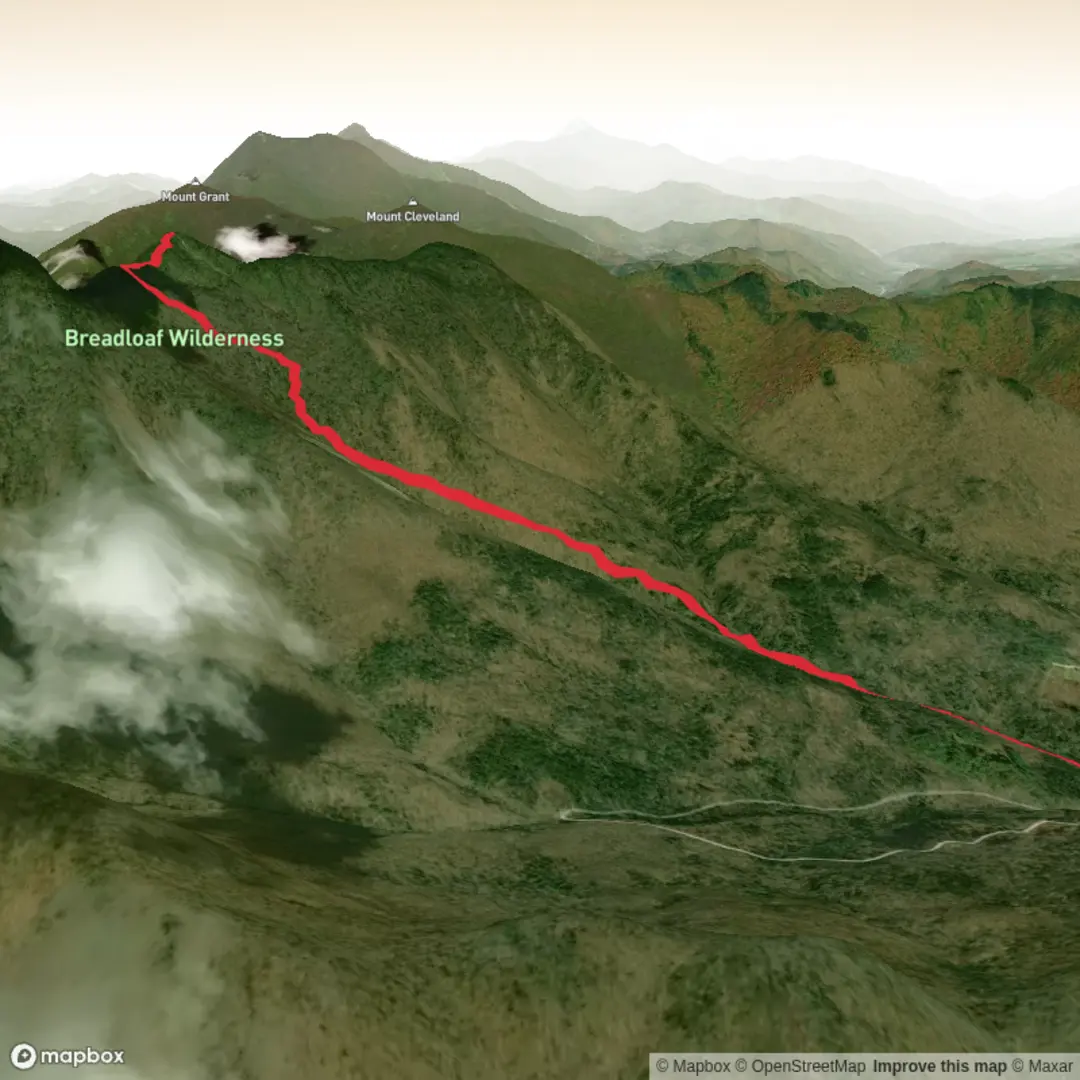
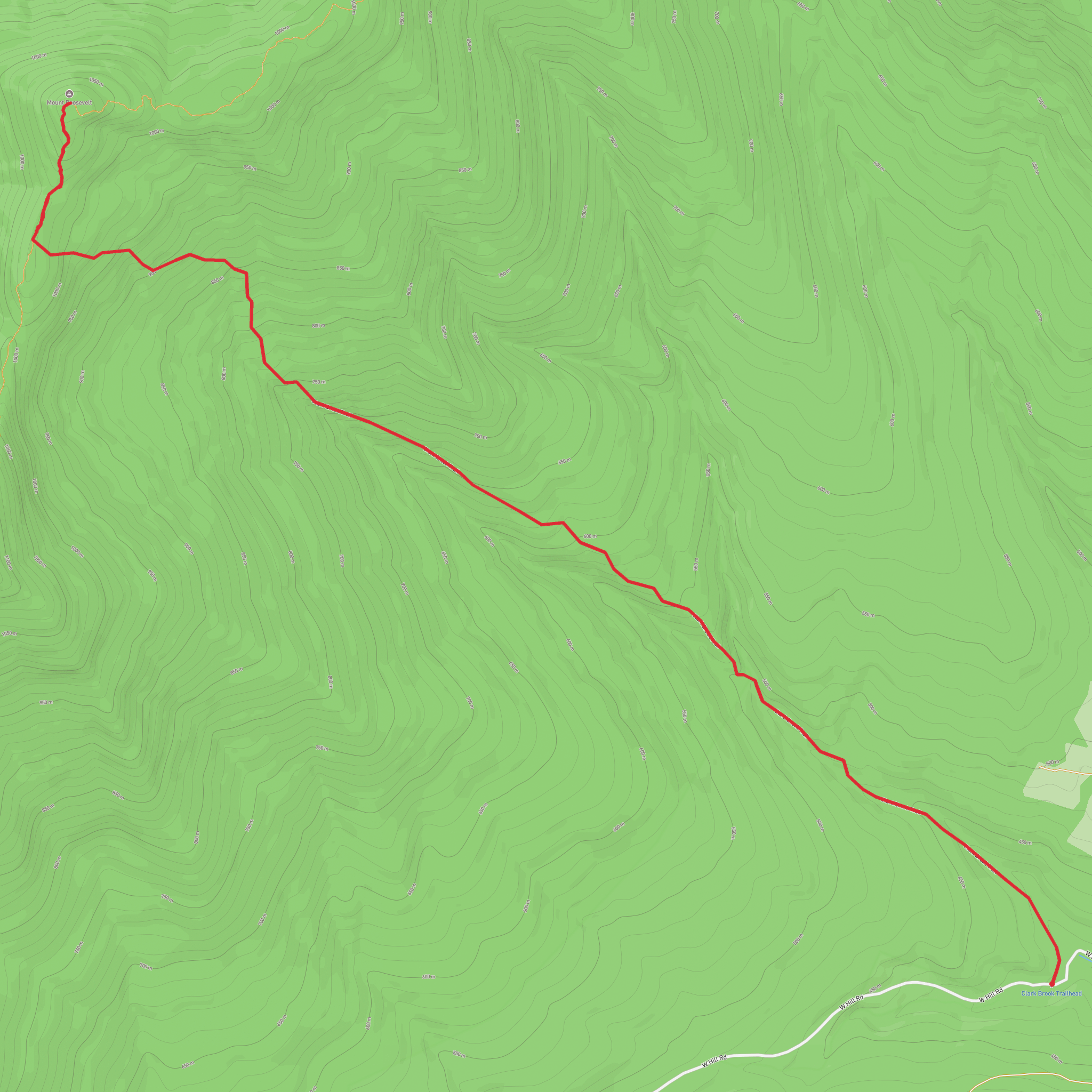
This difficult out-and-back climbs to Mount Roosevelt on a rugged section of Vermont’s Long Trail, gaining about 10 km / 6.2 miles round trip with roughly 700 m / 2,300 ft of elevation gain. The route begins at the Clark Brook Trailhead in Granville, Vermont, on Forest Road 55 near Clark Brook, then follows Clark Brook Trail for about 4.8 km / 3.0 miles to the Long Trail junction. From there, Mount Roosevelt is another 0.6 km / 0.4 miles north on the Long Trail, for a one-way total of roughly 5.4 km / 3.4 miles. Official Forest Service information notes that the lower trail climbs gradually beside Clark Brook, crosses the brook twice on bridges, then steepens and becomes rockier after entering the Breadloaf Wilderness. (fs.usda.gov)
The setting is classic central Green Mountains: cool hardwood forest lower down, increasingly mossy and conifer-rich terrain higher up, with a more enclosed, wild feel once the route enters the Breadloaf Wilderness. Because this is a wilderness section, signage, blazing, and maintenance are intentionally minimal compared with front-country trails, so hikers should expect a more natural tread, rougher footing, and fewer built features. That makes the climb feel more remote than its mileage suggests. (fs.usda.gov)
What the hike is like
The first part of the route is the gentlest. Clark Brook Trail ascends at a moderate grade through forest alongside running water, which can make the lower miles feel cooler and damper than exposed ridge hikes. After the two brook crossings, the trail continues upward into the Breadloaf Wilderness, where the footing typically becomes more uneven, with rocks, roots, and steeper pitches demanding steady effort. The final approach on the Long Trail is short but often feels tougher than the map suggests because the ridge tread can be rough, narrow, and slick in wet weather. (fs.usda.gov)
Mount Roosevelt’s summit sits at about 1,075 m / 3,528 ft in Vermont’s Presidential Range, a cluster of peaks in this part of the Green Mountains named for U.S. presidents. The summit itself is on the Long Trail and is often more wooded than dramatic, so hikers should not expect a broad open summit ledge. One of the notable nearby features is Killington View, about 0.64 km / 0.4 miles east of Mount Roosevelt on the Long Trail, where there are longer views south toward Killington Peak on a clear day. If you want to extend the outing, Mount Wilson lies about 1.3 km / 0.8 miles south of the Clark Brook/Long Trail junction. (en.wikipedia.org)
Terrain, difficulty, and preparation
Although the distance is moderate, the route earns its difficult rating through sustained climbing, uneven footing, and the more committing feel of a wilderness trail. Plan for a proper mountain day rather than a casual woodland walk. Wet roots, mud, and slick rock are common hazards, especially after rain and during shoulder seasons. In late spring, Vermont’s mud season can make trails softer and more fragile, and some Long Trail sections may be seasonally affected to reduce erosion and protect sensitive vegetation. (en.wikipedia.org)
Footwear with solid grip is important, and trekking poles can help on the descent where the steeper, rockier sections of Clark Brook Trail can be hard on knees. There is no potable water at the trailhead and no restroom there, so arrive prepared. If using navigation, carry the route downloaded in HiiKER before setting out, since this is not the kind of trail where you should rely on strong mobile signal or frequent wayfinding signs. (fs.usda.gov)
Wildlife is typical of the Green Mountain National Forest and Breadloaf Wilderness: hikers may encounter songbirds, woodpeckers, red squirrels, chipmunks, and signs of larger mammals such as deer, black bear, moose, or smaller forest carnivores, though actual sightings are never guaranteed. The brook corridor also supports amphibians and moisture-loving plant life. As always in Vermont forest habitat, ticks can be present at lower elevations and mosquitoes or black flies can be intense in warmer months. The wilderness setting also means extra care with Leave No Trace practices is especially important around water sources and campsites. (fs.usda.gov)
Landmarks and regional significance
One of the most meaningful aspects of this hike is that it joins the Long Trail, the historic backbone of hiking in Vermont. The Long Trail was conceived in 1909, construction began in 1912, and it was completed in 1930, making it America’s first long-distance hiking trail. It later helped inspire the Appalachian Trail.
Surfaces
Unknown
Dirt
Comments and Reviews
User comments, reviews and discussions about the Mount Roosevelt via Clark Brook Trail and Vermont Long Trail, Vermont.
average rating out of 5
0 rating(s)
