Download
3D Flyover
Add to list
More
6.4 km
~1 hrs 24 min
77 m
Loop
“A windswept Yell loop blends boggy shore, wildlife, and poignant seafaring history beneath vast skies.”
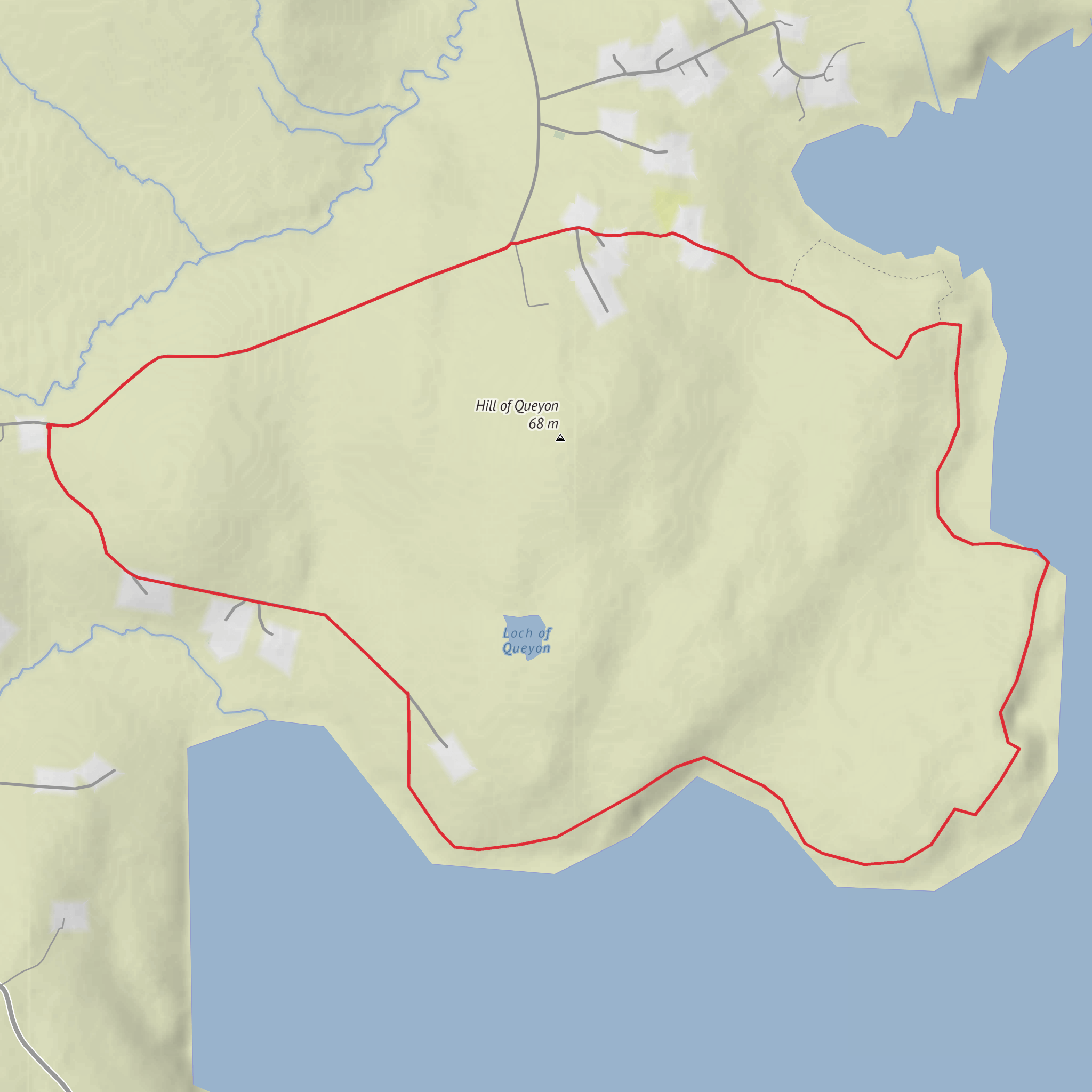
This easy coastal loop on Yell packs a surprising amount into roughly 6–6.75 km / 3.7–4.25 miles, with about 100–128 m / 330–420 ft of ascent. The route begins near the road junction west of East Yell Hall in Aywick, close to the Aywick community shop and the East Yell Hall area, and heads out toward the coast before circling the Ness of Queyon and returning by quiet minor road. It is short enough for a relaxed half-day outing, but the exposed shoreline, rough grass, and boggy patches mean it still deserves proper footwear and a weather check before setting out. (shetland.org)
The opening section is straightforward and well signposted, leading from Aywick down toward the sea. After about 0.5 km / 0.3 miles, the route leaves the road and follows fences and stiles toward the shoreline. The terrain here is mostly grassy, but underfoot conditions can quickly turn wet and soft, especially after rain. Although the overall difficulty is easy, the bog factor is notable for such a short walk, so waterproof boots are a better choice than trail shoes in unsettled conditions. (shetland.org)
Along the coast
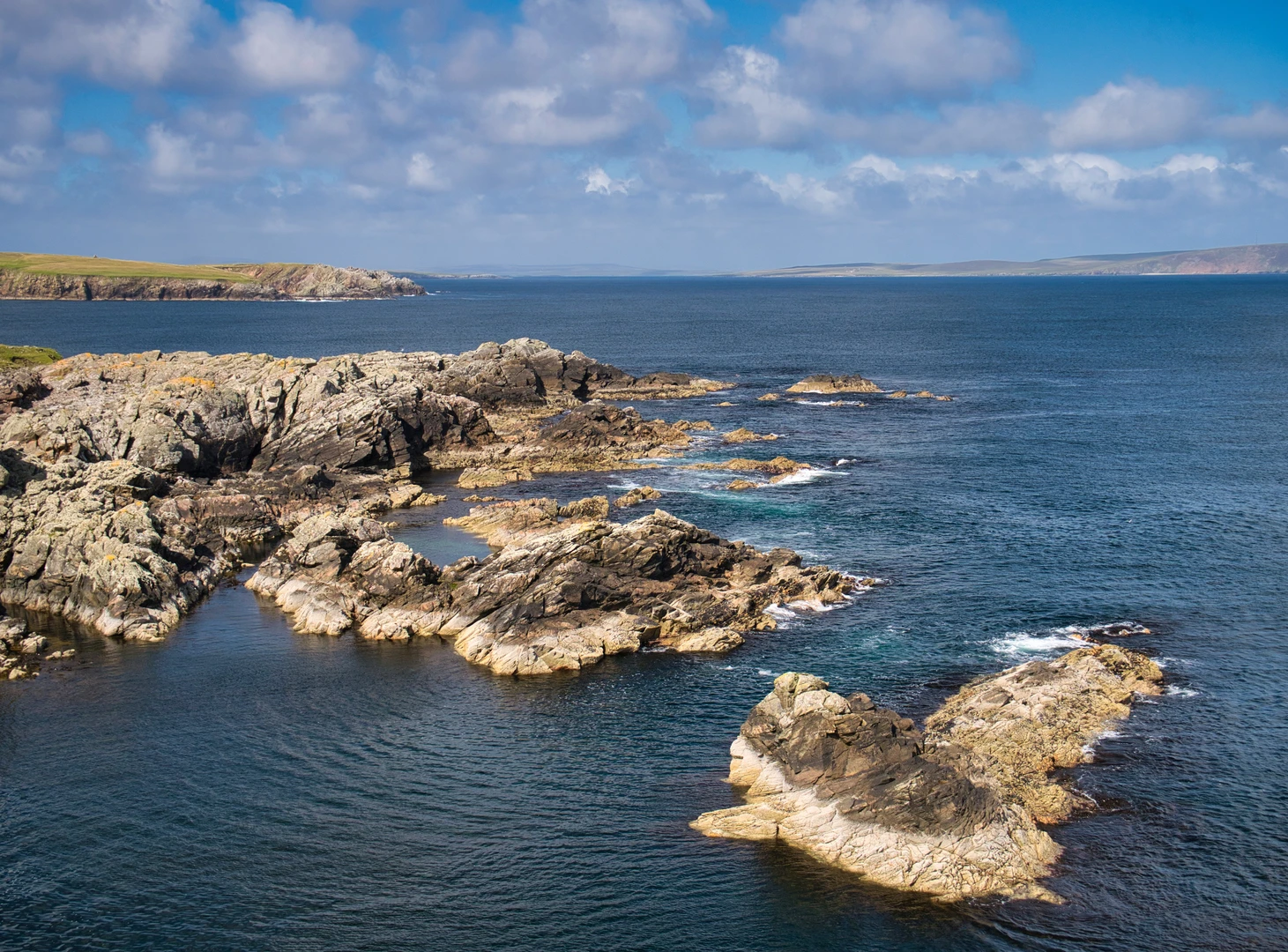
One of the first major landmarks is the White Wife, reached a little over halfway through the outward coastal section. This striking memorial is the figurehead of the German cadet ship Bohus, wrecked nearby on 26 April 1924. Four of the 39 crew died in the disaster, and the figurehead was later set up by local people within sight of the wreck site, giving the walk an unexpectedly moving historical focus. The surrounding coast is low, open, and deeply maritime in character, with rocky inlets, pebbly edges, and broad views over the North Sea. (shetland.org)
Beyond the memorial, the route continues around the Ness of Queyon on open moorland and coastal grass. This is where the walk feels wilder. There are sections of low cliff and one area known as “The Groin,” where extra care is needed near the edge, particularly in wind or if the ground is slick. Elsewhere, the path can be faint, and the line of travel often depends on gates, fence crossings, and the clearest ground rather than a built trail. For navigation, HiiKER is the best tool to have ready before leaving the road. (shetland.org)
Wildlife and landscape
This stretch of East Yell is excellent habitat for coastal wildlife. Otters are one of the area’s best-known attractions, and the nearby name Otterswick is no coincidence. The broken shoreline, shallow inshore waters, and quiet rocky landing places make this a strong area for sightings, especially early or late in the day. Grey and common seals are also regularly seen around Yell, and harbour porpoises may be spotted offshore if the sea is calm enough to scan properly. (walkhighlands.co.uk)
Birdlife can be just as rewarding. Yell is widely known for its rich birdlife, and on a coastal loop like this hikers may encounter gulls, waders, terns in season, and passing seabirds offshore. The open moor and maritime grassland also give the route a distinctly northern feel: treeless, wind-shaped, and expansive rather than dramatic in height. With only around 100 m / 330 ft of climbing, the elevation gain is gentle, but the exposure to wind can make the walk feel more serious than the numbers suggest. (shetland.org)
Historical interest around Aywick
The route is not only scenic but also tied to local history. Near the return leg by East Yell Hall are the ruins of the old Aywick School. From this same area it is possible to make out the remains of an old “meal road,” one of the tracks built during the potato famine of 1840, when laborers were paid in meal rather than money. That detail adds another layer to the landscape: what now feels like a quiet rural road and moorland edge was once part of a much harder subsistence economy. (shetland.org)
More broadly, Yell has a deep historical identity shaped by fishing, crofting, and seafaring. The island is also associated with major Shetland fishing history, including the 1881 Gloup disaster, one of the region’s most significant maritime tragedies
Comments and Reviews
User comments, reviews and discussions about the White Wife, Skerry of the Hoga, The Helliack and Haa of Aywick Loop, Scotland.
average rating out of 5
0 rating(s)
