Download
3D Flyover
Add to list
More
8.0 km
~1 hrs 57 min
217 m
Loop
“A wild Shetland loop of windswept moor, peaty ridges, and vast Atlantic horizons.”
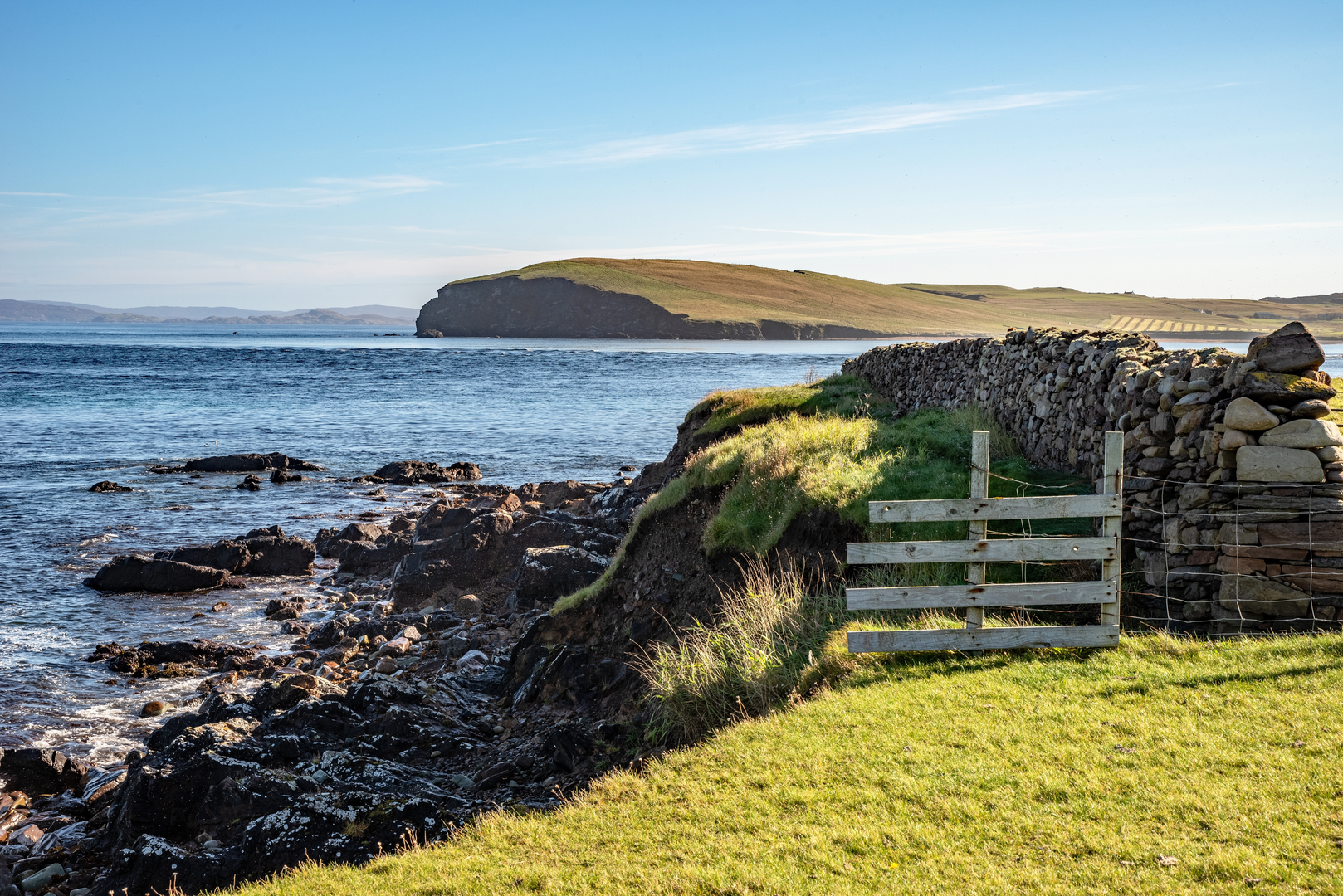
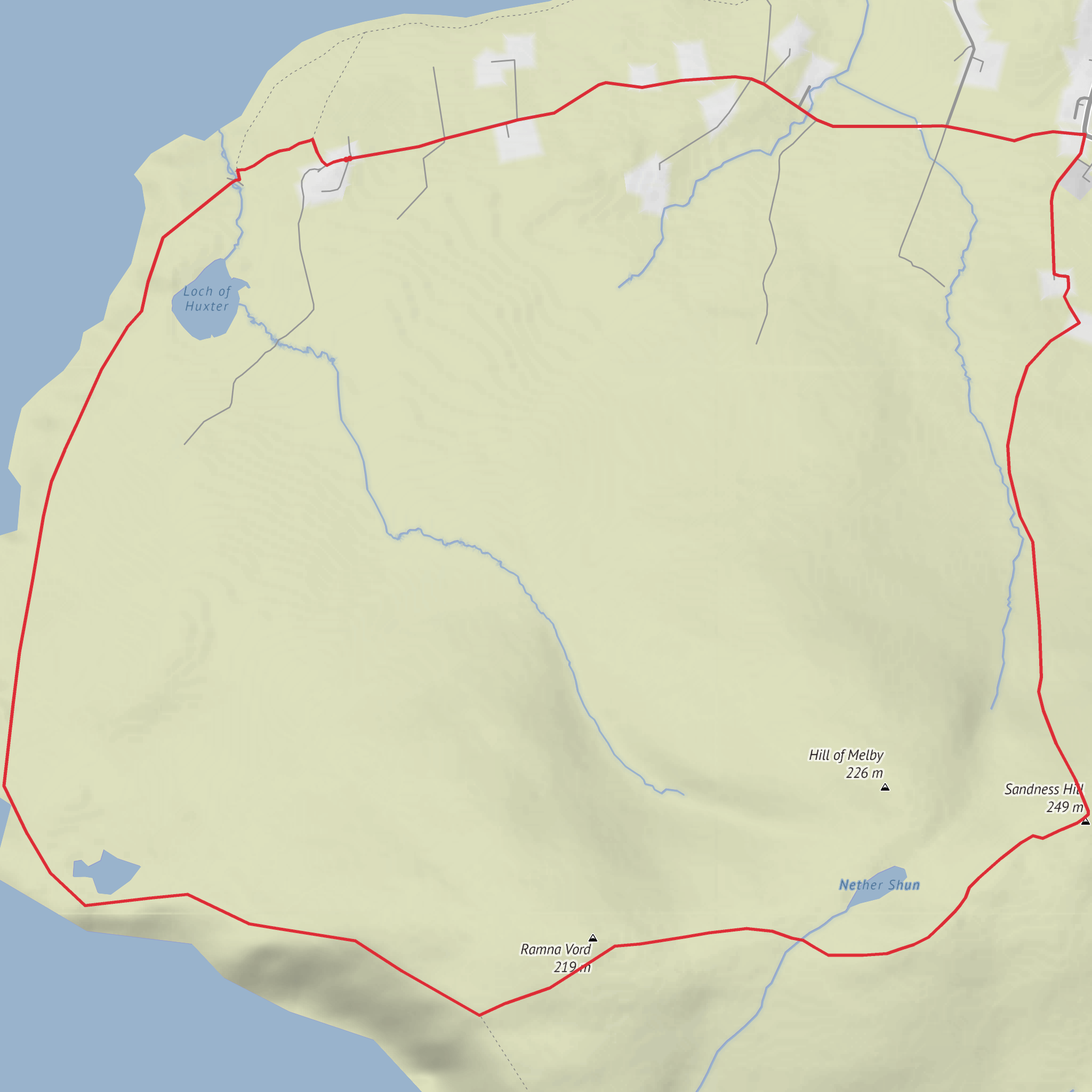
This medium-grade loop on Shetland’s West Mainland packs a lot into roughly 8 km / 5 miles, with about 200 m / 656 ft of ascent. Expect a mix of open moorland, rounded hills, wet ground, and wide Atlantic views rather than engineered paths. The character of the walk is exposed, quiet, and very weather-dependent, with the high points around Ramna Vord, Sandness Hill, and the Hill of Melby giving a strong sense of space over Sandness, Melby, Papa Stour, and the surrounding coast. Sandness Hill is widely noted as the highest summit on Shetland’s west side, and the ridge country here is known for broad views and peat-hagged ground. (walkhighlands.co.uk)
The start is best understood as being near Melby, Sandness, Shetland, close to the minor road network west of Sandness and the coast by Melby rather than a formal large trailhead. If you are converting a map point or lon/lat to a practical place name for planning, Melby near Sandness on the A971 side road is the nearest useful landmark, with Melby Pier / the Ness of Melby often the clearest navigation reference for drivers. Melby is a small coastal hamlet on Mainland Shetland, just west of Sandness. (en.wikipedia.org)
By car, most hikers approach from Lerwick via the A971 toward Walls and Sandness, then continue on the local single-track roads toward Melby. Roads in this part of West Mainland are generally narrow and passing-place driving is normal, so allow extra time and drive conservatively in poor visibility or high winds. Public transport on West Mainland exists through Shetland’s bus network, but service coverage is limited and trail access is not always direct; Shetland’s official visitor guidance points walkers to the island-wide transport information and timetables, and the Westside leaflet confirms public toilets at Sandness. For this particular hill loop, a car is usually the simplest option. (shetland.org)
Terrain and what the walk feels like
Although the distance is modest, this is not a quick, easy stroll. The challenge comes from the ground and exposure rather than sheer mileage. You should expect uneven grassy slopes, heather and moorland, sections of soft or boggy peat, and occasional rougher, peat-cut terrain on the higher ground. Comparable routes over Ramna Vord and Sandness Hill are specifically described as boggy, peat-hagged, and exposed, so waterproof footwear and solid route-finding are important even on a shorter loop. In wet weather, the effort can feel closer to a longer hill day. (walkhighlands.co.uk)
The climbing is spread across a series of rises rather than one single sustained ascent. Around 200 m / 656 ft of elevation gain usually feels manageable for regular walkers, but the wind can make the hills feel much bigger than the numbers suggest. Shetland weather changes quickly, and low cloud can flatten the landscape visually, making navigation less obvious on the return across open ground. For planning, carrying spare warm layers, full waterproofs, and checking your route in HiiKER before setting out is sensible for any medium-rated outing here.
Landmarks, views, and natural features
Ramna Vord and the surrounding heights give you the classic West Mainland feel: open, treeless uplands dropping toward a deeply indented Atlantic coast. Sandness Hill is the main high point in the area and is known for extensive views, especially toward Papa Stour, with Foula sometimes visible in clear conditions. Lower down, the Melby side of the route looks out toward Holm of Melby, the small offshore islet in the Sound of Papa. (walkhighlands.co.uk)
The landscape is shaped by exposure to the Atlantic. Even where the loop stays inland, the sea is never far away in character: salt-laden air, cropped vegetation, and a broad horizon are part of the experience. The wider Sandness coast is recognized for dramatic coastal scenery, and nearby protected areas include Ramna Stacks and Gruney and the Sandness Coast, which helps explain the richness of the local geology and birdlife. (en.wikipedia.org)
Wildlife can be one of the highlights. On Shetland moorland, walkers may encounter skuas, golden plover, and other upland or coastal birds, while the rougher hill ground is also associated with mountain hare on nearby
Surfaces
Unknown
Ground
Gravel
Comments and Reviews
User comments, reviews and discussions about the Ramna Vord, Sandness Hill and Hill of Melby Loop, Scotland.
average rating out of 5
0 rating(s)
