
Download
3D Flyover
Add to list
More
4.1 km
~58 min
86 m
Out and Back
“A pale sand ribbon leads to windswept cliffs and vast Atlantic views on this striking Shetland outing.”
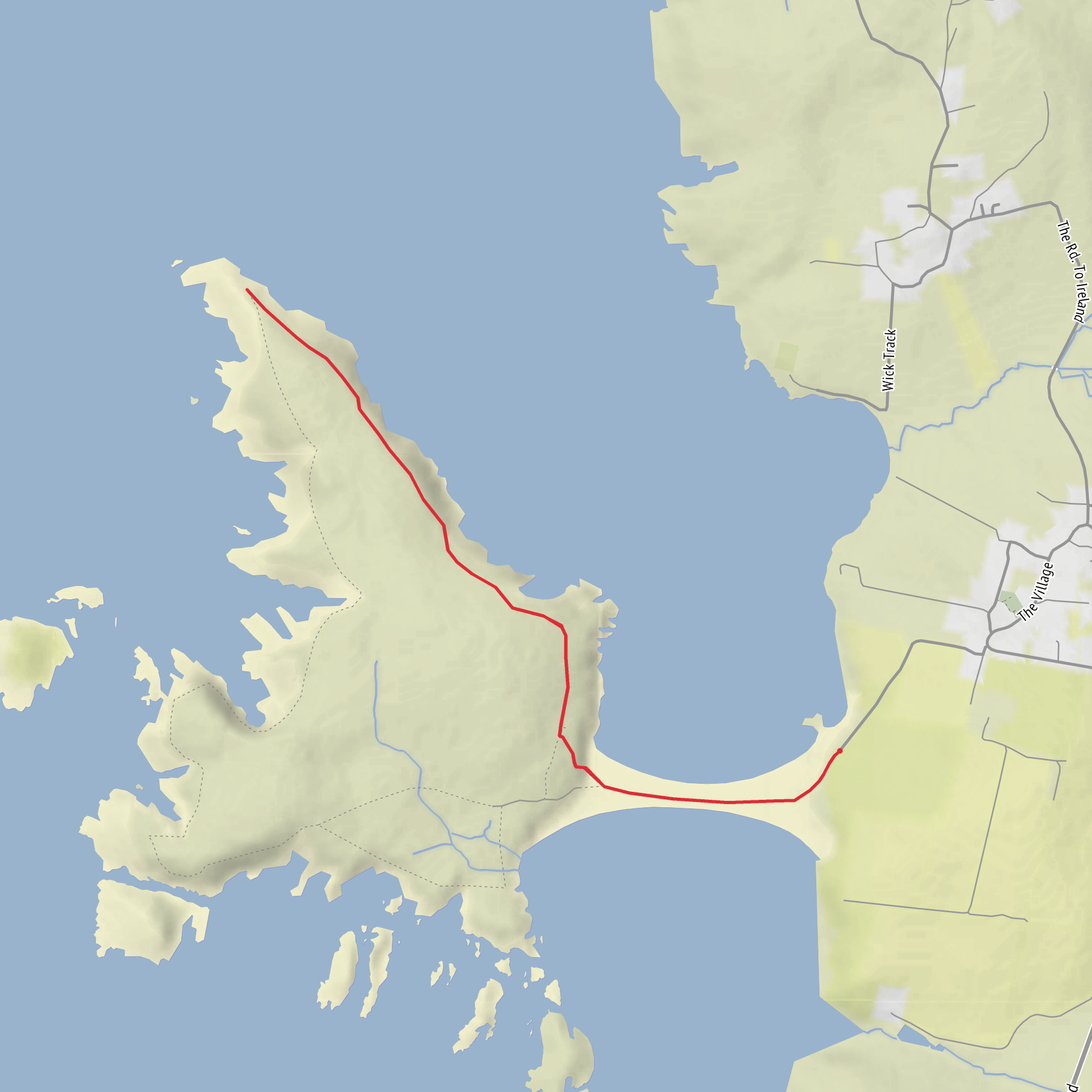
This medium out-and-back of about 4 km / 2.5 miles with roughly 100 m / 330 ft of ascent explores the dramatic northern end of St Ninian’s Isle in South Mainland, Shetland, heading toward Loose Head, the island’s highest point. The walk is short, but it feels bigger than the numbers suggest because of the exposed coastal setting, uneven grassy ground, and the constant pull of the views. Expect a mix of sandy walking across the famous tombolo and clifftop turf beyond, with a route that is straightforward in clear weather but deserves care in wind, mist, or after rain. The nearest well-known start point is the St Ninian’s Isle tombolo car park near Bigton, Shetland, signed from the A970 via Bigton. (walkhighlands.co.uk)
From the parking area, the route begins by crossing the remarkable sand tombolo linking Mainland Shetland to St Ninian’s Isle. This natural sand causeway is about 500 m / 0.3 miles long and is widely noted as the largest active sand tombolo in the UK or Britain, with sea on both sides and very different beach character north and south depending on wind and tide. It is one of the most distinctive coastal landforms in Shetland, and even before the climb begins it gives the walk a memorable sense of place. (shetland.org)
Once on the island, the route trends north over close-cropped grass and low coastal slopes toward Loose Head. Although the total ascent is only around 100 m / 330 ft, the climb comes in gentle stages rather than one sustained pull. Underfoot is usually a combination of firm turf, sandy patches, and occasional boggy ground, so waterproof footwear is useful even on a relatively short outing. In dry, calm weather this feels like a moderate scenic walk; in strong Atlantic winds it can feel much more serious because the island is open and the cliff edges are abrupt. Shetland.org specifically advises keeping well away from the cliff edges. (walkhighlands.co.uk)
What to expect on the route
The first half of the walk is defined by openness. Looking back, the tombolo forms a striking ribbon of pale sand between the mainland and the island. Looking outward, the route quickly becomes more rugged in character, with low cliffs, rocky inlets, and broad sea views. Around the western side of the island there are views toward offshore skerries and the open Atlantic, while the northern section feels wilder and more exposed. Walkhighlands notes that the northern tip, Loose Head, has a trig point and is the highest point on St Ninian’s Isle. (walkhighlands.co.uk)
Loose Head itself is less about summit drama and more about position. At roughly 43 m / 141 ft above sea level, it is not high, but it sits at the island’s far northern end above coastal cliffs, so the outlook is expansive. On a clear day, this is the place to pause for views over the surrounding sea, nearby islets, and the sweep back toward the tombolo and mainland. Because this is an out-and-back rather than a full circuit, the return gives a second perspective, often with changing light across the beaches and machair. (mudandroutes.com)
Nature and wildlife
This is an excellent short walk for coastal wildlife. The tombolo and surrounding shore attract seabirds, while the grassy and machair-like areas can hold seasonal wildflowers. Shetland.org describes machair behind the dunes, where calcium-rich sand supports flower-rich grassland. Offshore and along the coast, seals are a realistic possibility, and the wider South Mainland is well known for seabird life. Depending on season and luck, hikers may also spot passing marine life from the cliffs. The key thing to prepare for is not dense woodland wildlife or inland habitat, but a windswept coastal ecosystem shaped by salt, sand, and Atlantic weather. (shetland.org)
Historical significance
The island carries far more history than its size suggests. Near the route are the remains of St Ninian’s Chapel, with visible ruins dating to the 12th century, while the site also preserves evidence of earlier religious use and some of Shetland’s oldest Christian burials. The island became especially famous in 195
Surfaces
Unknown
Sand
Grass
Gravel
Comments and Reviews
User comments, reviews and discussions about the Loose head Out and Back, Scotland.
average rating out of 5
0 rating(s)


