Download
3D Flyover
Add to list
More
2.1 km
~25 min
6 m
Loop
“A peaceful Shetland loch loop, where broad skies, quiet waters, and ancient echoes gently unfold.”
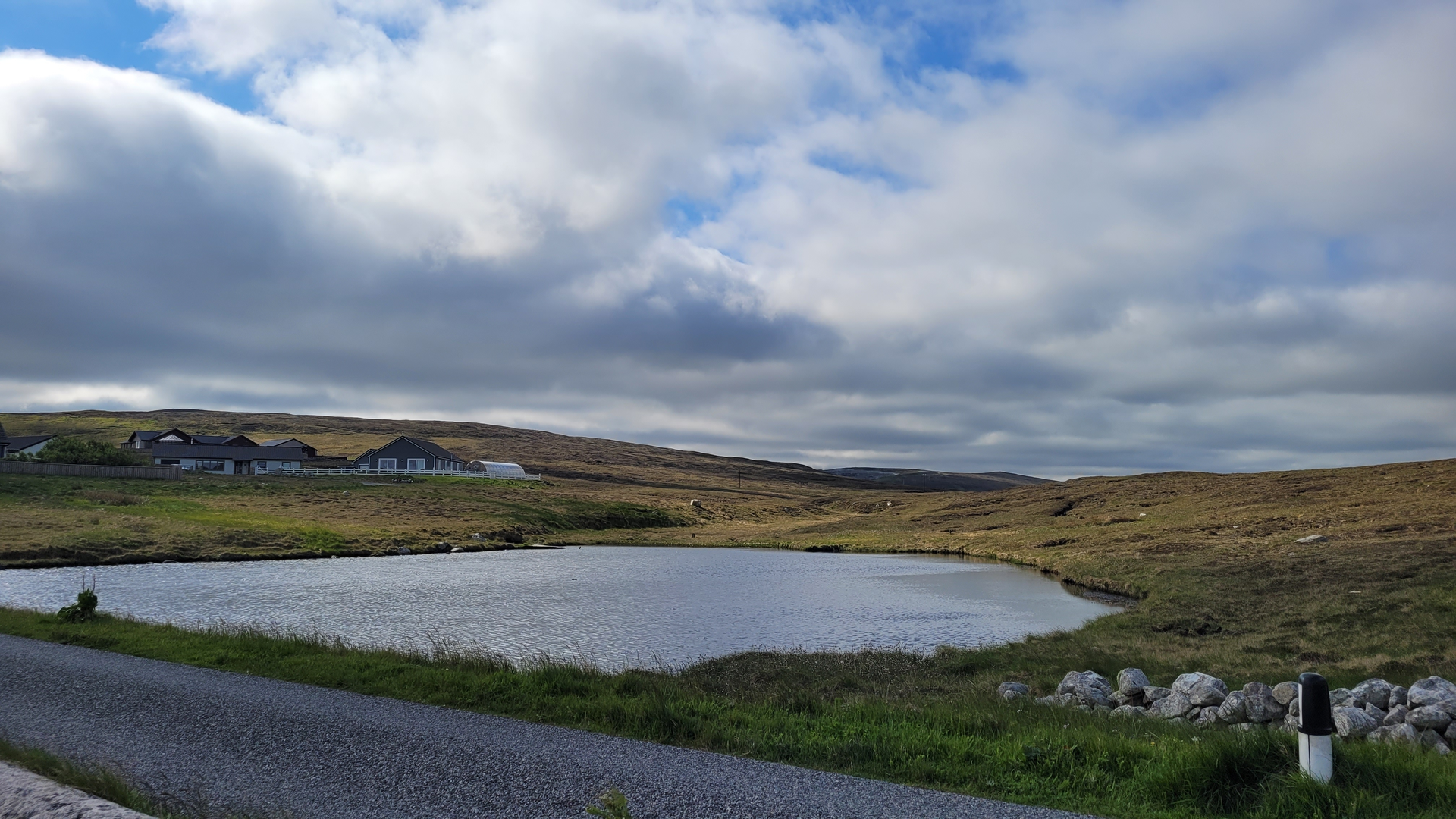
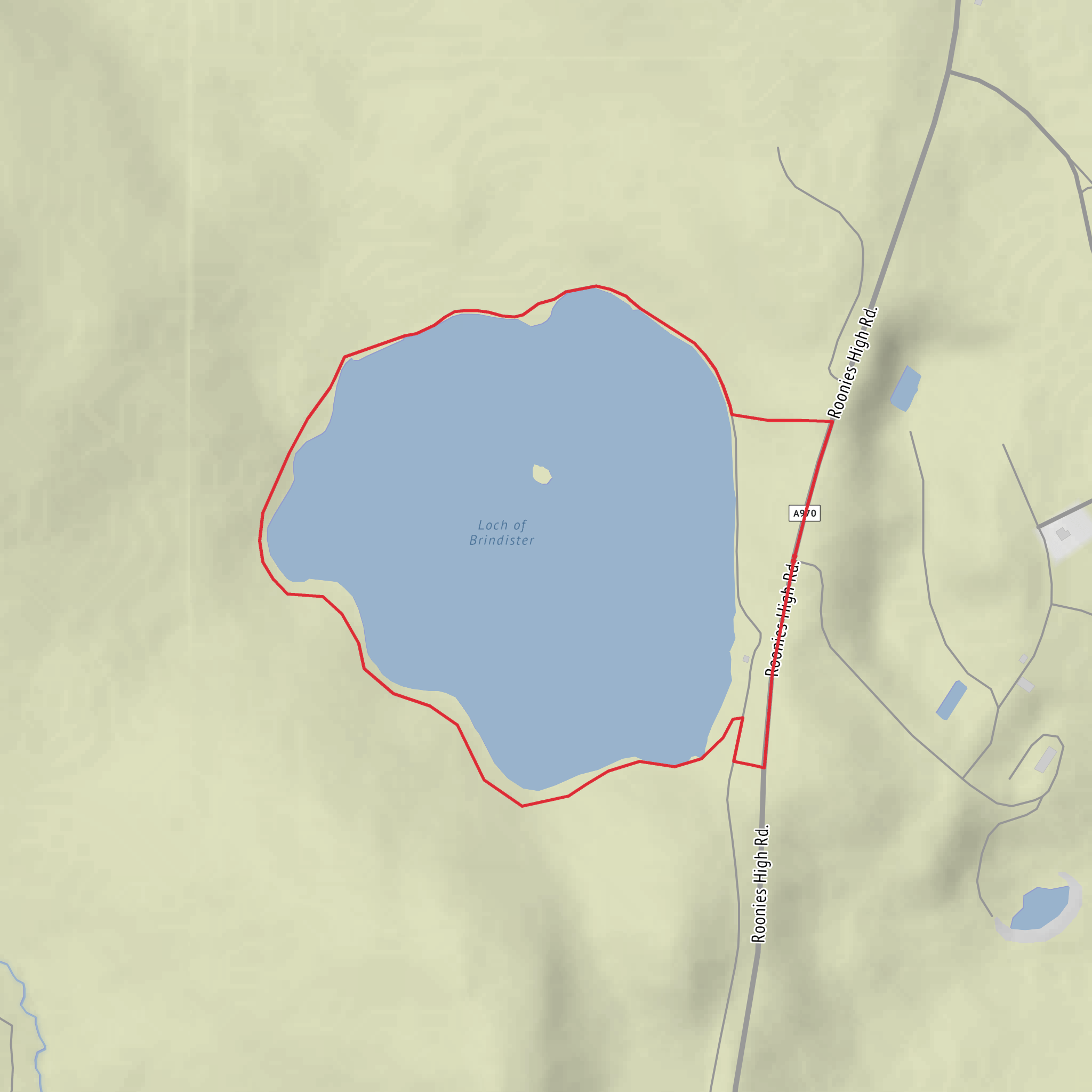
This easy loop around the Loch of Brindister is a short, low-level walk of about 2 km / 1.2 miles with virtually no climbing—roughly 0 m / 0 ft of elevation gain—making it a good choice for a relaxed outing, a family stroll, or a leg-stretcher in South Mainland, Shetland. The route sits near the small settlement of Brindister, a few miles southwest of Lerwick, and the loch itself lies close to the A970 with access from a peat track near the roadside. The nearest useful location reference is Brindister, near the A970 south of Lerwick, Shetland, postcode area ZE2 9EX. The loch’s recorded position is around OS grid HU 43263 37011, and it is recognized as a historic site as well as a natural feature. (trove.scot)
Because the terrain is broadly flat and the distance is modest, most walkers can expect straightforward going, but this is still Shetland terrain rather than an urban park path. Underfoot, expect a mix of rough track, grassy margins, and potentially wet or peaty patches, especially after rain. Even on an easy circuit, waterproof footwear is a sensible choice, and windproof layers are worth carrying because exposed lochside ground can feel much colder than the mileage suggests. Navigation is usually uncomplicated on a short loop like this, but it is still wise to check the route in HiiKER before setting out, particularly if visibility is poor or if you plan to extend the walk onto nearby ground.
What to expect on the route
The character of the walk is open, quiet, and distinctly Shetland: low moorland, freshwater, broad skies, and a sense of space rather than dramatic ascent. With almost no elevation change, the main appeal is the atmosphere of the loch and the surrounding landscape. The water sits in low-lying ground and is known as a shallow, clear loch with easy access from the roadside side of the area. (lets.fish)
As you move around the loop, the views are likely to shift between open water, rough grazing land, peatland textures, and the gently undulating backdrop of South Mainland. On calm days the loch can feel still and reflective; in windier weather it takes on a more exposed, elemental feel. This is not a route of constant landmarks every few hundred metres, but rather one where the interest comes from subtle changes in light, birdlife, and the archaeological significance of the setting.
Nature and wildlife
Freshwater lochs in Shetland often attract birdlife, and this one is also known for brown trout. The loch is managed for angling and is described as a small, shallow waterbody with good access and clear water. (lets.fish) That means walkers may see anglers near the shore at times, especially in favorable conditions.
Depending on season and weather, expect the possibility of seeing common moorland and wetland birds around the loch margins. In spring and summer, ground-nesting birds may be present in surrounding open land, so keeping to the clearest line of the path and controlling dogs carefully is important. The vegetation is typical of exposed northern ground: grasses, heath, boggy patches, and loch-edge plant life rather than woodland cover. Midges are usually less of an issue here than in many mainland Highland walks, but wind and rain can be much more significant factors.
Historical significance
One of the most interesting aspects of this walk is that the Loch of Brindister is not just scenic—it is archaeologically important. The site includes the Loch of Brindister dun, a scheduled monument recorded in the national historic environment record. (trove.scot) Research on Shetland’s island dwellings has also identified Loch of Brindister as an important site in discussions of Iron Age settlement, with antiquarian excavation work recorded there in the nineteenth century. (onlinelibrary.wiley.com)
In Shetland, duns and brochs are among the most distinctive prehistoric structures, generally associated with later Iron Age communities. Even if the remains are not visually dramatic in the way a standing broch is, the landscape around the loch carries that deep-time significance. Walking here gives a sense of how freshwater, defensible islets, and low but strategic ground mattered to earlier settlement patterns. The wider Brindister area also contains other historic remains, including Norse-period features nearby, reinforcing how layered the local history is. (trove.scot)
Getting to the start
By car, the simplest approach is from Lerwick, following the A970 south toward Brindister/Quarff. The loch lies close to the main road, and access is described as
Comments and Reviews
User comments, reviews and discussions about the Loch of Brindister Loop, Scotland.
average rating out of 5
0 rating(s)
