Download
3D Flyover
Add to list
More
6.0 km
~1 hrs 24 min
122 m
Loop
“Wind-lashed cliffs, puffins, and lighthouse history make this compact Shetland loop feel thrillingly elemental.”
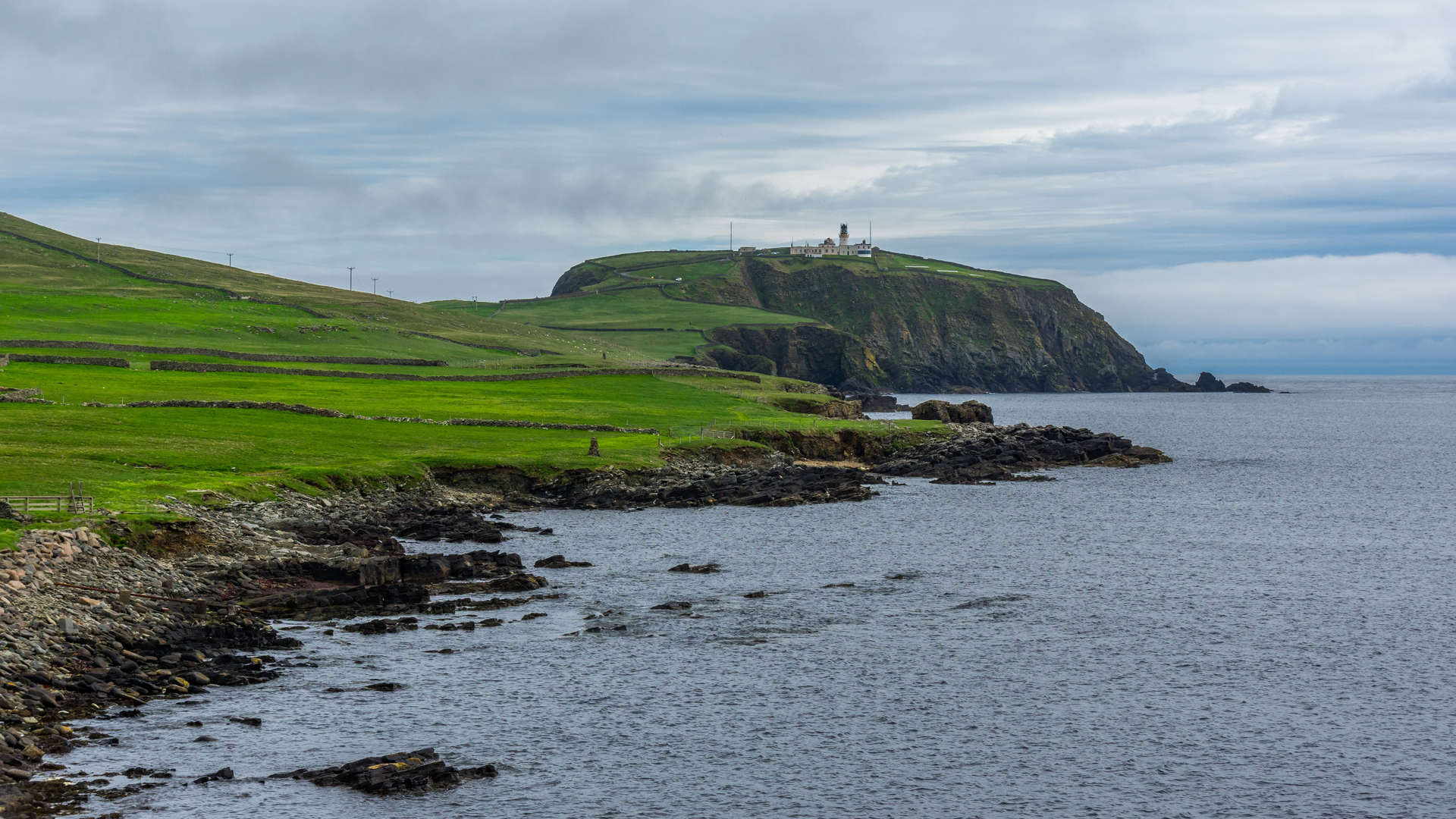
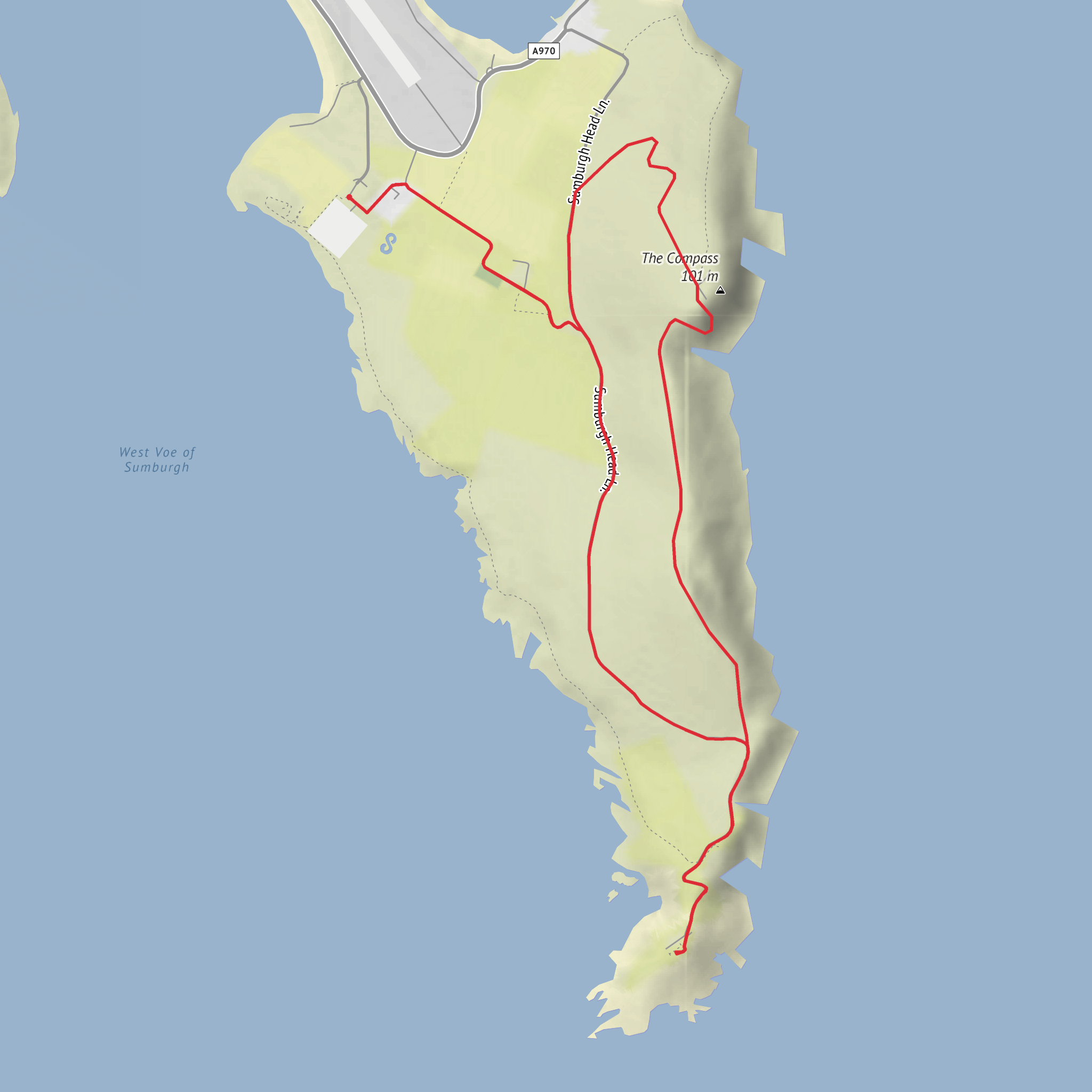
This roughly 6 km / 3.7 mile loop around the far south of Mainland Shetland is a compact coastal walk with outsized scenery: sea cliffs, open moorland, lighthouse views, wartime remains, and one of Shetland’s best-known seabird headlands. With only about 100 m / 330 ft of ascent, it is not a big climbing day, but the exposed terrain, uneven ground, and frequent wind make the route feel more serious than the numbers suggest. A medium rating fits well, especially in wet or gusty conditions.
The walk is best understood as a circuit based on Sumburgh Head Lighthouse, the nearest clear landmark for the hike start. If your original start point was left blank, this is the most practical and recognizable trailhead area: Sumburgh Head Lighthouse and Visitor Centre, near Grutness, Shetland, at the southern tip of the mainland. There is parking by the lighthouse area, and the route is also close to Jarlshof and Sumburgh Hotel, both useful landmarks when planning arrival. (shetland.org)
By car, most walkers approach from Lerwick by following the main southbound road toward Sumburgh, then turning through Grutness for the single-track road to the lighthouse parking area. By public transport, buses from Lerwick run south toward the airport and Sumburgh area; depending on the service, you may need to get off near Sumburgh Hotel, Jarlshof, or the airport and walk the final stretch to the headland. Because rural timetables can be limited, it is worth checking current connections in advance and plotting the approach in HiiKER before setting out. (meanderingwild.com)
The route begins on a dramatic note near the lighthouse, where the land narrows and the sea is never far away. Early on, expect a mix of short grassy sections, worn coastal paths, and open ground where the walking is straightforward in dry weather but can become slick after rain. The gradients are generally gentle, with the elevation gain spread out rather than concentrated in one hard climb. What makes the opening section memorable is not the effort but the exposure: cliffs drop sharply to the sea, and even on a calm day the wind can be strong enough to demand care near edges.
Terrain and route character
As the loop swings toward Compass Head, the landscape becomes broader and more open, with a sense of walking across the edge of the North Sea. This side of the route often feels quieter and wilder than the immediate lighthouse area. The path may be faint in places, so this is a walk where basic navigation awareness matters even though the distance is short. In mist, low cloud, or strong crosswinds, the route can feel much more committing than its mileage suggests. Waterproof footwear is useful, and an extra windproof layer is often more important here than on inland walks of similar length.
The loop’s modest ascent of around 100 m / 330 ft comes in small rises and undulations rather than one sustained hill. Most walkers will find the physical challenge manageable, but the route still rewards steady pacing and attention underfoot. If visibility is poor, the headland terrain can become disorienting, particularly where paths blend into grass. Using HiiKER to keep track of the loop is a sensible precaution.
Wildlife and coastal scenery
Sumburgh Head is one of Shetland’s standout wildlife sites. In the breeding season, the cliffs and grassy edges support large numbers of seabirds, with puffins, fulmars, guillemots, and shags among the species most often noted here. The lighthouse headland is especially well known for close puffin viewing in summer, and the surrounding sea can also offer chances of spotting marine life from the clifftops. (rspb.org.uk)
Because of the birdlife, this is a route where walkers should be prepared to stop often. Binoculars are worth carrying even on such a short outing. The best wildlife moments may come from simply pausing at safe viewpoints and scanning the ledges, sea surface, and air currents around the cliffs. In windy weather, watching fulmars and other seabirds glide along the cliff face can be as memorable as the views themselves.
The scenery is classic far-south Shetland: rough grass, heather tones, dark rock, and long sea horizons. On clear days, the sense of standing at the edge of the archipelago is a major part of the experience. On grey days, the walk takes on a more elemental character, with the lighthouse and cliffs feeling inseparable from the weather.
History and landmarks
The most important landmark is Sumburgh Head Lighthouse, built by Robert Stevenson in 1821 and recognized as the oldest lighthouse in Shetland. The site is not only scenic but historically significant, reflecting the long maritime importance of these dangerous waters at the meeting point of North Sea and Atlantic routes. The visitor centre interprets both the lighthouse story and the area’s natural
Surfaces
Asphalt
Unknown
Unpaved
Comments and Reviews
User comments, reviews and discussions about the Compass Head and Sumburgh Head Loop, Scotland.
average rating out of 5
0 rating(s)