Download
3D Preview
Add to list
More
5.6 km
~1 hrs 12 min
62 m
Loop
“A graceful Borders loop blends grand estate elegance, shady woodland hush, and Tweedside history.”
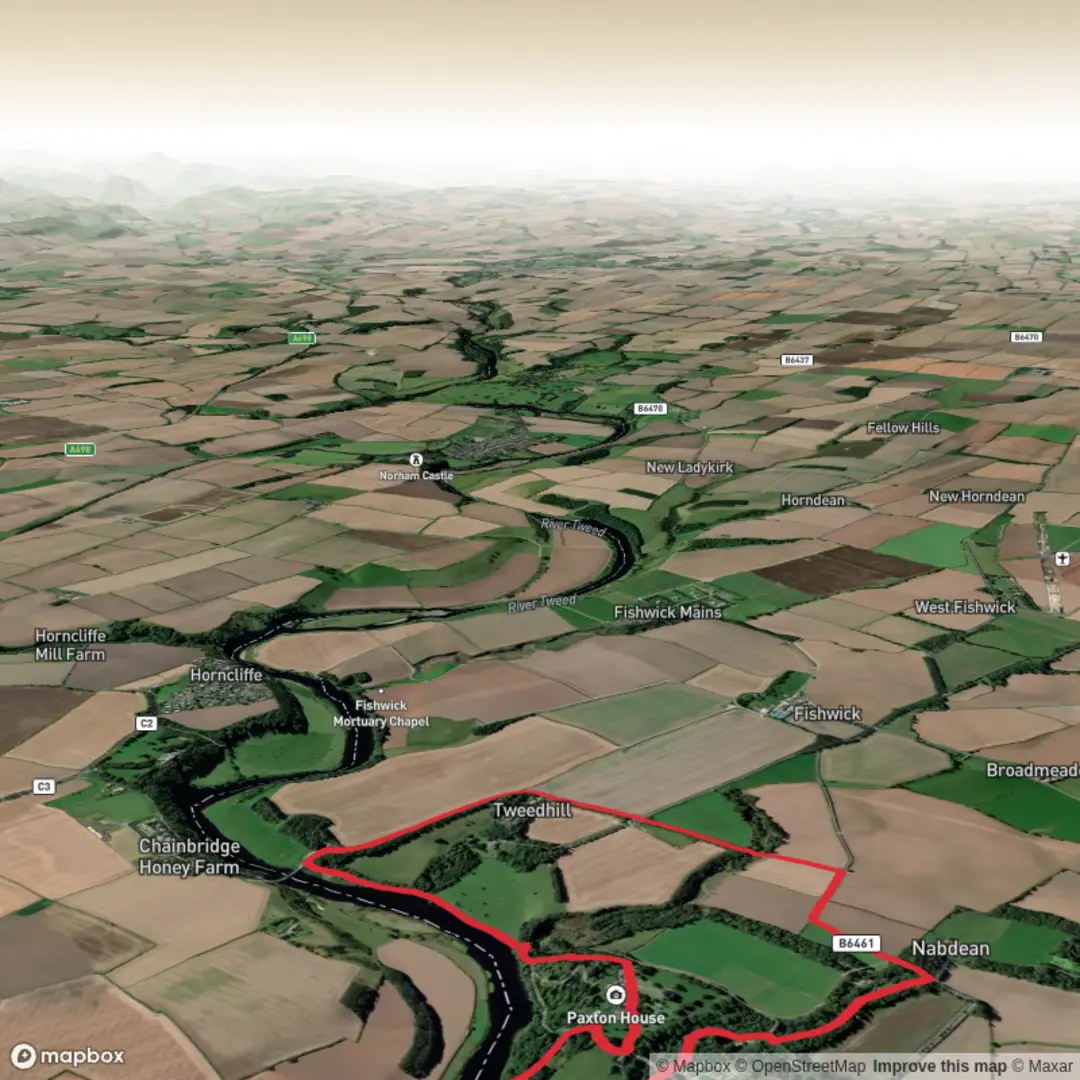
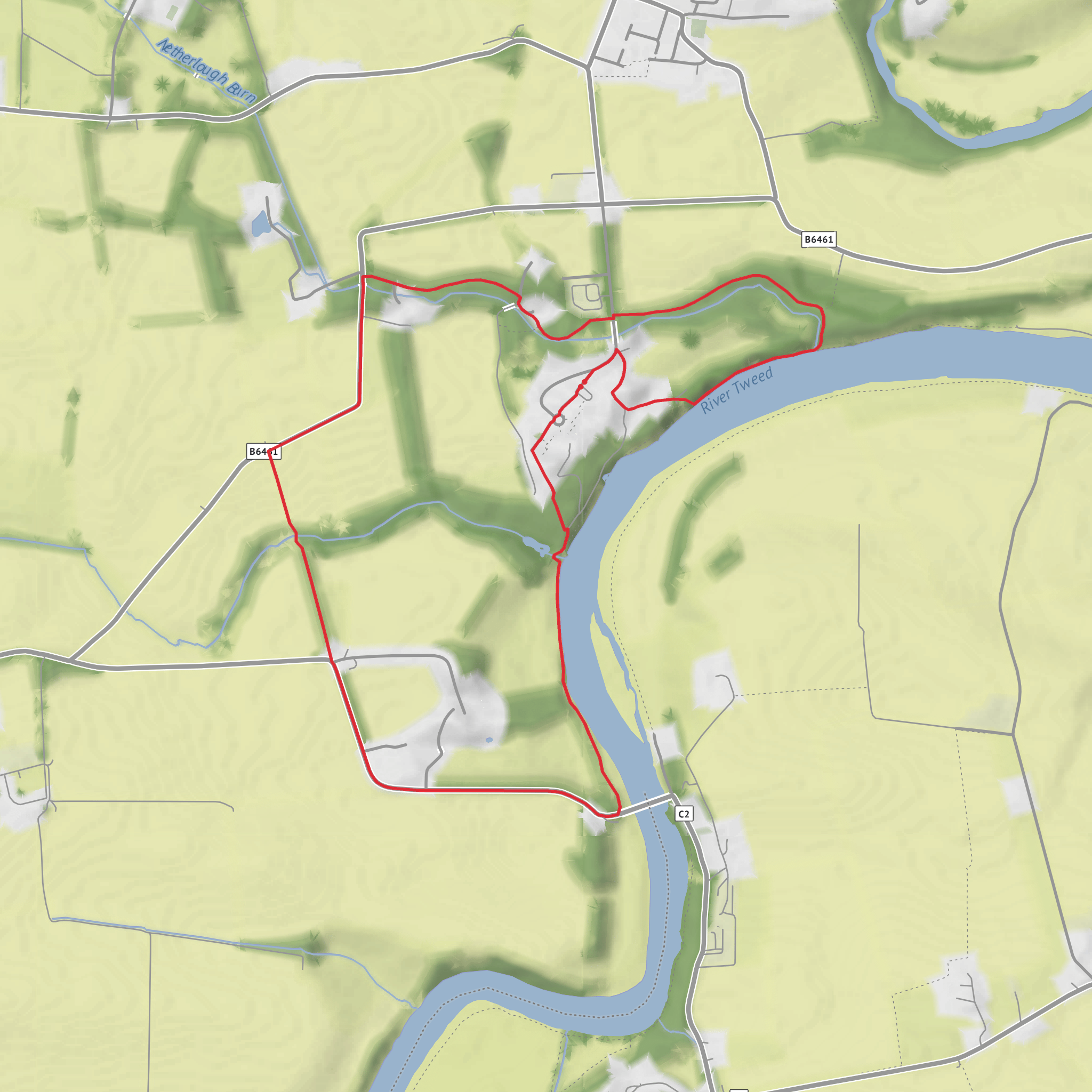
This easy loop of around 6 km / 3.7 miles with roughly 100 m / 330 ft of ascent makes a very approachable outing on the Scottish Borders side of the River Tweed, combining estate paths, woodland tracks, riverside walking and a memorable crossing near one of the most important historic bridges in Britain. The route is best understood as a scenic circuit based from Paxton House, Paxton, Berwick-upon-Tweed TD15 1SZ, a well-known landmark and the clearest practical start point for most walkers. Paxton House sits about 3 miles / 4.8 km from the A1 Berwick-upon-Tweed bypass, and the estate has visitor parking available. It is also about 5 miles / 8 km from Berwick-upon-Tweed railway station, while Borders Buses route 32 stops on the estate, making public transport possible with some timetable planning. (paxtonhouse.co.uk)
The walking is generally gentle, with the climbing spread out rather than concentrated in one punishing pull, so it suits families, casual walkers and anyone wanting a shorter half-day route. Expect a mixture of broad estate paths, woodland sections around the Linn Burn, and quieter riverside stretches where the ground can become muddy after rain. Good waterproof footwear is still worth having even on an easy-rated day, especially where tree cover keeps the ground damp and where leaf litter or roots can make footing a little slick. If you want digital route support, it is sensible to check the line on HiiKER before setting out. (paxtonhouse.co.uk)
What the route feels like
Starting near Paxton House, the first part of the walk has a very polished estate character: open lawns, mature trees, and glimpses of one of Scotland’s finest Palladian country houses. The house was commissioned in the late 1750s by Patrick Home of Billie and designed by John and James Adam, with later interiors and furnishings linked to Robert Adam and Thomas Chippendale. That means the walk begins in a landscape shaped not only by natural features but by Georgian ambition, architecture and estate planning. (paxtonhouse.co.uk)
As the loop moves away from the formal grounds, it becomes more intimate around the wooded dene and burn. This is where the “Linn Dean” element gives the route a different mood from a simple estate stroll. The paths here tend to feel more enclosed, with ravine-like woodland scenery, running water, and a cooler, shaded atmosphere. Paxton House’s own trail information highlights routes through the woods along the Linn Burn toward the River Tweed, passing features such as the boathouse and old salmon-netting station. (paxtonhouse.co.uk)
The elevation gain on this loop is modest, but the short rises and dips around the dene are what create most of the day’s climbing. None of it is especially technical, though care is useful on damp slopes, uneven roots and after windy weather when small branches may be down. Because the route is relatively short, many walkers will naturally slow down here to look into the burn, listen for birds, and enjoy the contrast between the formal estate and the wilder river corridor.
Landmarks and historical interest
Paxton House is the dominant historic landmark and gives the walk much of its identity. The estate today covers about 80 acres of grounds and gardens, including woodland, riverside paths and ornamental planting. Beyond its architecture, the site also carries a more complex history: Paxton House now interprets its links to Caribbean plantation wealth and slavery through exhibitions and research into the Home family’s colonial connections. That adds depth for walkers interested in the broader human story behind the landscape. (paxtonhouse.co.uk)
Another standout feature is the Union Chain Bridge, usually referred to locally as Union Bridge. Paxton House’s trail information describes it as Britain’s first suspension bridge, and other historical sources identify it as dating from 1820 and as the oldest vehicle-carrying suspension bridge in the world. It spans the River Tweed between Fishwick in Scotland and Horncliffe in Northumberland, so this area has a real borderland character
Surfaces
Unknown
Asphalt
Grass
Gravel
Ground
Wood
Comments and Reviews
User comments, reviews and discussions about the Paxton House, Linn Dean and Union Bridge Loop, Scotland.
average rating out of 5
0 rating(s)
