Download
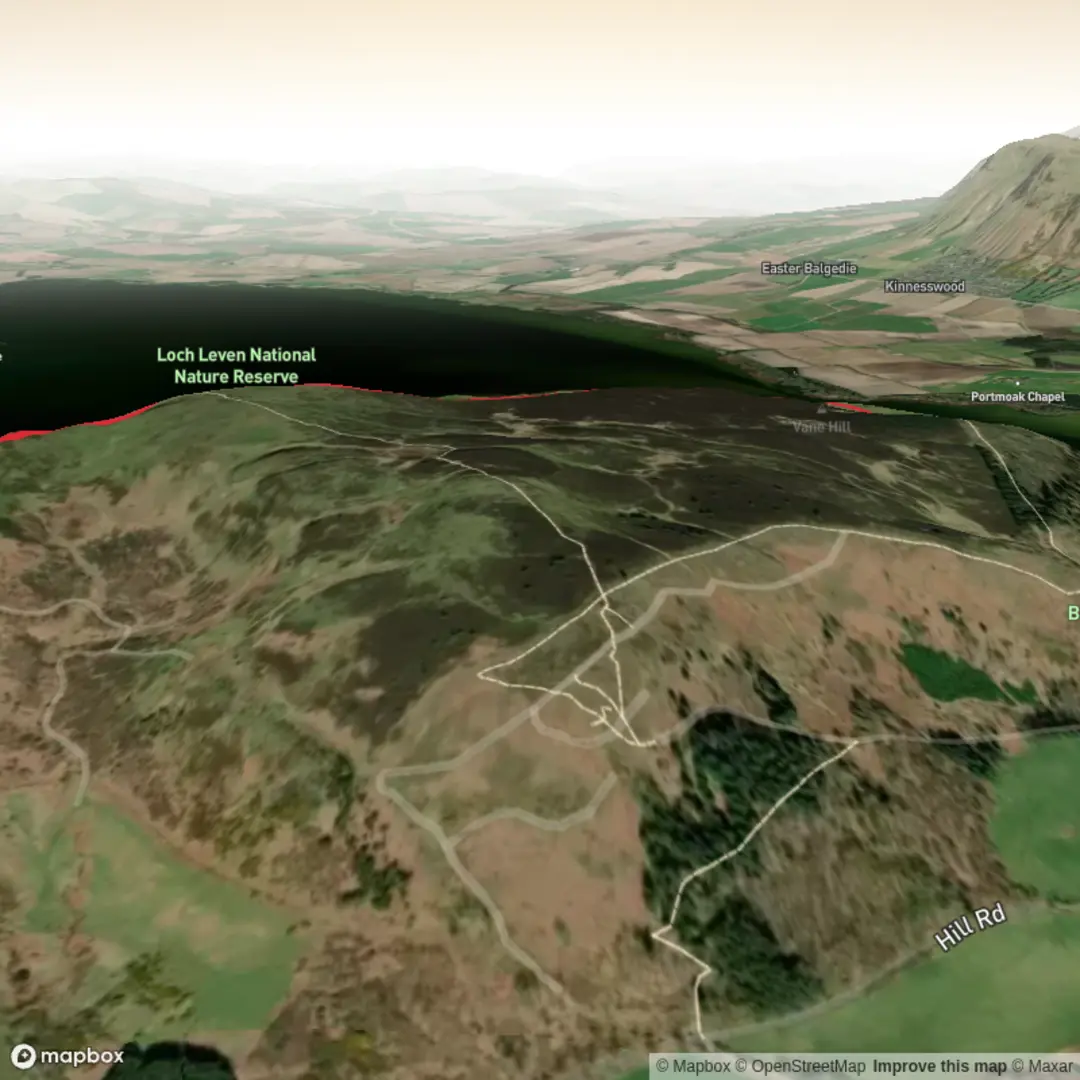
3D Flyover
Add to list
More
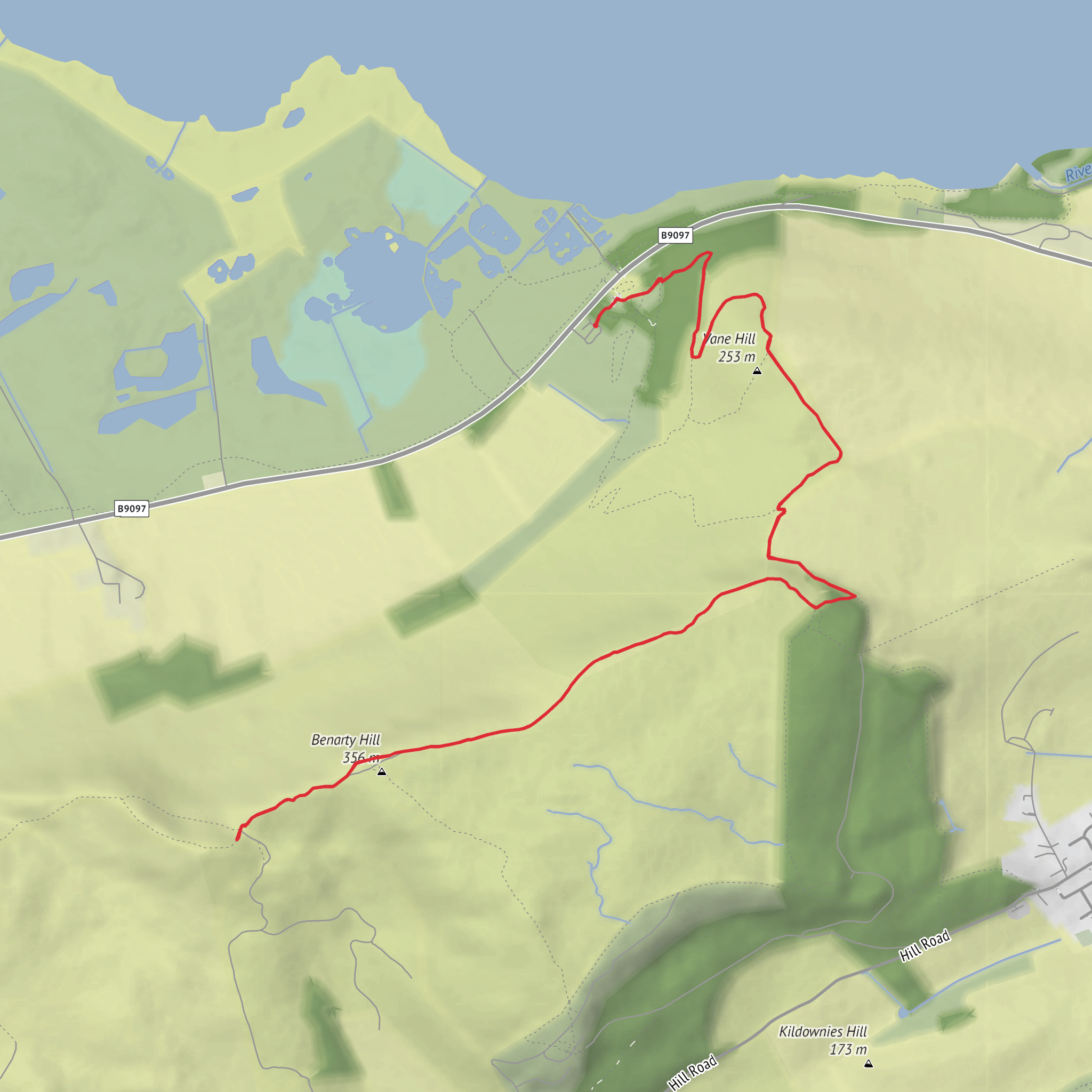
7.6 km
~2 hrs
298 m
Out and Back
“Steep woodland climbs give way to sweeping loch views and a haunting prehistoric ridge-top fort.”
This roughly 8 km / 5 mile outing over Benarty Hill and out toward the fort above Vane Hill packs a lot into a relatively short day: a steep woodland-and-hill climb, broad ridge walking, big views over Loch Leven and Fife, and the chance to visit the remains of an ancient hillfort. With around 300 metres / 985 feet of ascent, it sits well in the medium category, but the climbing is concentrated enough that it can feel tougher than the distance suggests, especially in wet or windy weather.
The route is usually associated with the north side of the hill above Loch Leven, starting near the RSPB Loch Leven reserve at Vane Farm, now generally known as the RSPB Loch Leven visitor area near Kinross. That is the nearest clear landmark for the start, and it gives easy access to Vane Hill and the paths rising onto Benarty’s long ridge. Walkhighlands describes this approach as climbing the steep slopes behind the visitor centre, while local route information also notes Vane Hill as a lower viewpoint beneath the main bulk of Benarty. (walkhighlands.co.uk)
Expect the first section to warm the legs quickly. From the visitor area, the path heads up through mixed woodland and onto steeper ground, gaining height fast. The climb is the main effort of the day, and although the paths are generally clear, some sections can be muddy, rooty, or slippery after rain. Once you break out higher up, the walk becomes much more open, with the ridge giving increasingly wide views across Loch Leven, the Lomond Hills, the Cleish Hills, and south toward the Firth of Forth on a clear day. Forestry and Land Scotland highlights these panoramic views as one of the area’s main draws. (forestryandland.gov.scot)
Terrain and what to expect
For an 8 km / 5 mile circuit or out-and-back variation, most hikers should allow around 2.5 to 4 hours depending on pace, stops, and ground conditions. The route combines firm paths, steeper hill tracks, and rougher ridge sections. There may be short uneven stretches where stones, exposed roots, or worn earth require a bit more care. In windy conditions the ridge can feel very exposed, and in mist the broader hill can be less obvious to read than it first appears, so carrying HiiKER for navigation is sensible even on a relatively short walk.
The ascent of about 300 metres / 985 feet is not extreme, but it comes in a fairly direct pull. That means sturdy footwear is worthwhile, and trekking poles can help on the descent if the ground is greasy. In winter or during icy spells, this hill can become much more serious than its height suggests.
Landmarks, views, and the fort
Benarty Hill rises to about 356 metres / 1,168 feet and is one of the most distinctive hills in the area, sometimes nicknamed the “Sleeping Giant” because of its profile. From the ridge, the landscape opens dramatically: Loch Leven lies immediately below to the north, with the Lomond Hills beyond, and the lower-lying towns and farmland of west Fife stretching south and east. (fifewalking.com)
A major point of interest on this walk is the fort on the ridge west of the main summit, often referred to as Benarty or Castle Craig hillfort. The surviving remains are subtle rather than monumental, so it helps to know you are looking for earthworks and defensive positioning rather than standing walls. The site occupies a naturally strong position, with steep slopes dropping toward Loch Leven and a gully helping to defend the approach from higher ground. Records from the Atlas of Hillforts and Historic Environment material summarized by Trove Scotland place the fort on a rocky knoll along the ridge and identify it as an important prehistoric defended site. (hillforts.arch.ox.ac.uk)
That historical layer adds real depth to the walk. This is not just a viewpoint hill: it has been used strategically for thousands of years. The fort’s position makes immediate sense when you stand there and look over the surrounding country, especially the routeways around Loch Leven and the natural defensive strength of the ridge.
Nature and wildlife
The lower slopes around Vane Hill and the approach from the Loch Leven side mix woodland, open hillside, and lochside habitats. That variety means the walk can be rewarding for wildlife as well as scenery. The nearby RSPB Loch Leven reserve is especially well known for birdlife, and even if your route mainly heads uphill, the surrounding area is rich in wetland and farmland species. Depending on season, hikers may notice waterfowl on the loch, raptors using the updrafts, and smaller woodland birds in the lower sections. (walkhighlands.co.uk)
On the hill itself, expect heathery and grassy ground higher up, with gorse and scrub in places lower down. In warmer months there can be plenty of insect activity, while autumn often brings richer colour across the woods and clearer long-distance views after cooler weather moves in.
Getting to the
Surfaces
Unknown
Gravel
Grass
Asphalt
Comments and Reviews
User comments, reviews and discussions about the Benarty Hill and Fort via Vane Hill, Scotland.
5.0
average rating out of 5
1 rating(s)
