Download
3D Flyover
Add to list
More
6.5 km
~1 hrs 19 min
18 m
Out and Back
“Stronsay’s clifftops weave arching seas, seabirds, and ancient echoes into a short, wind-bright adventure.”
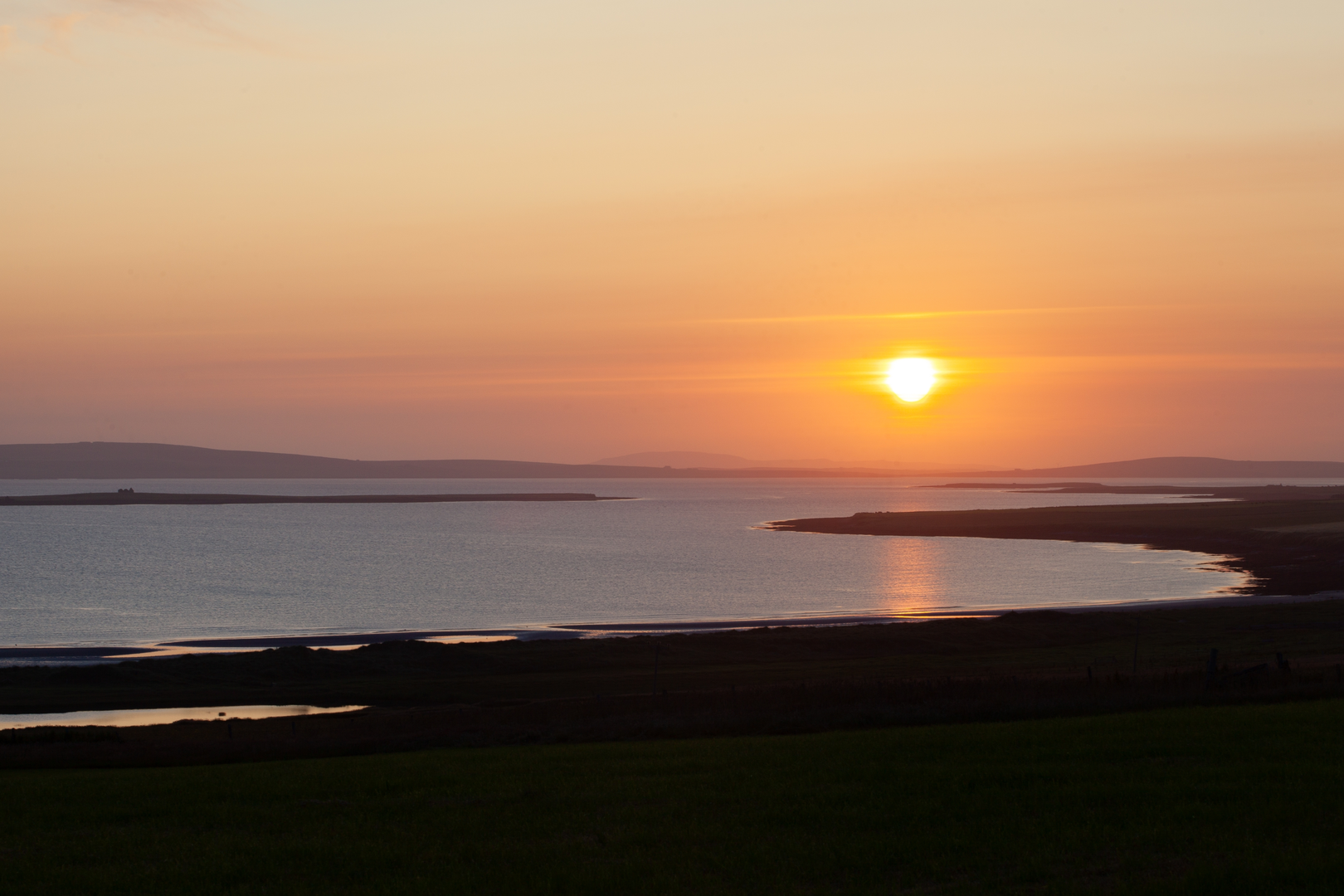
This easy coastal walk on Stronsay in Orkney packs a lot into roughly 6 km / 3.7 miles, with almost no real climbing overall—expect only gentle undulations and a total ascent that feels close to 0 m / 0 ft for most walkers. The route is best thought of as a short outing to some of Stronsay’s most striking sea-cliff scenery, centered on the Vat of Kirbuster, Burgh Head, and The Brough, with wide sea views, archaeological interest, and good opportunities for spotting seabirds. The Vat of Kirbuster is a collapsed sea cave with a dramatic natural arch, widely described as one of Orkney’s finest coastal rock features. (orkney.com)
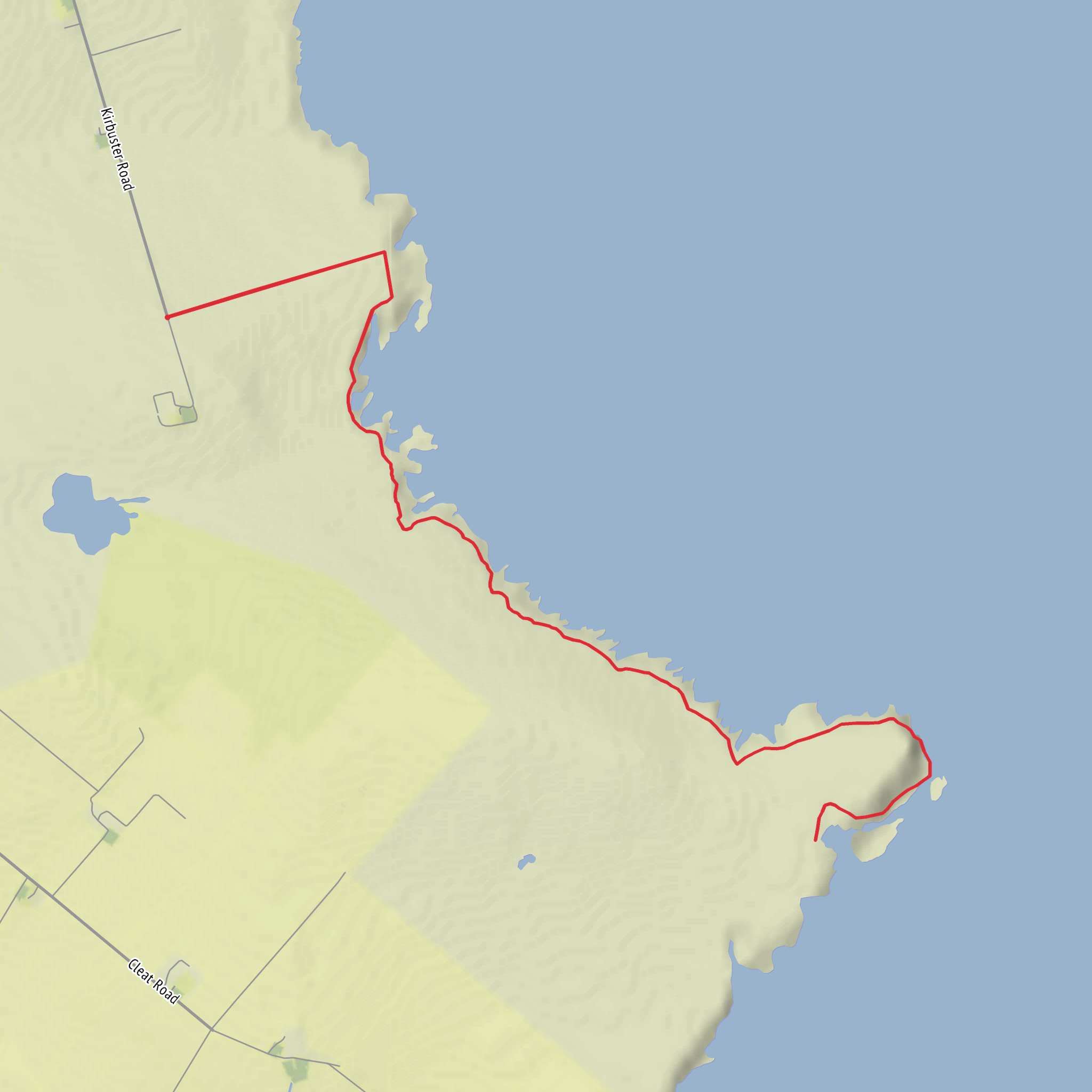
The walk starts near the Vat of Kirbuster car park, close to Kirbuster Farm, Stronsay, Orkney, at the end of the minor road signed for the site. That is the clearest known landmark for the trailhead. Parking is available there, and the route begins on a hard-surfaced path before reaching rougher coastal ground. If arriving by car, you would first need to reach Stronsay via ferry from mainland Orkney, then drive across the island to the signed parking area near Kirbuster. If using public transport, the key point is that Stronsay is served through its ferry connection, but the Vat of Kirbuster is some distance from Whitehall Pier, so onward local transport or a taxi is usually the practical option rather than trying to walk from the pier. (orkney.com)
The opening section is straightforward and suitable for most walkers with a basic level of fitness. From the parking area, the path heads out for about 0.5 km / 0.3 miles toward the coast through gates and along an easy approach. Once you reach the cliff edge, the character of the walk changes immediately: low maritime heath, open sea, and exposed cliff scenery dominate the route. Within another 0.4 km / 0.25 miles, you reach the Vat itself, so the main geological highlight comes very early. This makes the outing rewarding even for anyone planning only a shorter there-and-back version. (orkney.com)
Terrain and what to expect
Although the route is graded easy, it is not an urban-style promenade. The first stretch is the simplest underfoot, but beyond that you should expect coastal grass, uneven ground, short heath, occasional tussocky patches, and exposed cliff-top walking. In wet weather, some sections can become soft or slippery, and strong winds can make the exposed edges feel much more serious than the distance suggests. The route is largely level, but the ground can be lumpy enough to slow your pace. Good waterproof footwear is sensible even on a short day. (orkney.com)
Care is needed near the cliff edges throughout. The cliffs around the Vat are crumbly in places, and the safest viewpoint is from the crossing near the small burn flowing into the feature rather than from unstable edges. If visibility is poor, keep well back from the brink and rely on HiiKER for route awareness rather than drifting toward the cliff line. (orkney.com)
Landmarks, wildlife, and historical interest
The standout landmark is the Vat of Kirbuster, formed when the roof of a sea cave collapsed, leaving a huge bowl-like inlet and a natural arch open to the sea. It is one of those places where the geology explains the landscape instantly: Atlantic wave action has carved, weakened, and then partially destroyed the rock, leaving a feature that feels both enclosed and exposed at the same time. (orkney.com)
Continuing south toward Burgh Head, the route stays close to the coast and passes over open clifftop ground. Burgh Head itself is modest in height—around 37 m / 121 ft—but because the surrounding land is low, it still gives expansive views over the sea and neighboring islands. On clear days, this section feels much bigger than the map suggests. (orkney.com)
Just off the southern side of Burgh Head lies The Brough, a broad sea stack with visible archaeological remains. Stonework and upright slabs have been noted there, and it is thought to have been a prehistoric fortified site when it was still connected to the mainland. Some accounts also describe later religious use, suggesting the stack may at one point have served as a hermitage. Either way, it is a place where geology and human history overlap: a naturally defensive outcrop that people appear to have adapted for occupation or retreat. (orkney.com)
Wildlife is one of the pleasures of this walk. The cliffs and ledges support fulmars and shags, and the coastal vegetation can be bright with maritime flowers such as thrift in season. Around the bays and geos, seals are also a possibility, especially in quieter stretches of shoreline. Bring binoculars if
Comments and Reviews
User comments, reviews and discussions about the Vat of Kirbuster, Burgh Head and The Brough, Scotland.
average rating out of 5
0 rating(s)
