
Download
3D Flyover
Add to list
More
3.5 km
~41 min
0 m
Loop
“A breezy machair loop with Atlantic drama, wildflowers, and birdlife, though exposed ground may challenge some walkers.”
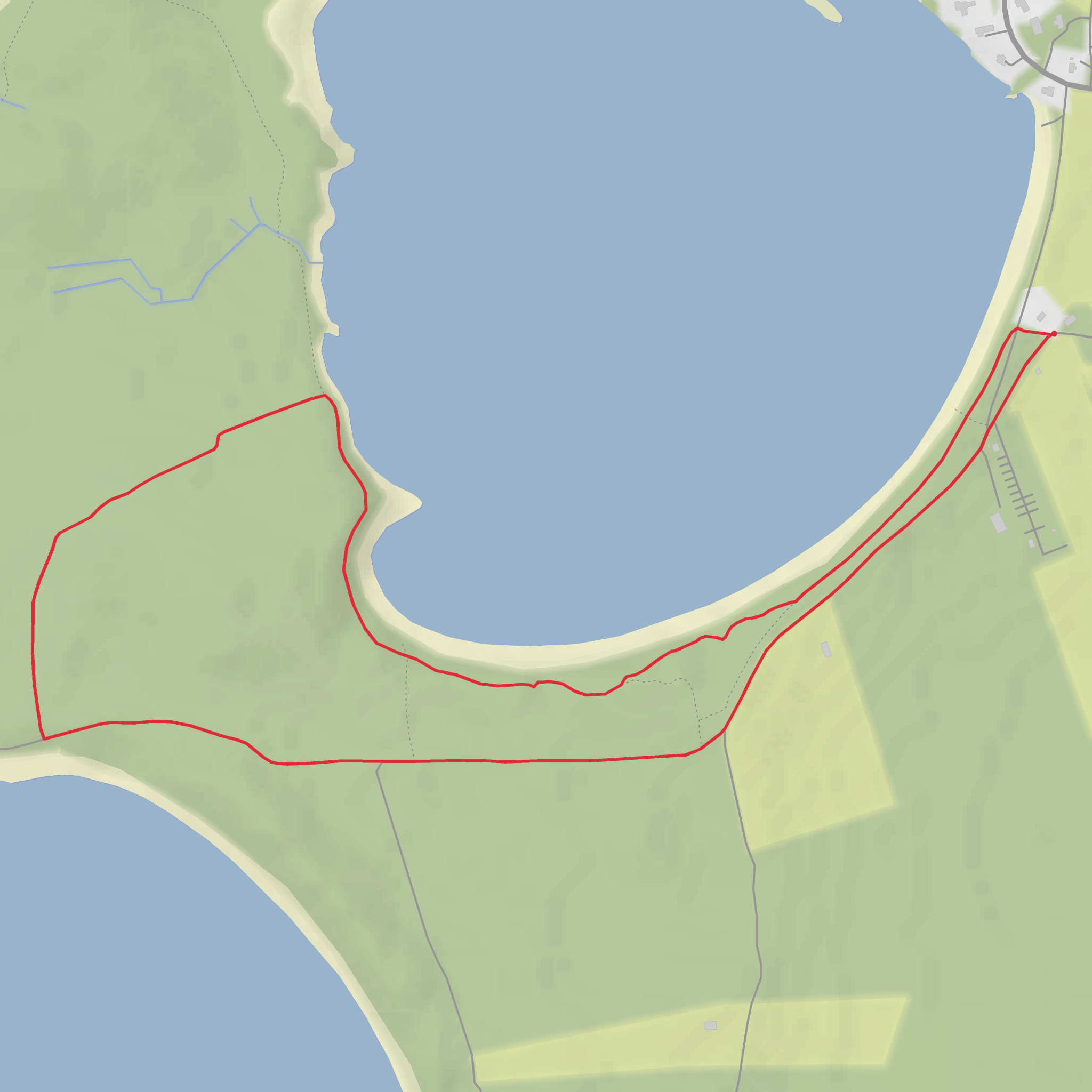
This easy coastal loop explores the Balranald area on North Uist, Outer Hebrides, beginning near the RSPB Balranald Nature Reserve visitor centre, Balranald, Isle of North Uist, HS6 5DL. That is the nearest clear start landmark and address for this walk, with parking available at the visitor centre. The route is short at about 3 km / 1.9 miles with virtually no ascent—around 0 m / 0 ft, so it suits walkers looking for a relaxed outing rather than a strenuous hike. (rspb.org.uk)
The ground is mostly flat, but “easy” here still means paying attention to the Hebridean setting. Expect a mix of sandy shore, short grass, machair, rougher coastal sections, and potentially soft or wet patches depending on recent weather and tides. Even on a short walk, sturdy footwear is useful because the surface can change quickly from firm track to uneven natural ground. Wind exposure is often the main challenge rather than gradient, and in poor weather the coast can feel much wilder than the distance suggests. The wider Balranald reserve trail network is described as mainly flat but natural and uneven in places, with stony and soft or wet areas, which is a good guide to what to expect here as well. (rspb.org.uk)
What the route feels like
From the Balranald side, the loop heads out across one of North Uist’s most distinctive landscapes: machair, the flower-rich coastal grassland unique to parts of western Scotland and Ireland. This is not a mountain walk or a forest trail; it is an open, sea-edged ramble where the sense of space is a major part of the experience. The terrain is broad and low-lying, with long views over beach, dunes, rocky foreshore, and Atlantic water. RSPB describes Balranald as a landscape of sweeping sandy beaches, rockpools, wind-shaped dunes, and wildflower-rich grassland, and that is exactly the character hikers should prepare for. (rspb.org.uk)
One of the key landmarks is Tràigh nam Faoghailean, a beautiful sandy beach on the reserve’s western side. The beach is broad and open, and the surrounding coast has a mix of pale sand and darker rock, giving the loop a constantly changing shoreline character. Geological work on the Uists describes Tràigh nam Faoghailean as an exceptionally large intertidal beach, with sand that has helped build the foredunes and the broad headland of Aird an Rùnair. (research.st-andrews.ac.uk)
As the loop reaches Aird an Rùnair, the westernmost point of North Uist, the scenery becomes more exposed and more dramatic. This headland is especially well known for sea views and birdlife, with open outlooks toward the Atlantic and, on clear days, views toward offshore islands and the hills farther south. Sources describing the area note views to the Monach Isles and toward South Uist, which adds a strong sense of remoteness despite the walk’s short length. (beachcottagehebrides.com)
Wildlife and seasonal highlights
This is one of the best short walks in the Uists for wildlife interest. Balranald is a major RSPB reserve and an important site for traditional crofting landscapes that support breeding birds. Species regularly associated with the reserve include corncrake, lapwing, redshank, dunlin, ringed plover, oystercatcher, snipe, skylark, twite, reed bunting, and corn bunting, while porpoises are sometimes seen offshore. (rspb.org.uk)
The headland at Aird an Rùnair is particularly noted as an excellent place for passage migration and seawatching, especially for skuas during migration periods. Bird-focused sources describe it as one of Britain’s premier seawatching spots in spring for species such as Pomarine Skua and Long-tailed Skua. Even hikers who are not dedicated birders should keep binoculars handy, because the combination of machair, shore, and open sea means wildlife can appear almost anywhere along the loop. (visitouterhebrides.co.uk)
In late spring and summer, the machair is often at its most striking, with low-growing wildflowers spread across the grassland. That same season also brings the greatest sensitivity for nesting birds. Dogs should be kept under close control, especially during the breeding season from 1 April to 15 August, because the reserve supports ground-nesting species and also has livestock present
Surfaces
Unknown
Ground
Comments and Reviews
User comments, reviews and discussions about the Traigh nam Faoghailean and Aird An Runair Loop, Scotland.
average rating out of 5
0 rating(s)


