
Download
3D Flyover
Add to list
More
1.8 km
~22 min
18 m
Out and Back
“A gentle Hebridean wander through wind-brushed wetlands, where still waters and ancient echoes linger.”
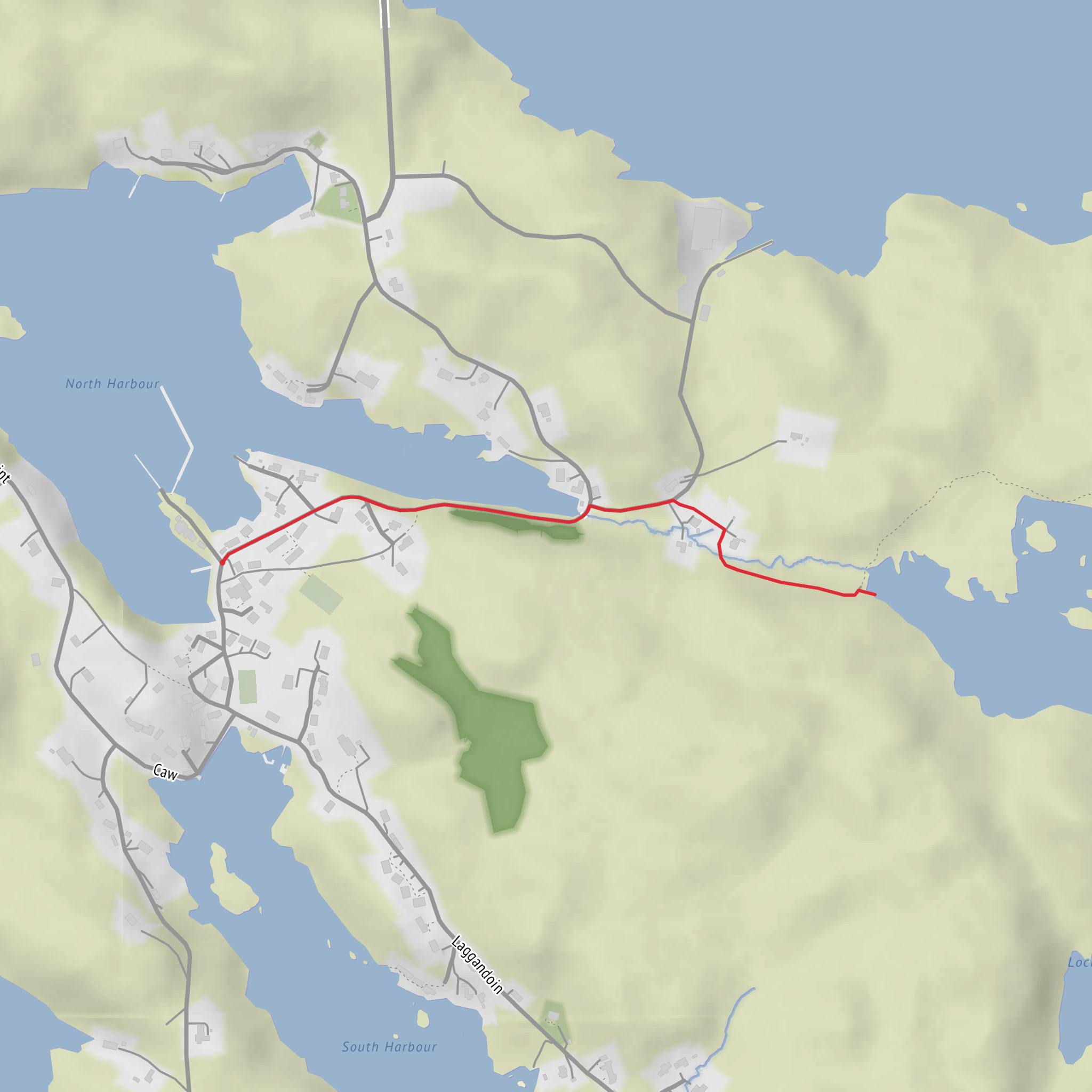
This short out-and-back to Loch an Duin is an easy Hebridean walk of about 2 km / 1.2 miles with virtually no climbing, making it well suited to families, casual walkers, and anyone looking for a gentle outing with strong scenery and a sense of place. Expect open ground, lochside views, and a route where the landscape does most of the work: broad skies, water, low-lying moor and machair, and the quiet, exposed character that makes North Uist feel so distinctive. Although the elevation gain is effectively nil, the ground can still feel uneven underfoot in places, especially if it is wet, so waterproof footwear is often more useful than the easy grading might suggest.
The walk is near Loch an Duin on North Uist in the Outer Hebrides, with the nearest practical landmark for most visitors being Lochmaddy, North Uist, the island’s main settlement and ferry port. Loch an Duin itself is part of a wider protected wetland landscape on and near the northeastern side of North Uist. NatureScot identifies the area as a Site of Special Scientific Interest, and the wider loch system is also recognized as a Ramsar wetland of international importance. It is noted for saline lagoons, tidal channels, breeding birds, and otter habitat. (nature.scot)
What the walk feels like
With only around 2 km / 1.2 miles to cover there is no long approach, so the character of the route reveals itself quickly. The terrain is generally flat and open, and the sense of exposure can be greater than the distance suggests. On calm days this is a very relaxed outing; in wind or rain, even a short walk can feel more serious because there is little shelter. Hikers should be prepared for soft or boggy patches, damp grass, and possibly rougher sections near the loch edge or old crossing points.
Navigation is usually straightforward on a route this short, but in poor visibility or if paths become faint across open ground, it is still worth checking the line carefully on HiiKER. The easy rating comes more from the short distance and lack of ascent than from manicured trail surfaces, so it helps to think of this as a simple island walk rather than a paved promenade.
Landmarks, wildlife, and atmosphere
Loch an Duin is not just a single ordinary loch but part of a complex coastal and inland water system of freshwater, brackish water, sea lochs, channels, and small islands. That mix gives the area a rich, shifting character, with changing light, reflective water, and a strong chance of seeing birdlife. The protected site supports nationally important breeding birds, including common terns, and is also recognized as habitat for otters. (en.wikipedia.org)
Depending on season and tide, hikers may notice waders, waterfowl, and seabirds moving between the lochs and shore. In summer, insect life and wildflowers can add color to the surrounding ground, while cooler months bring a starker, more elemental feel. Because this is a sensitive wetland environment, it is best to keep dogs under close control, avoid disturbing nesting birds, and stay alert to soft margins around the water.
One of the most interesting visual features in the area is the presence of small islets and ancient-built features associated with a dun or defended island site. Historic records note a small rocky islet near the loch with remains of a defensive wall and a causeway, showing that people were using and fortifying these watery landscapes many centuries ago. (trove.scot)
Historical significance
This is one of those short walks where the history can feel larger than the mileage. The name “dun” in Scotland usually points to a fortified site, and records for Loch an Duin describe prehistoric remains including a dun and causeway. These island strongholds were often chosen for defense, visibility, and control of local movement through the landscape. Even where the masonry is now fragmentary, the setting still explains the choice: water as protection, low islands as natural strongpoints, and wide views across the surrounding lochs. (trove.scot)
North Uist more broadly is rich in archaeology and Gaelic cultural history, and this walk fits into that wider pattern of settlement shaped by water, crofting land, and coastal access. The result is a route that combines natural interest with a tangible sense of deep time.
Getting to the start
By car, the simplest approach is usually via Lochmaddy, North Uist, which is the main arrival point for many visitors coming by ferry. From there, local island roads provide access toward the loch area. Parking arrangements at small Hebridean trailheads can be informal, so use obvious
Surfaces
Unknown
Gravel
Asphalt
Comments and Reviews
User comments, reviews and discussions about the Loch an Duin Out and Back, Scotland.
average rating out of 5
0 rating(s)


