Download
3D Flyover
Add to list
More
14.4 km
~3 hrs 4 min
118 m
Point-to-Point
“A breezy coastal ramble threads harbours, cliffs, bays and old railway paths beneath Moray’s ever-changing sea horizon.”
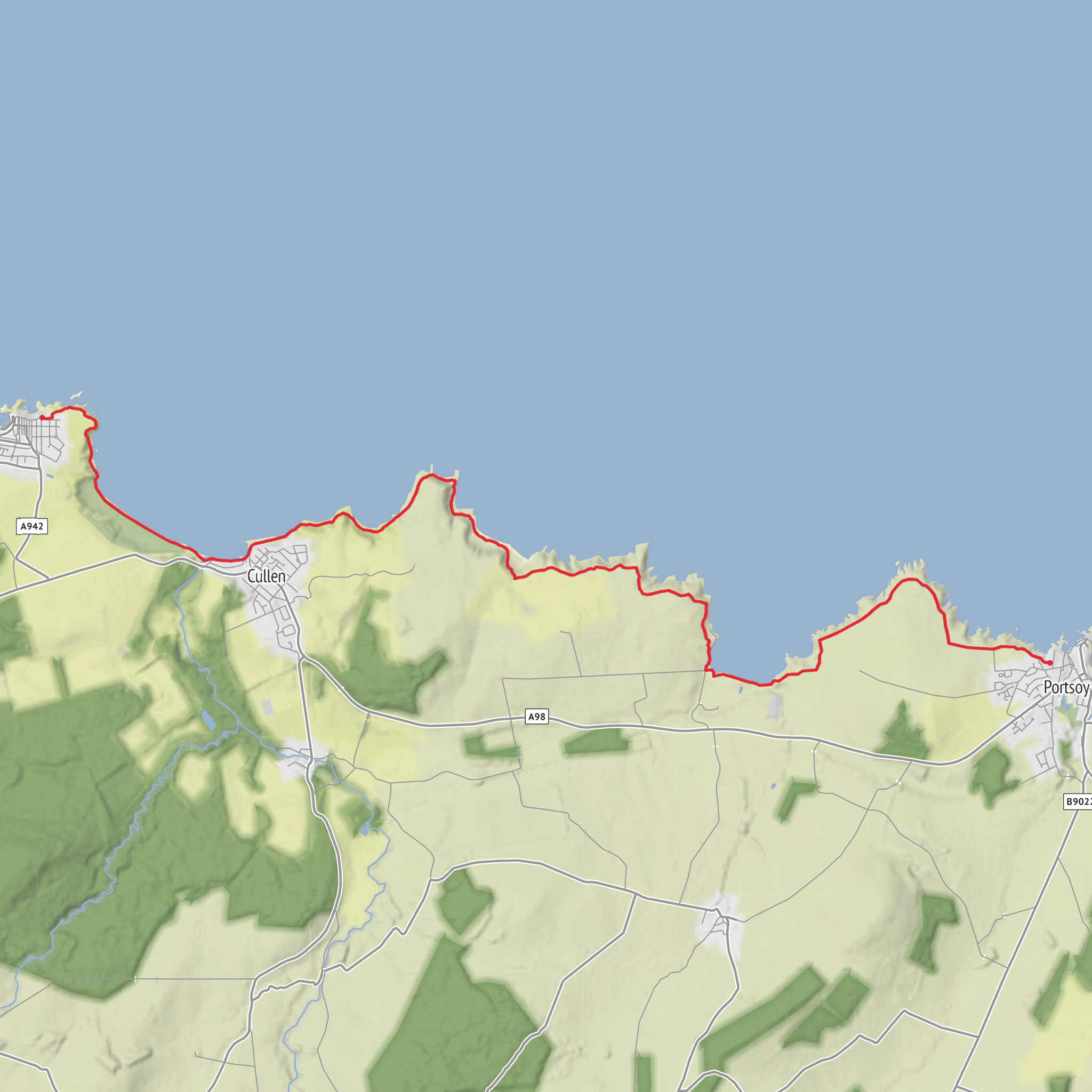
This easy coastal point-to-point walk runs for about 14 km / 8.7 miles with only around 100 m / 330 ft of ascent, but it still feels varied because the ground changes often: village pavements, old railway path, clifftop sections, sandy bays, and short uneven stretches above rocky shore. It links a string of Moray Firth landmarks, beginning near Portknockie Harbour and Bow Fiddle Rock viewpoint, Portknockie, Moray, Scotland, and finishing in Portsoy Harbour, Shorehead, Portsoy, Aberdeenshire, Scotland. The route follows one of the most scenic parts of the Moray coast, passing the Cullen quartzite cliffs, Cullen Bay, Logie Head and Sandend Bay before reaching Portsoy’s historic harbour. (seemoray.co.uk)
The walking is generally straightforward and the elevation is modest, so this suits hikers looking for a relaxed coastal day rather than a strenuous outing. What makes it memorable is the constant exposure to sea views and the number of natural and historic features packed into a relatively short distance. Even on an easy route, it is worth planning for wind, sea spray, and slippery ground, especially after rain or in rough weather. Some sections near the cliff edge and above rocky coves need more care than the distance and ascent figures suggest. (morayways.org.uk)
Getting to the start
For drivers, Portknockie is easiest to reach by road via the A98 and local roads through the village. A practical place to begin is around Portknockie Harbour / Bow Fiddle Rock access area, which puts you close to the coast immediately and avoids unnecessary road walking at the start. At the far end, Portsoy has parking around the harbour and village streets, making it workable as a one-car walk if you arrange a return bus. (aberdeenshireharbours.co.uk)
By public transport, the most useful combination is usually the 309 bus for Portknockie and the Stagecoach 35 for Portsoy and Cullen. Current timetable sources show the 309 serving Portknockie, Station Court, while the Stagecoach 35 runs along the coast through Cullen and Portsoy between Elgin and Aberdeen. That makes it possible to start in Portknockie and return from Portsoy by bus with a change, often via Cullen depending on the day and direction of travel. The nearest rail connections are not at the trail itself; this coast’s former railway is long closed, and much of your walk uses or parallels that old line. Check same-day times before setting out, as rural services can be limited. (bustimes.org)
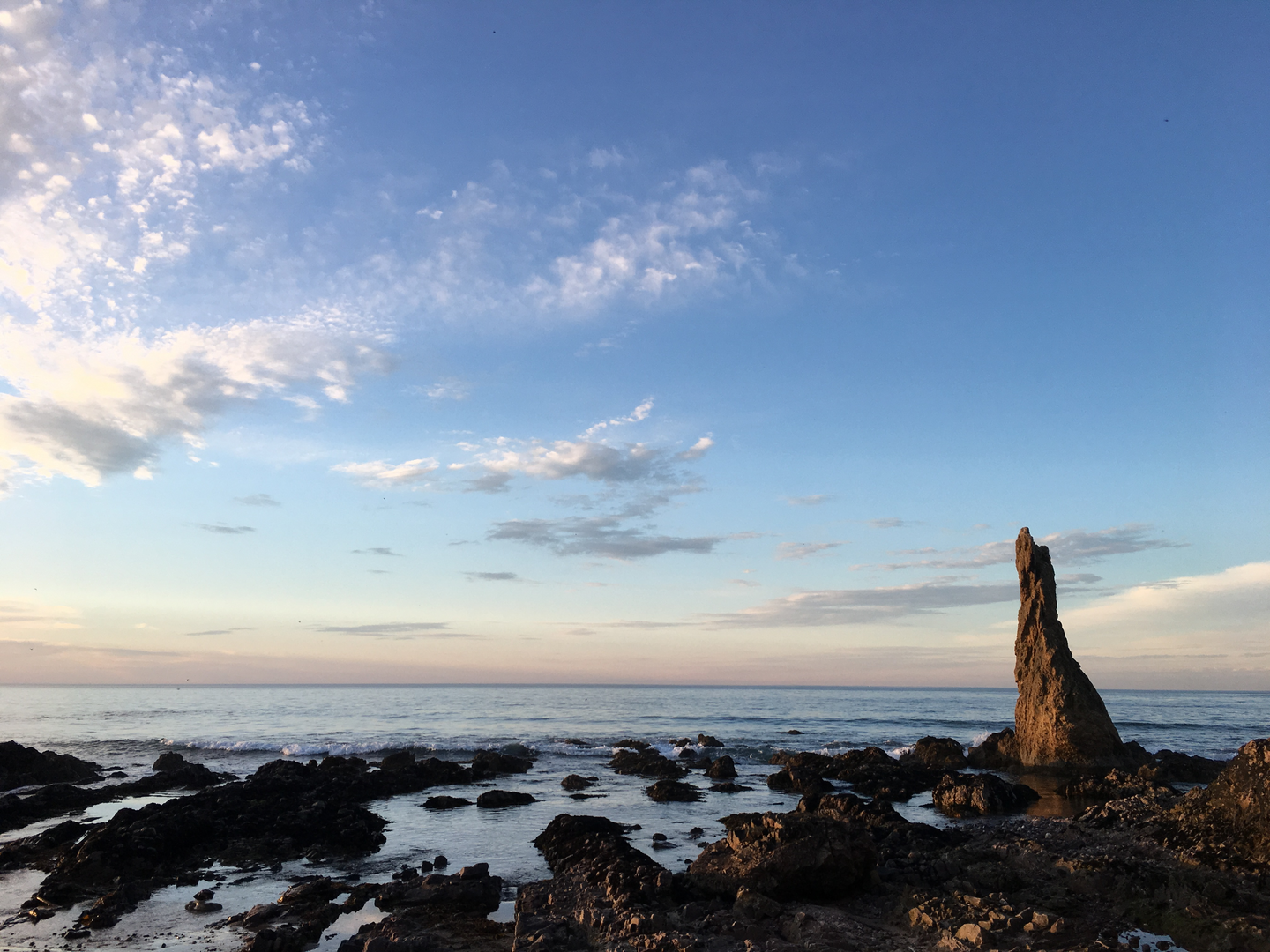
The opening stretch from Portknockie is one of the highlights straight away. The village is an old fishing settlement on the Moray Firth, and the coast here is shaped by hard Cullen quartzite, which gives the cliffs and offshore stacks their rugged form. Very early on, attention naturally goes to Bow Fiddle Rock, the famous sea arch just off the shore. It is one of the signature landmarks of the Moray coast and a strong reason many walkers choose this section. The path around here is easy to follow, but in wet or windy conditions the cliffside edges deserve respect, and it is best to keep well back from unstable margins. (en.wikipedia.org)
From Portknockie to Cullen is roughly 4 to 5 km / 2.5 to 3 miles depending on the exact line taken. This section often uses the old railway corridor and associated paths, so gradients are gentle and progress is quick. The former railway is part of the area’s story: the coastal line opened in the 1880s, linked communities such as Portknockie and Cullen, and later closed in 1968. Today, that transport history survives in the walk itself, with old rail infrastructure repurposed for recreation. (morayways.org.uk)
Coast, bays and headlands
Approaching Cullen Bay, the route opens into a broader sweep of sand and sea, with excellent views back toward Portknockie
Surfaces
Unknown
Asphalt
Gravel
Comments and Reviews
User comments, reviews and discussions about the Portknockie to Portsoy via Scar Nose, Cullen Bay, Logie Head and Sandend Bay, Scotland.
average rating out of 5
0 rating(s)
