Download
3D Flyover
Add to list
More
11.4 km
~3 hrs 38 min
824 m
Loop
“From castle shores to jagged volcanic ridges, this demanding Rum circuit feels wild, dramatic, and atmospheric.”
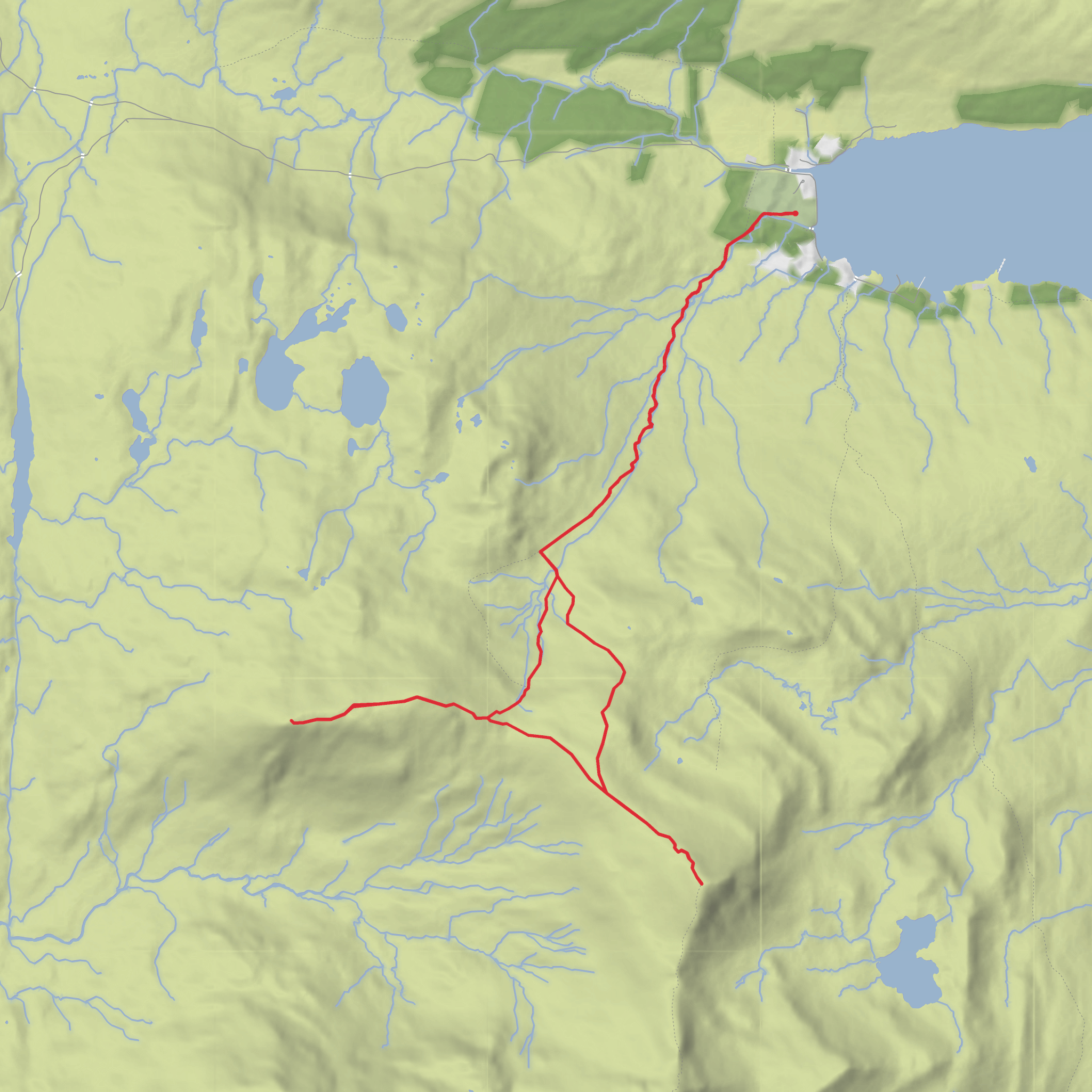
This is a compact but serious mountain outing on the Isle of Rum, climbing from sea level near Kinloch Castle, Kinloch, Isle of Rum PH43 4RR toward two of the island’s most distinctive peaks before returning by the dark, steep-sided bowl of Coire Dubh. Although the round is only about 11 km / 6.8 miles, the route gains roughly 800 m / 2,625 ft, and the combination of steep gradients, rough ground, exposure to weather, and sections of hands-on terrain makes it a difficult day for most hikers. (en.wikipedia.org)
The walk usually begins near the Kinloch ferry jetty and Kinloch Castle, the main arrival point on Rum. From the settlement, the route heads toward the Coire Dubh path, climbing through woodland and then out onto increasingly open, rocky mountain ground. The ascent to Hallival is the main early effort, with a sustained pull from near sea level to a summit around 722 m / 2,369 ft. From there, the traverse to Barkeval adds more undulating ridge walking and a second summit at about 665 m / 2,182 ft, before the descent curves back toward the old dam and the Coire Dubh path. (walkhighlands.co.uk)
What the route feels like on the ground
The first section is comparatively straightforward, following a clear approach from Kinloch past the castle area and onto the marked path beside the burn in Coire Dubh. This lower stretch can feel deceptively gentle, but it quickly steepens as the route leaves the shelter of the trees and enters the corrie. Expect a mix of path, stony sections, loose material, and wetter patches after rain. In poor visibility, the transition from the corrie to the upper ridge can become much more serious than the distance suggests, so careful navigation is important and HiiKER is the best tool to have ready before leaving Kinloch. (walkhighlands.co.uk)
The climb onto Hallival’s northwest ridge is where the day starts to feel properly mountainous. The views open dramatically over Loch Scresort, the Kinloch area, and the surrounding Rum Cuillin peaks. Hallival is often considered one of the finest viewpoints on the island because it stands above the eastern side of Rum with a direct outlook over the coast and inland ridges. The ridge itself is narrow in places and can feel exposed in wind, even where the ground is technically simple. (walkhighlands.co.uk)
From Hallival to Barkeval, the terrain becomes more rugged and committing. The ridge gives a real sense of Rum’s volcanic architecture: serrated profiles, steep corries, and broken rock. Some lines beyond Barkeval lead into trickier scrambling, so hikers should be careful not to continue onto more technical ground by mistake. For this outing, the safer and more usual option is to return and descend by the same ridge line toward Coire Dubh rather than pressing into more complex terrain. (walkhighlands.co.uk)
Landmarks, scenery, and natural history
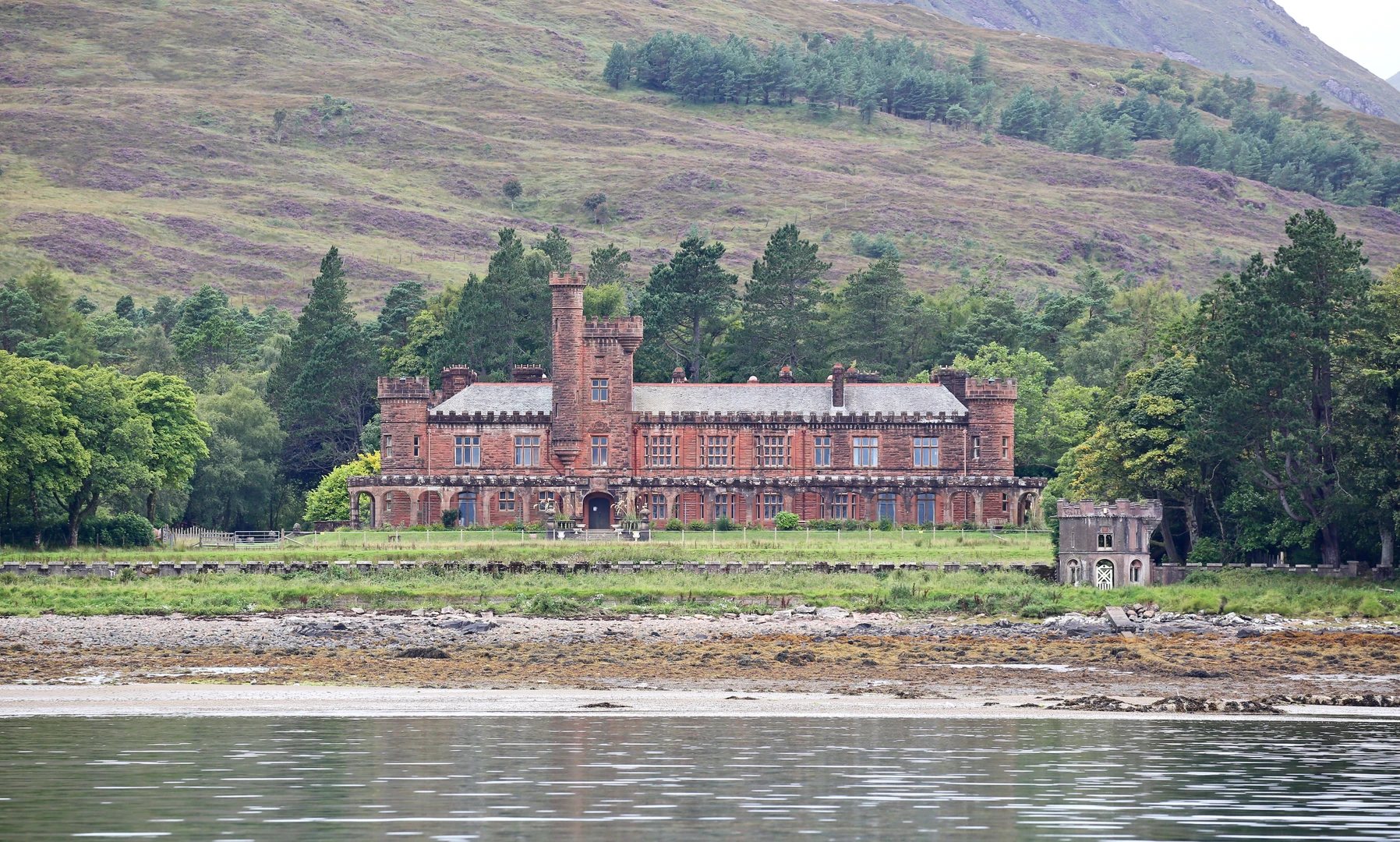
One of the most striking landmarks at the start is Kinloch Castle, an extravagant Edwardian mansion built for George Bullough between 1897 and 1900. It stands above Loch Scresort and gives the opening of the hike an unusual contrast: ornate estate history at sea level, then wild volcanic mountains almost immediately behind it. The castle and its wider estate are central to Rum’s modern story, and the island later passed into conservation ownership in 1957, helping establish Rum as a nationally important protected landscape. (scotland-inverness.co.uk)
Coire Dubh itself is a notable feature. The name means “black corrie,” and it forms a dramatic natural corridor behind Kinloch Castle. The old dam in the corrie is a reminder of the estate infrastructure associated with the castle and its early services, including hydro power linked to Kinloch. As you descend, the corrie walls and burn line create one of the most atmospheric parts of the route, especially when cloud hangs low over the upper slopes. (scotlandhills.net)
Rum is especially important for wildlife. The island is famous for its red deer, and long-running deer research has made it internationally known in ecological circles. Around the mountains, hikers may also spot golden eagles overhead, while the upper slopes of Hallival, Askival, Trollaval, and Barkeval support one of the world’s largest breeding colonies of Manx shearwaters, though these seabirds are most noticeable in season and are often more heard or inferred than clearly seen by day. Lower down, depending on the time of year, there can be butterflies, coastal birds, and occasional sightings of otters nearer the shore around Kinloch. (wildlochaber.com
Surfaces
Unknown
Unpaved
Comments and Reviews
User comments, reviews and discussions about the Kinloch Castle to Hallival, Barkeval and Coire Dubh, Scotland.
average rating out of 5
0 rating(s)
