Download
3D Preview
Add to list
More
6.6 km
~1 hrs 26 min
70 m
Loop
“A gentle woodland ramble through Cally’s storied estate, with bluebells, hidden history, and soft valley glimpses.”
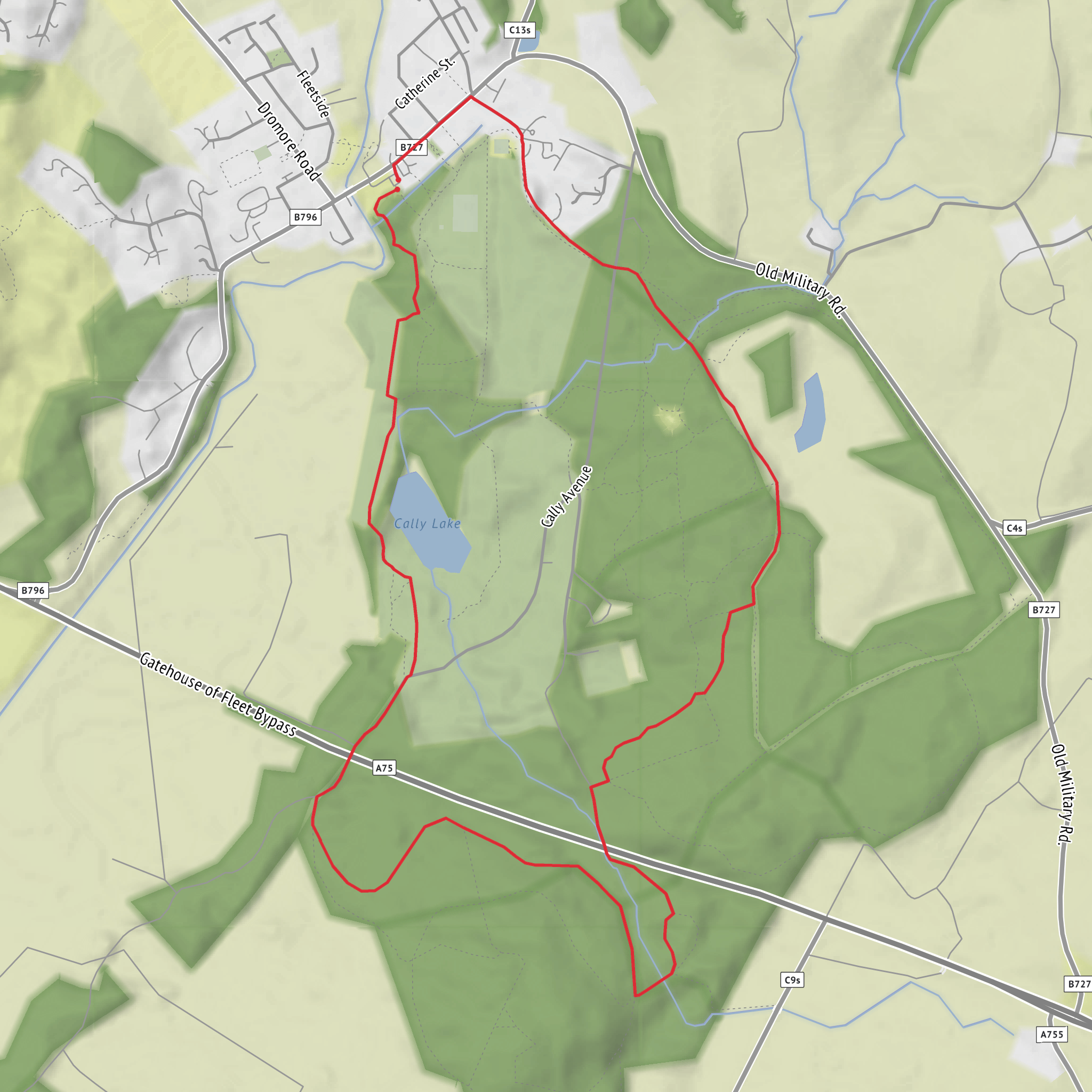
This easy loop explores the designed landscape and mixed woodland around Cally Palace on the edge of Gatehouse of Fleet in Dumfries and Galloway. Expect a walk of about 7 km / 4.3 miles with roughly 100 metres / 330 feet of ascent, though closely related mapped circuits in the same woods are often listed at around 5.5 km / 3.5 miles with 88 metres of climbing, so the exact total depends on which signed paths and spurs you include. The terrain is generally gentle and well suited to most walkers looking for a relaxed half-day outing, with broad woodland paths, estate tracks, short undulating rises, and a few potentially muddy or uneven patches after rain. (walkhighlands.co.uk)
The route starts near the main entrance to Cally Woods and Cally Palace, just east of Gatehouse of Fleet on the B727. The nearest clear landmark and practical start point is the Cally Woods car park, 100 metres beyond the gatehouse on the B727, Gatehouse of Fleet, DG7 2DB. Forestry and Land Scotland identifies this as the main access for the woods, about a quarter mile east of town. If you are arriving by bus, there is a stop at the main entrance to Cally, and nearby stops are listed as Gatehouse of Fleet, opposite Cally Palace on the B727, served by routes including the 431 and 500. By car, Gatehouse of Fleet is reached from the A75, with the woods just off the eastern side of town. Parking at the woodland car park is free. (forestryandland.gov.scot)
One important planning note: Forestry and Land Scotland currently states that all walking trails in Cally Woods are closed due to forestry works supporting utilities works. Walkhighlands also flags the Cally Woods circuit as closed because of tree felling works. It is worth checking the latest local access information before setting out. (forestryandland.gov.scot)
What the walk feels like
From the start, the route moves into peaceful deciduous woodland that was once part of the wider Cally estate. The gradients are mild, which is why the walk is usually considered easy, but there is enough rise and fall to keep it interesting. Most of the ascent comes in short woodland climbs rather than one sustained hill, so it tends to feel manageable for families, casual walkers, and anyone wanting a scenic outing without mountain terrain. Surfaces are usually firm gravel or estate track in the main sections, but side paths can be rooty, damp, or muddy, especially where burns cross the route or where horses also use the trail network. (walkhighlands.co.uk)
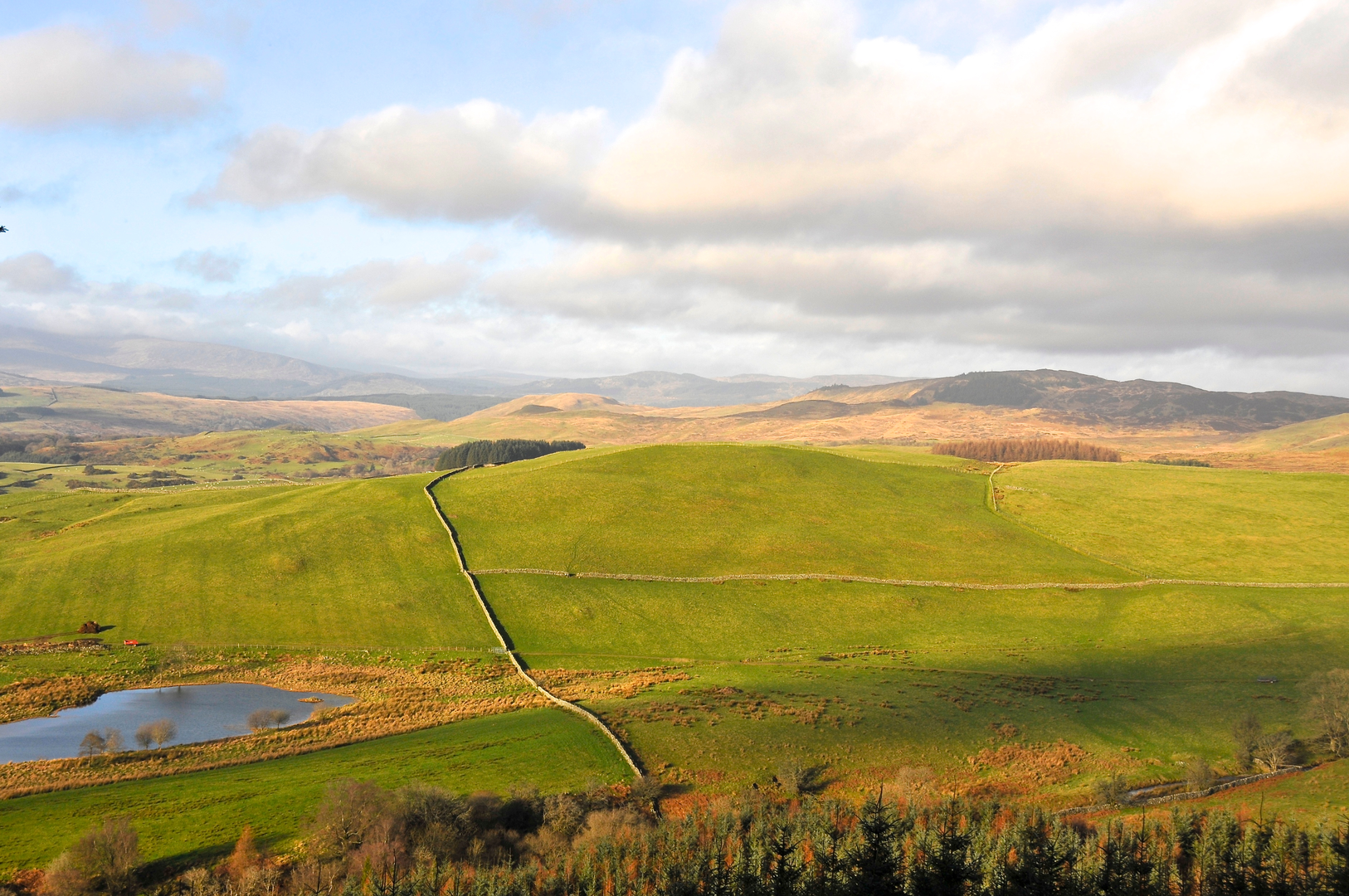
The first part typically threads through mixed broadleaf woodland of oak, birch, sycamore and beech. These woods are relatively young in their current form, but they sit within a much older designed landscape. In spring, the area is especially attractive for snowdrops, primroses and bluebells, while the tree cover and open glades create a sheltered feel for much of the year. (forestryandland.gov.scot)
As the loop develops, the path alternates between enclosed woodland and more open edges where there are glimpses across pasture and toward the Fleet Valley. Nothing here is exposed in a mountain sense, but wet weather can make the route slick underfoot, and small burns or fords can become the main thing to watch for. Good waterproof footwear is usually enough for most conditions. (walkhighlands.co.uk)
Landmarks and historical interest
One of the most significant features on the walk is Cally Motte, a 12th-century earthwork that marks the site of an Angle-Norman stronghold. Forestry and Land Scotland notes that a fortified tower once stood on the mound, likely serving as a refuge in troubled times. It gives the walk an unexpectedly deep historical layer, linking this quiet woodland to the medieval frontier history of Dumfries and Galloway. (forestryandland.gov.scot)
The route also passes through the former grounds of Cally House, now Cally Palace, an 18th-century country house completed in 1763 for James Murray of Broughton and designed by Robert Mylne. The estate was laid out with pleasure grounds, orchards, deer parks and gardens, and it played a major role in the development of Gatehouse of Fleet. The house and grounds are historically important enough to be listed and included in Scotland’s inventory of significant designed landscapes. �
Surfaces
Unknown
Unpaved
Asphalt
Comments and Reviews
User comments, reviews and discussions about the Cally Lake, Cally Palace and Temple Loop, Scotland.
average rating out of 5
0 rating(s)
