
Download
3D Flyover
Add to list
More
3.1 km
~1 hrs
228 m
Point to Point
“A short, steepened journey from sea-hugging fajã to storied terraces and cloudward village lanes.”
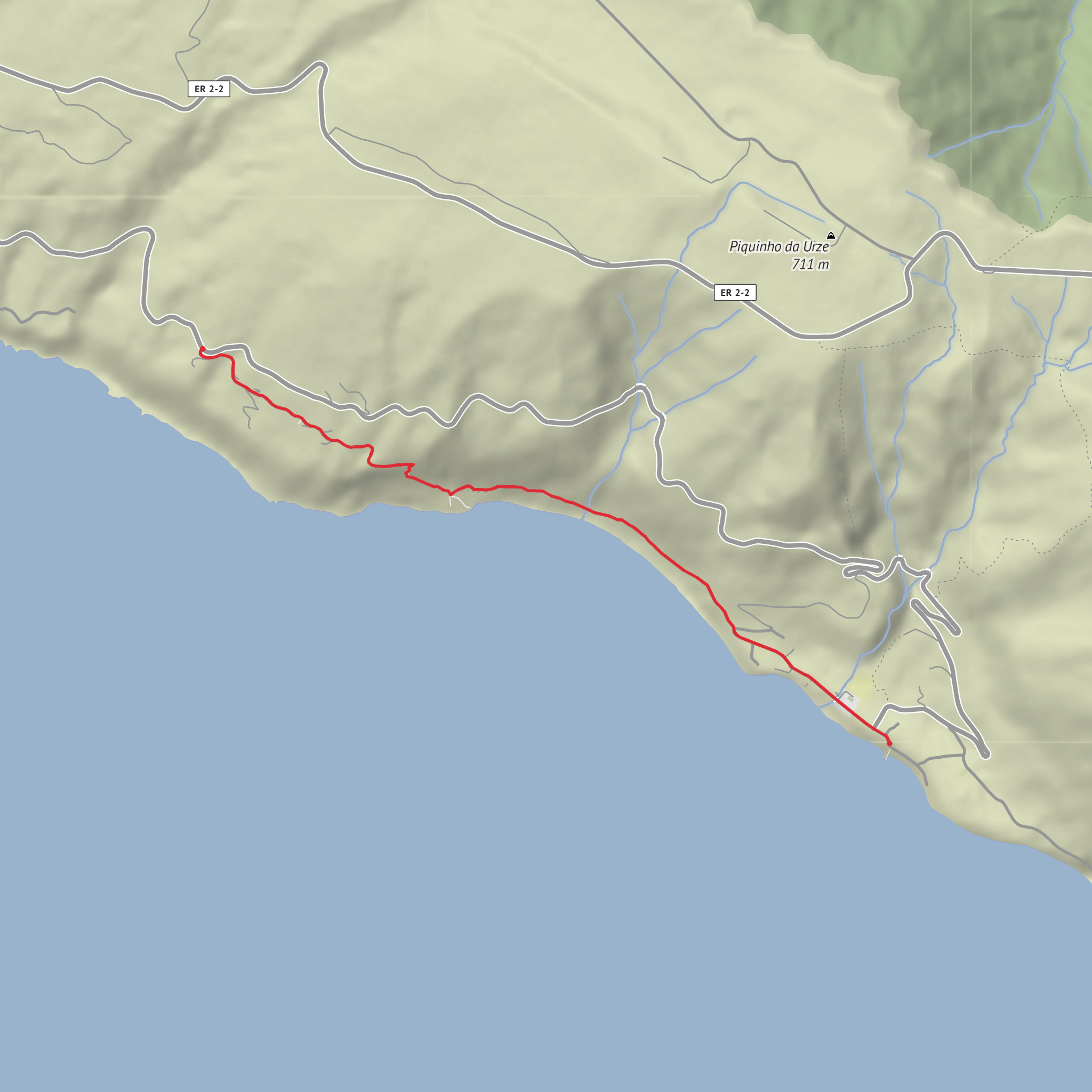
This short but surprisingly demanding linear walk on São Jorge links the coastal plain of Fajã dos Vimes with the cultivated terraces of Fragueira and the higher settlement of Portal, covering about 3.1 km / 1.9 miles in roughly 1 hour 30 minutes. Official trail information rates it as medium, but with around 200 m / 656 ft of climbing, an old stone stairway, and sections that can be slick underfoot, it can feel difficult for many hikers, especially in wet or humid conditions. The route starts near the Porto da Fajã dos Vimes, the small harbor and bathing area in Fajã dos Vimes, Ribeira Seca, Calheta, São Jorge, and finishes by the church in Portal, Ribeira Seca, Calheta. (trails.visitazores.com)
Getting to the start is easiest by car. The recognized access point for the lower end of the walk is the road signed for Acesso à Fajã dos Vimes, Ribeira Seca, Calheta, which descends to the harbor area where the trail begins. If using two vehicles, one can be left near the church in Portal and the other at the harbor in Fajã dos Vimes. Public transport on São Jorge is limited, but island bus services do connect through Calheta and the Ribeira dos Vimes / Serra do Topo corridor, so hikers relying on buses should check current island timetables carefully and be prepared for infrequent service. A taxi transfer between Portal, Calheta, and Fajã dos Vimes is often the simplest one-way option. (visitazores.com)
The opening stretch is gentle enough to lull people into underestimating the route. From the harbor, the path crosses the fajã westward on a dirt track beneath the cliffs. This low coastal platform is one of São Jorge’s classic fajãs, formed below steep escarpments shaped by landslides and coastal processes, part of the island’s distinctive geology. The setting is lush and sheltered, and Fajã dos Vimes is especially known for its mild microclimate, traditional handicrafts, and locally grown coffee, one of the most unusual agricultural features in the Azores. (trails.visitazores.com)
What to expect on the trail
As the route leaves the harbor area, it follows a farm track along the cliff base where incense tree / Australian cheesewood (Pittosporum undulatum) is noted as the dominant vegetation. Views open repeatedly toward the Atlantic and, on clear days, toward Pico Island offshore. This section is not especially long, but it is exposed to moisture, sea air, and occasional muddy patches, so shoes with strong grip are important even on a dry forecast. The route also passes a junction with PR2 Serra do Topo – Fajã dos Vimes and the Grande Rota de São Jorge, so it is worth checking the route line in HiiKER before setting out to avoid following the wrong markings at the intersection. (trails.visitazores.com)
The middle section through Fajã da Fragueira is the cultural highlight. Here the trail crosses a landscape of small agricultural terraces with vineyards, banana trees, sweet potato, sweet corn, and vegetable plots, along with traditional wine cellars. Although Fragueira is now uninhabited, it remains actively cultivated by people from Portal and nearby communities, which gives the area a lived-in agricultural character rather than a purely abandoned one. (visitazores.com)
One of the most significant landmarks is the ruins of the house associated with Francisco de Lacerda, the São Jorge-born composer and conductor. Official trail information highlights the remains of the house in Fragueira and notes that he lived here for about eight years in the period before the First World War. Visit Azores also identifies Fragueira as the place connected with his birth and legacy, making this a route with more historical depth than its short distance suggests.
Surfaces
Unknown
Concrete
Paved
Asphalt
Cobblestone
Comments and Reviews
User comments, reviews and discussions about the Fajã dos Vimes, Fragueira, Portal and Ribeira Seca, Portugal.
average rating out of 5
0 rating(s)
