
Download
3D Flyover
Add to list
More
7.9 km
~2 hrs 2 min
279 m
Loop
“Clifftop drama, Atlantic sparkle, and rolling climbs make this Madeira loop vividly rewarding.”
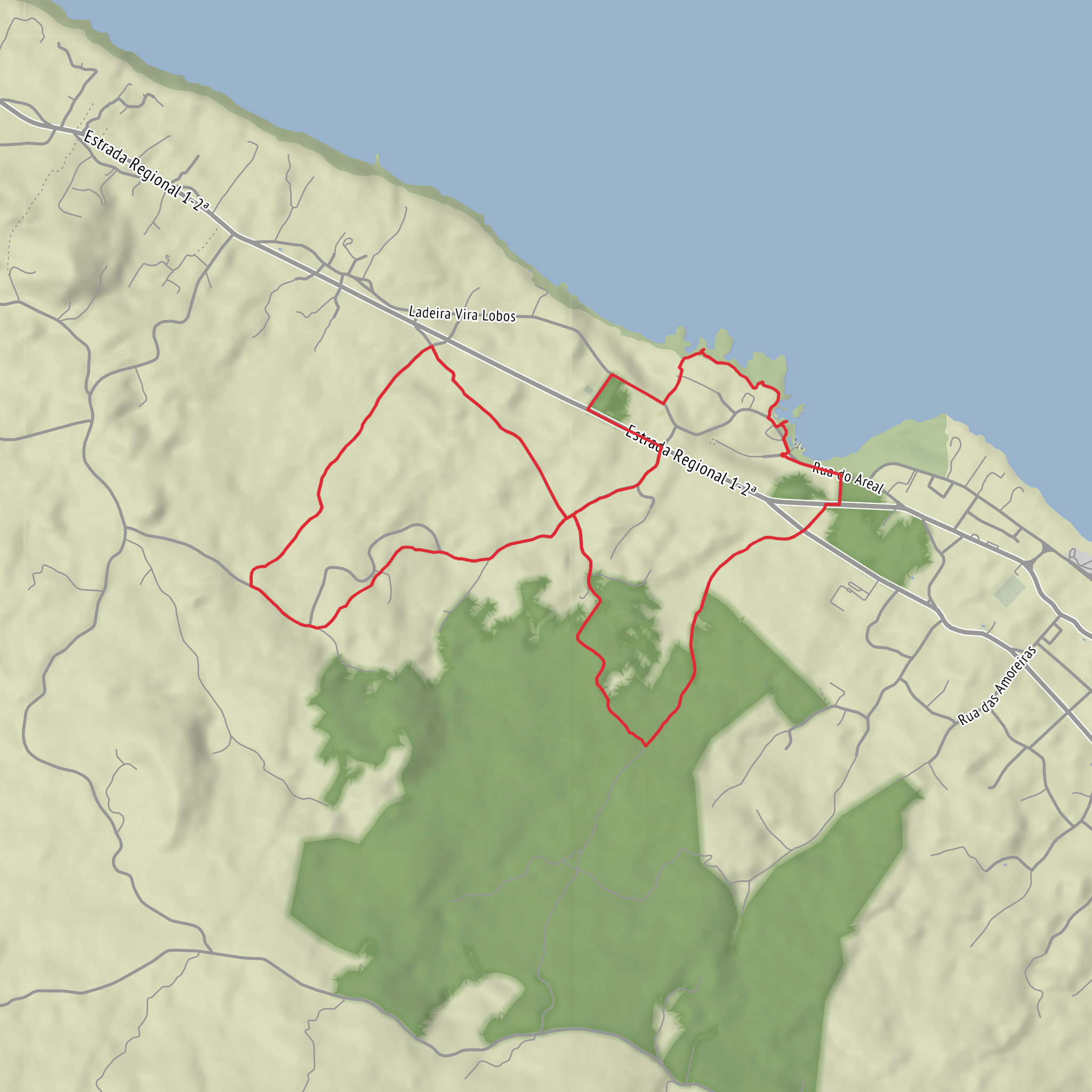
This roughly 8 km / 5 mile loop near Cristo Rei do Garajau, Caniço, Santa Cruz, Madeira packs a lot into a relatively short outing: sea cliffs, broad Atlantic views, a well-known coastal monument, and a mix of paved lanes, local paths, and hillier inland stretches that explain the medium difficulty despite the modest distance. With about 300 m / 985 ft of elevation gain, the route is best approached as a scenic half-day walk rather than a quick promenade, especially if you plan to stop at viewpoints or detour toward the cable car area. The start is most sensibly identified with the Cristo Rei Viewpoint / Ponta do Garajau, the best-known landmark in the area and the usual access point for walkers exploring this headland. (visitmadeira.com)
From the outset, expect a dramatic coastal setting. The headland at Garajau sits above steep volcanic cliffs on Madeira’s south coast, around 8 km / 5 miles east of central Funchal, and the opening section is typically the most visually striking. The path network around the viewpoint gives wide panoramas over the Atlantic, part of Funchal Bay, and the built-up slopes of Caniço de Baixo. Even before the climbing begins in earnest, this is the kind of route where exposure to sun, wind, and cliff edges matters more than the raw mileage suggests. (visitmadeira.com)
What to expect on the route
The loop’s character is usually split between a coastal viewpoint section and an inland climbing section. Near Garajau, surfaces are often straightforward underfoot—paved access roads, promenades, and established walking paths—but the route becomes more undulating as it turns away from the headland and works through the higher ground around the loop. Over 8 km / 5 miles, 300 m / 985 ft of ascent is enough to create several short but noticeable climbs, so hikers should expect bursts of effort rather than one single sustained ascent.
The coastal portion is the highlight for many walkers. Around the Cristo Rei statue, the terrain is open and airy, with uninterrupted views and a strong sense of height above the sea. If the loop passes near the cable car station, you may also overlook the descent to Garajau Beach, which lies inside the protected marine area below. The inland portion is quieter and more residential or semi-rural in feel, giving a contrast to the exposed headland and often a better sense of the local landscape beyond the tourist viewpoint. (visitmadeira.com)
Because this is a loop rather than an out-and-back, pacing matters. The route is not especially long, but the repeated ups and downs can feel harder in warm weather. Good footwear is advisable even if much of the route is on firm surfaces, as short sections can be uneven, dusty, or slick after rain. In windy conditions, the exposed cliffside stretches deserve extra care.
Landmarks, nature, and wildlife
The standout landmark is the Cristo Rei do Garajau statue, one of Madeira’s most recognizable coastal monuments. It was inaugurated on 30 October 1927 and predates Rio de Janeiro’s Christ the Redeemer by four years. The monument was commissioned and financed by Aires de Ornelas, linked to the historic landholding family of Caniço, and it remains the defining visual feature of the headland. (visitmadeira.com)
Below the cliffs lies the Garajau Partial Nature Reserve, created in 1986 to protect the seabed and marine life along this stretch of coast. Although most hikers will experience it from above rather than in the water, it adds real ecological significance to the walk. The reserve is known for exceptionally clear water and notable marine species including dusky grouper, manta rays, and devil rays, while the protected coastline is also valued for diving and other low-impact sea activities. (visitmadeira.com)
On land, expect typical Madeiran coastal vegetation, ornamental plantings near developed areas, and seabird activity along the cliffs. The biggest natural feature, though, is the geology: dark volcanic rock, abrupt ravines, and the contrast between the built headland above and the marine reserve below. On clear days, the visual range is excellent, and this is a strong route for hikers who enjoy landscape photography
Surfaces
Unknown
Asphalt
Grass
Comments and Reviews
User comments, reviews and discussions about the Garajau and Cabeco Zaranza Loop, Portugal.
average rating out of 5
0 rating(s)
