Download
3D Flyover
Add to list
More
8.5 km
~1 hrs 54 min
125 m
Loop
“Wander shaded Oil Creek woods, where river glimpses and oil-boom echoes linger underfoot.”
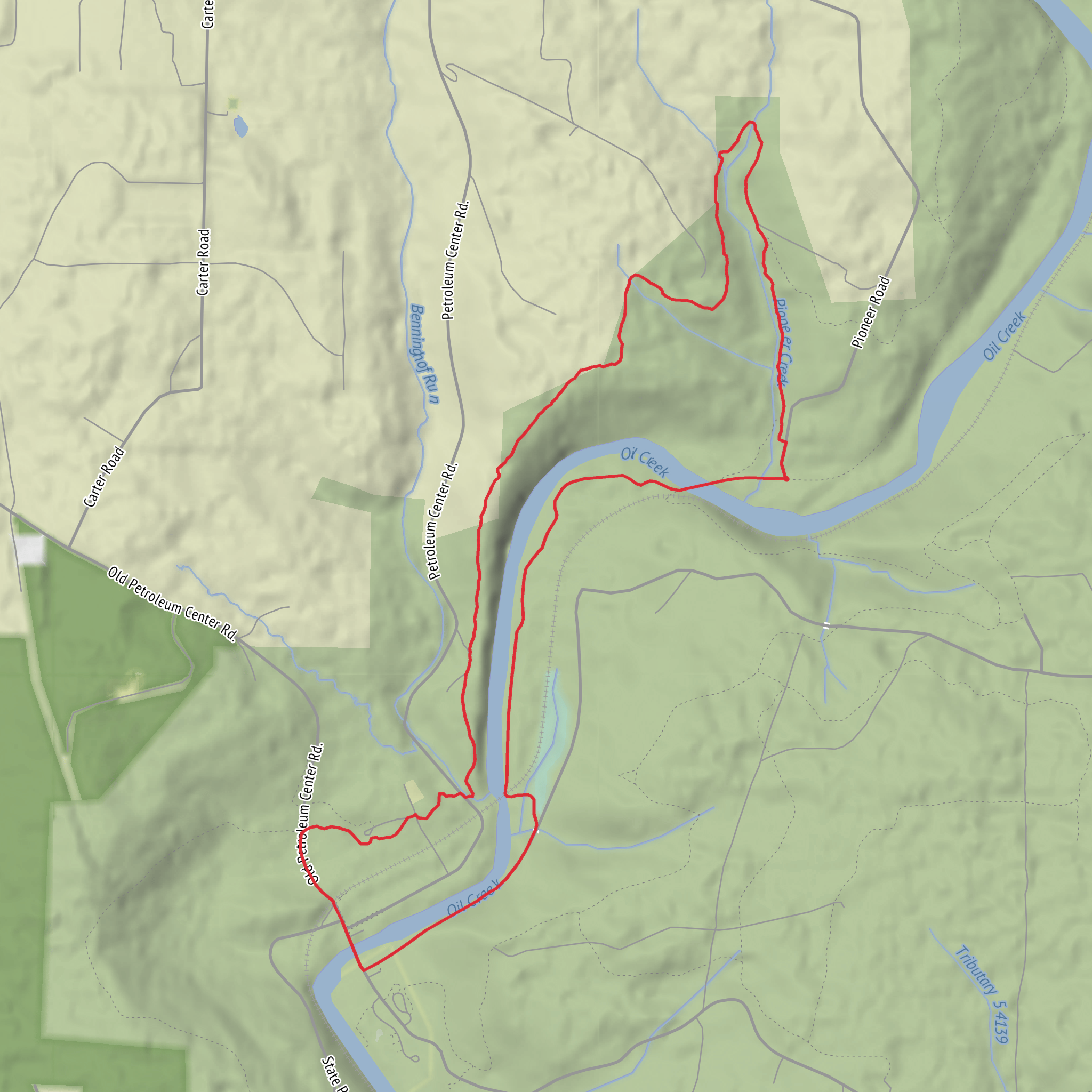
A gentle, mostly wooded walk through a classic Pennsylvania river valley, this easy outing covers about 9 km (5.6 miles) with roughly 100 m (330 ft) of total climbing. Expect a mix of shaded trail, occasional open river views, and frequent reminders that this quiet gorge was once at the center of the early American oil industry.
Getting to the start (car + public transport)
Because the start point is listed only as “near” (no coordinates provided), the most practical approach is to aim for the park’s main access corridor along PA-8 in Oil City, Pennsylvania, then choose the closest signed trailhead/parking area once you know which segment you’re hiking.
- By car: Most visitors approach via Oil City, PA and enter Oil Creek State Park along PA-8 (Oil Creek Road), which parallels Oil Creek through the park. Common, well-signed places to park and begin a moderate-length walk include the Oil Creek State Park Office / Park Operations area and the Drake Well Museum area (both are prominent landmarks along the corridor). Once you share a lon/lat (or the intended trailhead name), I can pin this to the nearest address/landmark precisely.
- By public transport: Public transit options are limited in this region. The most workable method is typically to reach Oil City (or Franklin, PA) via regional bus service where available, then use a taxi/rideshare to get to a park access point along PA-8. Plan for spotty cell coverage in the valley and limited pickup availability—arrange return transport ahead of time if possible.
What the trail is like underfoot
With an “Easy” rating and modest elevation gain, this route is usually approachable for beginners and families, but conditions can change quickly with weather:
- Surface: Packed dirt and leaf litter in the woods, with occasional gravelly or slightly rocky patches. After rain, low spots can hold water and become slick.
- Grade: The 100 m (330 ft) of gain tends to come in short, gentle rises rather than sustained climbs—think gradual benches above the creek and small ups/downs where side hollows cut into the valley wall.
- Navigation: The valley has many intersecting paths and old grades. Load the route in HiiKER before you arrive and keep an eye on junctions—especially where old rail grades, creekside paths, and connector trails meet.
Landmarks, scenery, and the “shape” of the hike
Over 9 km (5.6 miles), you’ll typically experience three repeating “themes” in Oil Creek’s corridor: creekside travel, shaded hardwood forest, and short climbs to slightly higher viewpoints.
- 0–2 km (0–1.2 mi): Creek valley immersion
Early on, you’ll settle into the rhythm of the gorge: the sound of moving water, hemlock and mixed hardwood shade, and a cool, damp feel near the creek. Watch for muddy edges and roots—the most common slip hazards on easy trails here. - 2–6 km (1.2–3.7 mi): Forested stretches with historic traces
This is where the park often feels like an outdoor museum without signs: subtle berms, unnaturally straight grades, and occasional clearings that hint at former industrial use. Depending on the exact route you choose, you may pass near interpretive areas tied to the region’s oil history (see below).
Keep an eye out for spring wildflowers (trillium, violets, mayapple) and, later in the year, dense green understory that can hide rocks and holes. - 6–9 km (3.7–5.6 mi): Easy return with intermittent views
The final portion usually trends gently back toward the valley floor or along a more level grade. If your route stays near the creek, you’ll get more open glimpses through the trees; if it uses a bench trail, you’ll notice slightly drier footing and fewer muddy patches.
Nature and wildlife to look out for
Oil Creek State Park sits in a rich Appalachian plateau ecosystem—expect classic northwestern Pennsylvania woodland species.
- Common wildlife: White-tailed deer, wild turkey, squirrels, and a wide variety of songbirds. Near water, you may spot great blue heron or hear kingfishers.
- Black bears: Bears are present in the region. Encounters are uncommon on busy trails, but store food securely, keep snacks packed away, and give wildlife space.
- Ticks and biting insects: From spring through fall, ticks can be a real consideration. Wear long socks, consider permethrin-treated clothing, and do a tick check after the hike.
- Poison ivy: Frequently found along sunny edges and disturbed ground—exactly the kind of habitat created by old grades and clearings.
Historical significance (why this valley matters)
This valley is closely tied to the birth of the modern petroleum industry. The broader Oil Creek region is associated with the early oil boom that followed Edwin Drake’s 1859 well near Titusville—often cited as a pivotal moment that accelerated oil production methods and sparked rapid industrial growth in the area. As you hike, the “quiet woods” setting can feel at odds with the valley’s past: during the boom years, the corridor supported intense activity—transport routes, work camps, and infrastructure that reshaped the landscape. Even when you’re not at a formal historic site, the straight, engineered lines of some paths and grades can reflect that legacy.
Practical planning notes (timing, gear, and safety)
- **Time estimate
Surfaces
Ground
Asphalt
Dirt
Unpaved
Unknown
Paved
Wood
Comments and Reviews
User comments, reviews and discussions about the Oil Creek State Park Trail, Pennsylvania.
average rating out of 5
0 rating(s)