
Download
3D Flyover
Add to list
More
3.8 km
~55 min
103 m
Out and Back
“A shady forest stroll with a gentle climb, ending in misty falls and slick-rock sparkle.”
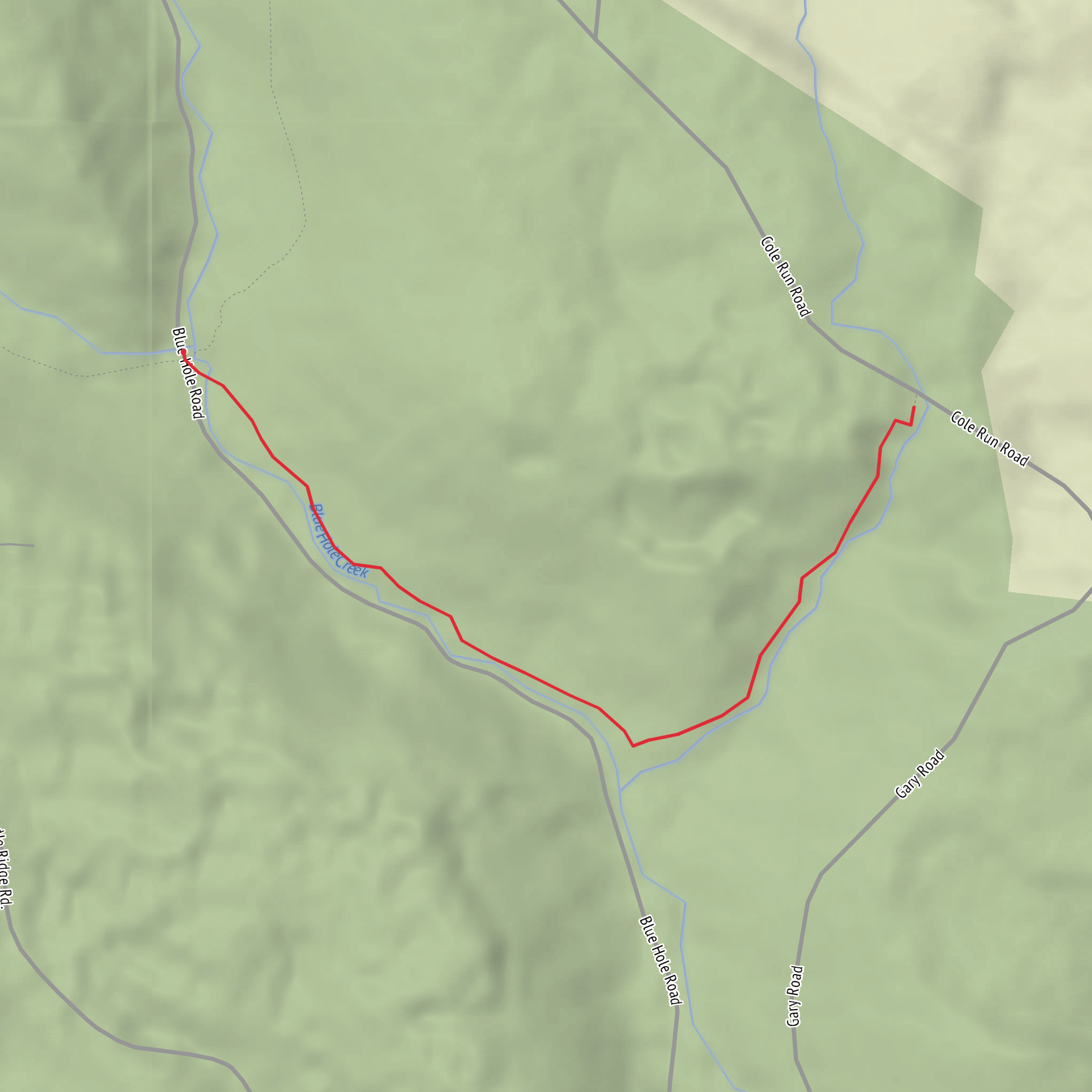
A compact waterfall walk with a steady but never-grueling climb, this ~4 km (2.5 mi) out-and-back/loop-style outing (often walked as an out-and-back depending on parking and spur choices) gains about 100 m (330 ft) overall. Expect a mix of shaded forest tread, short steeper pitches where the trail approaches the creek, and a rewarding finish at a cascade where spray and slick rock are the main hazards.
Before I can tailor this to the correct Cole Run Falls (there are a few similarly named falls/trails in the U.S.), I need one location detail you left blank:
- The state + nearest town, or a GPS coordinate / trailhead link, or the park/forest name.
Once you share that, I’ll: - convert any lon/lat you provide to the nearest known address or landmark, - give precise driving/public-transport approaches that match the real trailhead, - call out the right landmarks, wildlife, and any local historical context for that specific region.
What to expect on the trail (based on your distance/gain and typical “Cole Run Falls” style routes)
- Terrain & footing: Mostly dirt singletrack with leaf litter and roots; near the falls you’ll often see rocky, damp sections and occasional mud after rain. Trekking poles can help on the short steeper bits and on the return if you’re descending the same way.
- Grade: With ~100 m (330 ft) over ~4 km (2.5 mi), the average grade is modest, but it usually comes in small bursts—a couple of short climbs rather than one long grind.
- Waterfall approach: The final approach to the falls is commonly the slickest part. Expect wet rock, algae sheen, and spray depending on flow. Keep a buffer from the lip/edge and avoid stepping onto dark, glossy rock.
- Navigation: Cell service can be inconsistent in creek hollows. Download the route in HiiKER before you arrive and keep an eye out for any unsigned spur paths that head toward the water.
Landmarks, nature, and wildlife you’ll likely encounter
- Creek corridor: The trail typically parallels or repeatedly approaches a run/creek—listen for water to help confirm you’re on-track when the tread is faint.
- Forest character: In much of the Appalachians and Mid-Atlantic (where many “Run” drainages are named), you’ll see mixed hardwoods—oak, maple, tulip poplar—plus ferny understory in moist pockets.
- Wildlife: Common sightings/sign include white-tailed deer, squirrels, woodpeckers, and seasonal songbirds. In warmer months, watch for ticks in brushy edges and snakes sunning on rocks near water (give them space; most want nothing to do with hikers).
- Seasonal highlights:
- Spring: higher flow at the falls, wildflowers in richer soils near the creek.
- Summer: more insects; carry repellent and check for ticks.
- Fall: excellent visibility and color; leaf cover can hide roots/rocks.
- Winter: ice near the falls can turn the last few hundred meters into a slip zone—microspikes may be useful if conditions are frozen.
- Spring: higher flow at the falls, wildflowers in richer soils near the creek.
Hazards and “look out for” points (why it feels Medium)
- Slippery rock near the falls (most common incident area).
- Short steep pitches where erosion can expose roots/loose gravel.
- High water after storms: If the route uses stepping stones or narrow footbridges, be ready to turn around if crossings look unsafe.
- Bugs & ticks: Especially late spring through early fall—do a full tick check after.
Planning: timing, gear, and pacing
- Typical time: ~1–2 hours for most hikers at a relaxed pace, longer if you spend time at the falls.
- Water: Bring at least 0.5–1 L per person; more in heat/humidity.
- Footwear: Trail shoes with good grip are usually enough; boots if it’s been wet and you want ankle support.
- Extras that pay off: Light rain shell (spray + sudden showers), small first-aid kit, and a dry bag for electronics if you get close to the mist zone.
Getting to the start (car vs public transport)
I can’t responsibly give exact directions or the nearest address/landmark without the missing location. Once you tell me the state + nearest town (or coordinates), I’ll provide: - the closest recognized trailhead landmark/address (parking lot name, road junction, or park entrance), - car approach notes (road type, seasonal closures, parking capacity/fees), - public transport options (nearest bus/rail stop and the realistic last-mile plan—rideshare, taxi, or walking).
Historical significance (will be location-specific)
“Run” place-names are common in regions shaped by early colonial settlement patterns, Indigenous travel corridors, and later logging/mining eras. The specific historical context—Indigenous nations connected to the watershed, any Civil War-era activity, historic mills, CCC-era trail building, or logging history—depends entirely on which Cole Run Falls you mean. Share the location and I’ll tie the hike to the correct local history with concrete place references and dates where available.
Send the state + nearest town (or a pin/coordinates) for Cole Run Falls, and I’ll rewrite this as a fully specific, trail-ready description with accurate access details and the nearest known address/landmark for the trailhead.
Surfaces
Dirt
Unknown
Comments and Reviews
User comments, reviews and discussions about the Cole Run Falls, Pennsylvania.
average rating out of 5
0 rating(s)

