

Search a hike or location

search
Best difficult hikes in Pennsylvania
Share:

Best difficult hikes in Pennsylvania

Got your game face on? These difficult hikes are designed for hikers who are looking for a serious adventure.

Here are some great hikes to explore in Pennsylvania.

Most popular hikes


Reviews for difficult hikes in Pennsylvania

Mellissa Konopelski avatar

American Perimeter Trail - Southern Appalachian Primary

LakesideNavigator20 reviewed about 1 year ago

star star star star star


Megan Burdick avatar

Finger Lakes Trail

Fferyllt79 reviewed over 1 year ago

star star star star star

starting ar Kipknocky today and seeing how far I cannget over the next 3 or 4 days. my last 3 day outing covered 33 miles for me. was such an amazing and difficult walk. I am officially in LOVE with the FLT. thank you to the entire FLTC for all the hours of back breaking labor involved in the creation and maintenance of such an amazing trail. it's all about the journey!!!


Dustin Ryan avatar

Donut Hole Trail

Dustin Ryan reviewed over 4 years ago

star star star star star

Took me 1 hour shy of a full 4 days. Doing it at the height of spring, I found the trail horribly overgrown and unkempt. I also found that both the map from Sproul SF not accurate, and then also this map not accurate, ESPECIALLY past Hyner SP. Don't even both with this app south of that. It is significantly WRONG.


Isabel Jackson avatar

Tracy Ridge Loop

Isabel Jackson reviewed over 4 years ago

star star star star star


Hannelore Thompson avatar

White and Yellow Trail Loop - Ridley Creek State Park

MeadowCrestclimber34 reviewed about 1 year ago

star star star star star


Frequently asked questions for hikes in Pennsylvania

What is the climate like for hiking in Pennsylvania?

Pennsylvania experiences a temperate climate with distinct seasonal variations, influencing the hiking experience. Springtime hiking, from March to May, can be unpredictable with fluctuating temperatures and frequent rain, turning trails slippery. Summer, spanning June to August, brings warmer temperatures, making daytime hikes potentially challenging, but offering the best visibility and flora exploration.
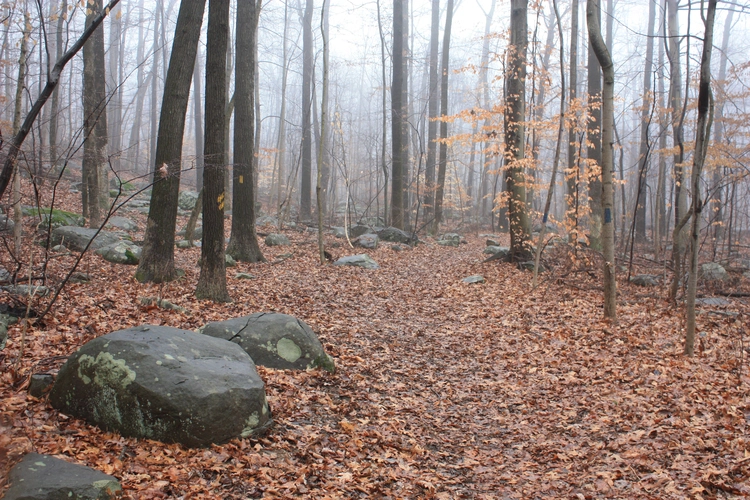
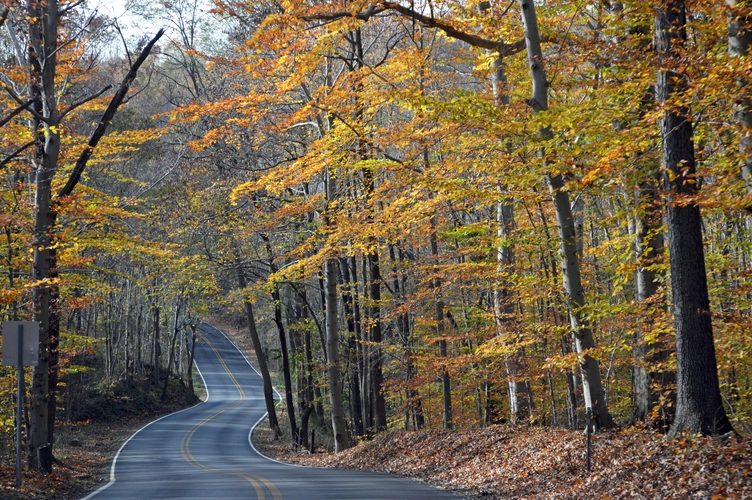
From September to November, the autumn season paints Pennsylvania's hiking trails with vibrant colors. This is an ideal time for hiking with moderate temperatures and less rainfall. However, trails can be covered with leaves, making them slippery. Winter hikes, from December to February, require proper gear due to freezing temperatures and potential snow, but the stark beauty of the landscape can be a reward.
It's generally recommended to hike in Pennsylvania during the fall for the most comfortable temperatures and scenic beauty. Always check the weather before hiking, and prepare accordingly. For detailed forecasts, the National Weather Service (https://www.weather.gov/) can be a reliable resource, and for specific trail conditions and advice, the Keystone Trails Association (https://www.kta-hike.org/) offers a wealth of information.


Do I need a permit to hike in Pennsylvania?

In Pennsylvania, most hiking trails are open to the public without requiring permits. However, for overnight backpacking in some state forests and parks, you may need a free permit. These can be obtained by contacting the Pennsylvania Department of Conservation and Natural Resources (DCNR). For information and inquiries, visit their official website (https://www.dcnr.pa.gov/).


Is wild camping allowed in Pennsylvania?

Wild camping in Pennsylvania is generally permitted in state forests and some state parks, but with restrictions. Campsites must be at least 25 feet from trails and 100 feet from streams or other water sources. Overnight stays may require a permit from the Department of Conservation and Natural Resources (https://www.dcnr.pa.gov/).


Are there mountain rescue services in Pennsylvania?

In case of emergencies during hiking in Pennsylvania, dial 911 to reach local law enforcement, who coordinate with other agencies for mountain rescue operations. The Pennsylvania Helicopter Aquatic Rescue Team (PA-HART) may also be deployed for complex rescues. For more information, visit their website https://www.dcnr.pa.gov/Recreation/SearchAndRescue/Pages/default.aspx


Are there dangerous plants in Pennsylvania?

Pennsylvania's trails offer diverse flora, with deciduous forests in the southeast and coniferous in the northwest. You'll find oak, maple, and pine trees, and wildflowers in spring. Beware of poison ivy and poison oak. The DCNR's "iConservePA" portal (https://www.iconservepa.org/) provides detailed information about local flora.


What wildlife should I be aware of when hiking in Pennsylvania?

On Pennsylvania's trails, hikers may encounter white-tailed deer, squirrels, and birds like the ruffed grouse. Insects include ticks, which can carry Lyme disease. Black bears are present but generally avoid humans. Information on wildlife safety is available on the Pennsylvania Game Commission's website (https://www.pgc.pa.gov/).