
Download
3D Flyover
Add to list
More
11.1 km
~2 hrs 34 min
220 m
Out and Back
“Drift beside the Ohio’s broad bends through shade and rolling rises, with riverbirds and history nearby.”
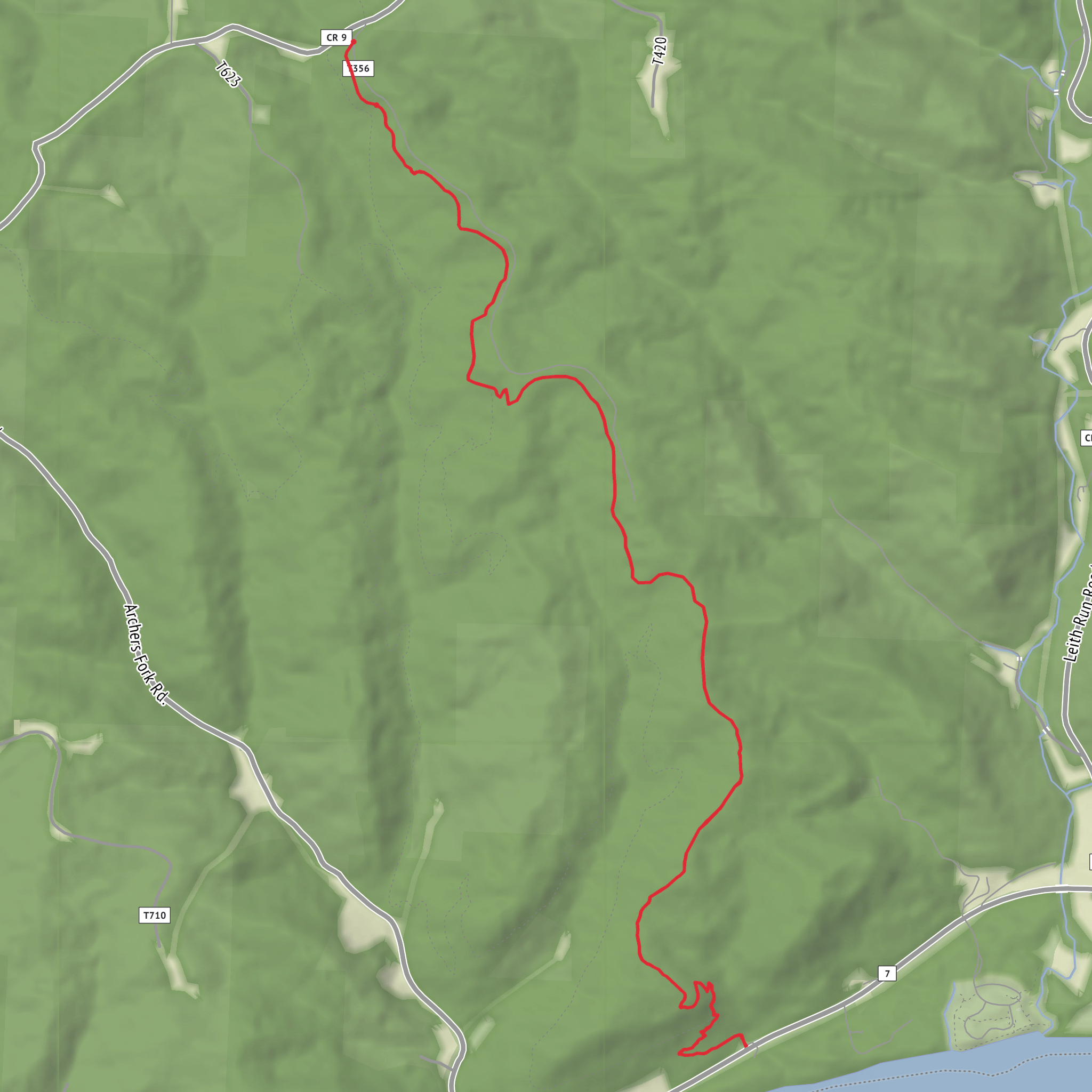
This medium out-and-back/point-to-point style walk (depending on where you turn around) follows the Ohio River closely on a mostly gentle riverside corridor, building to roughly 11 km / 6.8 miles with about 200 m / 656 ft of total climbing. Expect frequent river views, shaded woodland stretches, and a few short rises where the trail lifts above the floodplain to skirt steeper banks and side ravines.
Because “Hike head: near” and the hike type weren’t fully specified, the most reliable way to pin down the exact start is to open the route in HiiKER and use the trailhead pin to confirm the nearest parking lot/road access. If you share the trailhead coordinates (lon/lat) or a map screenshot, I can convert them to the nearest known address/landmark and tailor the directions precisely.
Getting to the start (car + public transport)
By car - Most Ohio River “Scenic River Trail” access points are reached via a riverfront park, boat ramp, or riverside greenway trailhead. Plan for a small municipal lot or gravel pull-off rather than a large state-park style parking area. - If the route begins at a riverfront park, arrive early on weekends—river towns often share parking between trail users, anglers, and boaters.
By public transport - Public transport varies a lot along the Ohio River corridor. In larger river cities, you can often get within 0.5–2 km (0.3–1.2 miles) of a riverfront trailhead by bus, then walk to the start. - In smaller towns, service may be limited to weekday commuter schedules. Use HiiKER to identify the closest trailhead road name, then check the local transit agency for the nearest stop.
What the trail is like underfoot
Most of the route tends to alternate between: - Packed dirt and leaf litter in wooded sections - Gravel/crushed limestone where the trail doubles as a multi-use riverside path - Short muddy patches after rain, especially in low spots near the floodplain
The 200 m / 656 ft of gain usually doesn’t come as one big climb. Instead, it’s commonly “rolling”: brief ups and downs as the trail navigates small hollows, drainage cuts, and riverbank terraces. If you’re watching effort, the steepest moments are typically the short pitches where the trail climbs away from the river to bypass an eroded bank or a wet area.
Landmarks, scenery, and the “Ohio River feel”
You’ll spend much of the hike with the river either in view or close enough to hear through the trees. Look for: - Broad river bends where the current slows and you can spot floating debris lines and sand/gravel bars (these shift seasonally) - Old industrial or rail remnants in some stretches—graded benches, straightened corridors, or occasional bridge/abutment structures depending on the town/segment - Bottomland hardwoods: sycamore, cottonwood, silver maple, and boxelder are common near the water, with taller oaks/hickories appearing as you rise slightly above the floodplain
If your segment passes any overlooks or higher banks, those are often the best places to pause—less insect pressure, better breeze, and wider views up- and downriver.
Wildlife you’re likely to see (and what to watch for)
The Ohio River corridor is a classic edge habitat—water, woods, and open banks—so wildlife sightings can be frequent.
Common sightings - Great blue herons and belted kingfishers along calmer edges - Canada geese and seasonal ducks in backwaters - Turtles sunning on logs (especially on warm afternoons) - White-tailed deer in the quieter wooded stretches
Less obvious but important - Ticks can be active from spring through fall in grassy edges and brushy sections. Long socks and a post-hike check help a lot. - Poison ivy often lines sunny trail margins and disturbed ground near trailheads and old clearings. - Mosquitoes/gnats can be intense in still, humid conditions near the floodplain—bring repellent in warm months.
Navigation and planning notes (HiiKER)
Even when the path feels straightforward, riverside networks can have spurs to boat ramps, picnic areas, levees, and neighborhood connectors. Use HiiKER to: - Confirm whether your 11 km / 6.8 mile plan is out-and-back (turn around at a landmark) or point-to-point (requires a shuttle) - Identify junction density near parks and river access points - Check for seasonal closures or reroutes if the trail parallels an active riverbank stabilization area
Conditions and hazards specific to big-river trails
- Flooding and high water: After heavy rain upstream, the Ohio can rise and backwater low sections. Even if it’s dry where you are, the river level may be elevated. If you see fresh silt lines, drift piles, or submerged vegetation, expect muddy detours.
- Erosion and undercut banks: Stay on the established tread—riverbanks can look solid but be hollowed underneath.
- Heat and humidity: The river corridor can feel hotter than expected, especially when the air is still. For an 11 km / 6.8 mile medium hike, many hikers are comfortable with 1–1.5 liters in mild weather and 2+ liters in heat, plus electrolytes.
Historical significance of the region
The Ohio River has long been a major transportation
Surfaces
Dirt
Ground
Unknown
Gravel
Comments and Reviews
User comments, reviews and discussions about the Ohio River via Scenic River Trail, Ohio.
average rating out of 5
0 rating(s)

