
Download
3D Flyover
Add to list
More
3.4 km
~40 min
0 m
Loop
“Stroll a near-level woodland path to a mirror-still beaver pond, where mud, moss, and quiet wildlife tell the wetland’s living story.”
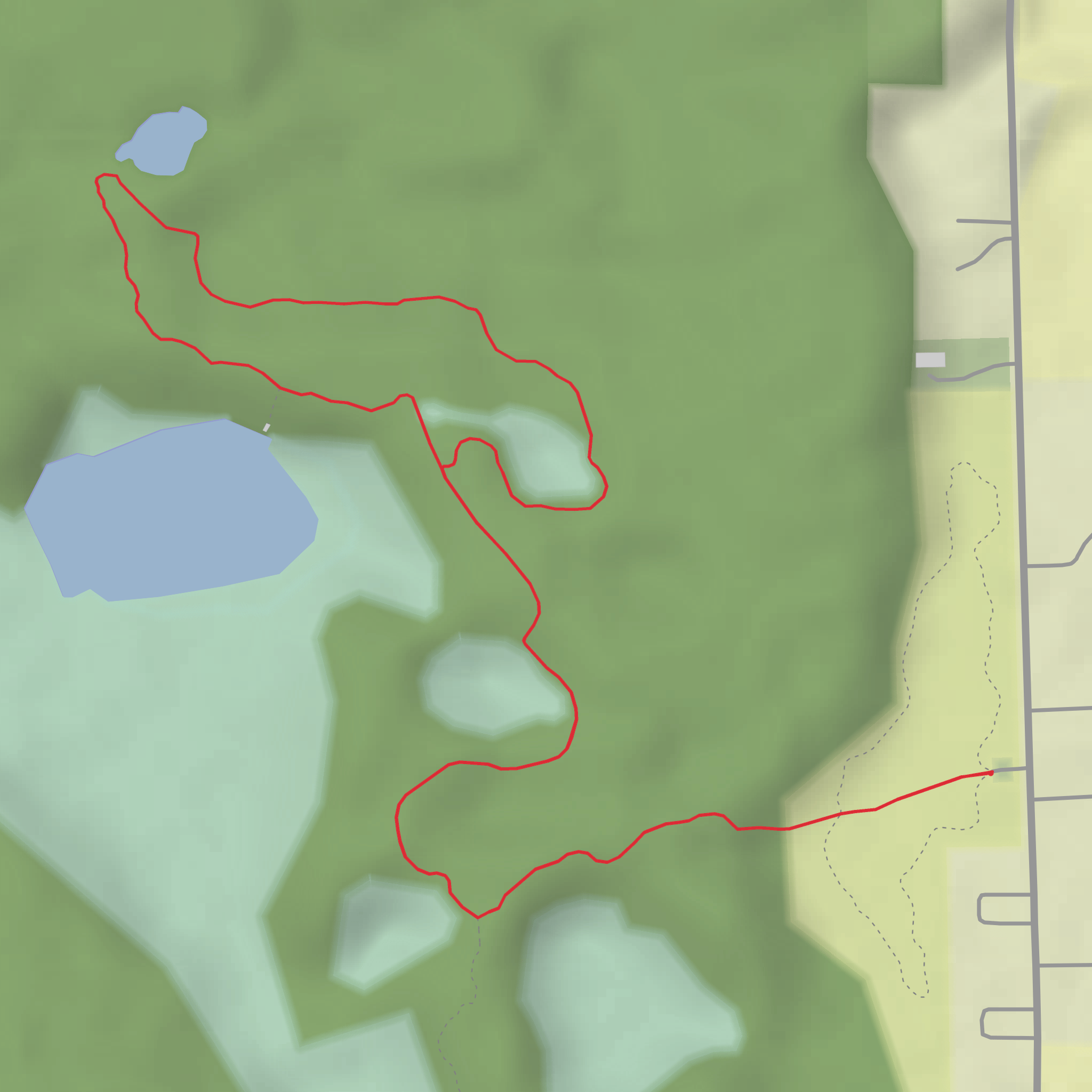
Expect a quiet, low-effort woodland walk that stays essentially flat—about 3 km / 1.9 mi round trip with ~0 m / ~0 ft elevation gain—built around the kind of wetland edge habitat where you’ll often see the “engineering” of beavers reflected in water levels, chewed stumps, and small dams. Because the grade is so gentle, this hike is well-suited to newer hikers, families, and anyone looking for a short nature-focused outing rather than a workout.
Getting to the start (car + public transport) - By car: Plan to drive to the nearest signed parking area for the Beaver Pond access/trailhead in the local park or conservation area where Clubmoss Trail is mapped. If you open the route in HiiKER, use the trail’s listed trailhead and navigate to the closest marked parking pull-off/lot shown there; in many “beaver pond” trail systems, parking is limited and can fill quickly on fair-weather weekends. - By public transport: If there’s transit in the area, the most reliable approach is usually bus/train to the nearest town center, then a short rideshare/taxi to the Beaver Pond access point. Use HiiKER to identify which road the trailhead sits on, then match that to the closest transit stop. (Many small trailheads near ponds don’t have a stop directly at the entrance.)
What the trail is like underfoot (and why it stays “easy”) You’ll typically be on a narrow footpath or old woods road with minimal elevation change. The “easy” rating comes from the lack of climbing, but the main variable is wetness: - Wet sections and soft ground: Beaver ponds expand and contract, and water can back up into low areas. Even on a short trail, expect mud, saturated leaf litter, and occasional standing water in the lowest spots—especially after rain or during spring melt. - Footwear: Light hikers are fine in dry spells, but waterproof shoes (or at least quick-drying trail runners) make the experience much more comfortable if the pond edge is soggy. - Bugs: Near still water, mosquitoes and black flies can be intense in warm months; bring repellent and consider long sleeves.
Landmarks and nature to watch for
0.0–0.8 km (0.0–0.5 mi): settling into mixed woods The first part usually threads through mixed forest—often a blend of hardwoods and conifers depending on the region—where the ground layer can be lush. Keep an eye low: “clubmoss” habitats tend to show up as dense, evergreen-looking mats on the forest floor in shaded, moist woods.
0.8–1.5 km (0.5–0.9 mi): approaching the Beaver Pond As you near the pond, the forest often opens slightly and the air feels cooler and damper. This is where you’re most likely to see: - Beaver sign: cleanly gnawed stumps, peeled sticks, small channels, and occasionally a dam or lodge-like mound. - Birdlife: wetland edges are prime for songbirds and water-associated species; early morning and dusk are best for activity. - Amphibians: frogs and salamanders are common around shallow water and wet leaf litter—watch your footing so you don’t accidentally step on small wildlife.
At/near the pond: the main “payoff” The pond itself is the focal point—often calm, reflective, and full of subtle movement. Scan the shoreline for: - Ripples and V-wakes (beavers, muskrats, or waterfowl) - Fresh cuttings (recent beaver work is usually pale wood with sharp tooth marks) - Tracks in mud along the waterline (deer and smaller mammals often visit to drink)
Safety and “look out for” notes - Changing water levels: If beavers have recently dammed an outlet, a normally dry stretch can become flooded. If you encounter water over the trail, avoid trampling the wetland edge—look for a durable bypass if one exists, or turn back. - Slippery roots/boardwalks: If there are any short bridges or planks near the wettest spots, they can be slick when damp or leaf-covered. - Wildlife distance: Beavers are generally shy; give them space, especially at dusk when they’re most active. If you’re in an area with larger mammals, make noise in dense vegetation and keep pets close.
Historical significance (what you’re walking through) Beaver ponds are more than scenic—they’re part of a long ecological and human story. In much of North America, beavers were historically trapped heavily during the fur trade era, and many landscapes lost the wetland complexity beavers create
Surfaces
Dirt
Grass
Wood
Comments and Reviews
User comments, reviews and discussions about the Clubmoss Trail near Beaver Pond, Ohio.
average rating out of 5
0 rating(s)
