3.2 km
~42 min
45 m
Loop
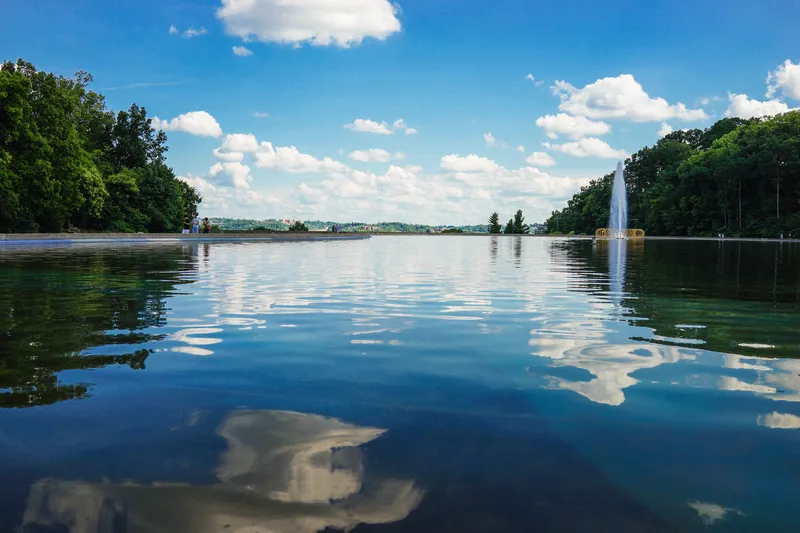
“Drift along Mirror Lake’s calm edge beneath grand shade trees, pausing often on benches.”
A gentle, mostly level stroll of about 3 km (1.9 mi) with essentially 0 m (0 ft) of climbing, this walk suits families, first-timers, and anyone after an easy loop with water views, big shade trees, and frequent benches. Expect paved paths and well-formed park walkways rather than rugged trail tread, with plenty of options to shorten or extend the outing depending on how much time you want by the lake.
Getting to the start (car + public transport)
By car: Aim for the main Eden Park area around Eden Park Drive / The Avenue, Auckland—a reliable landmark is Eden Park Stadium (Reimers Avenue, Kingsland), which sits a short drive from the park and is easy to navigate to. From there, follow signs toward Eden Park (the parkland) and look for the most convenient public parking near the park entrances and internal roads. If there’s an event on at the stadium, parking and traffic can change quickly—arrive earlier than you think you need.
By public transport: The simplest anchor point is Kingsland Train Station (near Eden Park Stadium). From the station, it’s a straightforward walk toward the parkland entrances (allow roughly 10–20 minutes depending on where you enter and where you choose to begin your loop). Buses also run frequently through Kingsland and nearby arterials; choose a stop closest to Eden Park/Stadium and walk in.
Where “near the trailhead” usually means: For planning purposes, treat the start as near Eden Park Stadium / Kingsland, then begin your walk from whichever park entrance puts you closest to the lake edge paths.
What the walk is like underfoot
Most of the route is flat and accessible, with paved or compacted paths suitable for casual walking shoes. After rain, you may still find slick patches under trees, damp leaf litter, and occasional puddling in low spots, but you won’t be dealing with steep grades or technical footing. Because the elevation change is negligible, the main “effort” comes from pace and time on feet, not climbing.
If you’re using navigation, load the route in HiiKER and keep an eye on where the lakeside paths branch—parks often have multiple connectors that can accidentally shorten your loop if you take a cross-path too early.
Route flow and key landmarks (approximate distances)
You can walk this as a relaxed loop with frequent opportunities to pause:
0.0–0.5 km (0.0–0.3 mi): Settling in Start from the nearest park entrance and follow the main path toward the water. Early on you’ll pass open lawns and mature plantings—good places to check footwear comfort and adjust layers.
0.5–2.2 km (0.3–1.4 mi): Mirror Lake shoreline The heart of the walk is the lakeside circuit, where the path stays close to the water for long stretches. You’ll get the best “mirror” reflections when the wind is low—early morning and late afternoon are often calmest. Look for:
- Viewing points where the path widens (good for photos and letting faster walkers pass)
- Benches and picnic spots tucked under shade trees
- Small footbridges or culverts where water drains in/out after rain
2.2–3.0 km (1.4–1.9 mi): Return via park connectors The final section typically uses internal park paths back toward your starting entrance. If you want to keep it exactly around 3 km, avoid doubling back along the same shoreline segment—use a parallel connector path instead.
Because park networks vary, your exact loop may come out a little short or long (often 2.7–3.5 km / 1.7–2.2 mi) depending on which entrance you start from and how closely you hug the water.
Nature, wildlife, and what to look for
Even on an urban park walk, the lake edge concentrates wildlife activity:
- Birdlife: Expect common waterbirds (often ducks, swans, and other lake visitors) plus songbirds in the canopy. Dawn and dusk are the most active times.
- Aquatic edges: Reeds and marginal plants provide cover for small fish and invertebrates; you’ll often see ripples and quick surface movement near sheltered corners.
- Trees and shade: Mature trees create cooler microclimates—handy on warm days, but they also mean more leaf litter and potentially slippery patches on damp pavement.
Please avoid feeding birds—human food can harm them and increases aggressive behavior around busy path sections.
Hazards and practical planning
- Shared-path traffic: This is the main “risk” here—walkers, runners, kids on scooters, and cyclists may all use the same corridors. Keep right (where customary), and be extra alert at blind corners and near benches where people step out suddenly.
- Wet surfaces: After rain, watch for slick algae on shaded pavement near the waterline and muddy edges where people cut corners.
- Sun exposure: Even with trees, open lawns can be bright. Bring sunscreen and a hat on clear days.
- Mosquitoes/sandflies: Still water can mean biting insects in warmer months—pack repellent if you’re sensitive.
- Dogs: If dogs are allowed in the park, expect them—especially near water access points. Keep space if you’re uneasy around off-leash play.
Historical and local context
Eden Park as a broader area is strongly associated with Auckland’s sporting and community history, anchored by **Eden

Surfaces
Unknown
Concrete
Comments and Reviews
User comments, reviews and discussions about the Mirror Lake in Eden Park, Ohio.
average rating out of 5
0 rating(s)