
Download
3D Flyover
Add to list
More
1.3 km
~15 min
0 m
Out and Back
“A gentle woodland wander leads to Thoreau Lake’s quiet shimmer—watch for roots and slippery shorelines.”
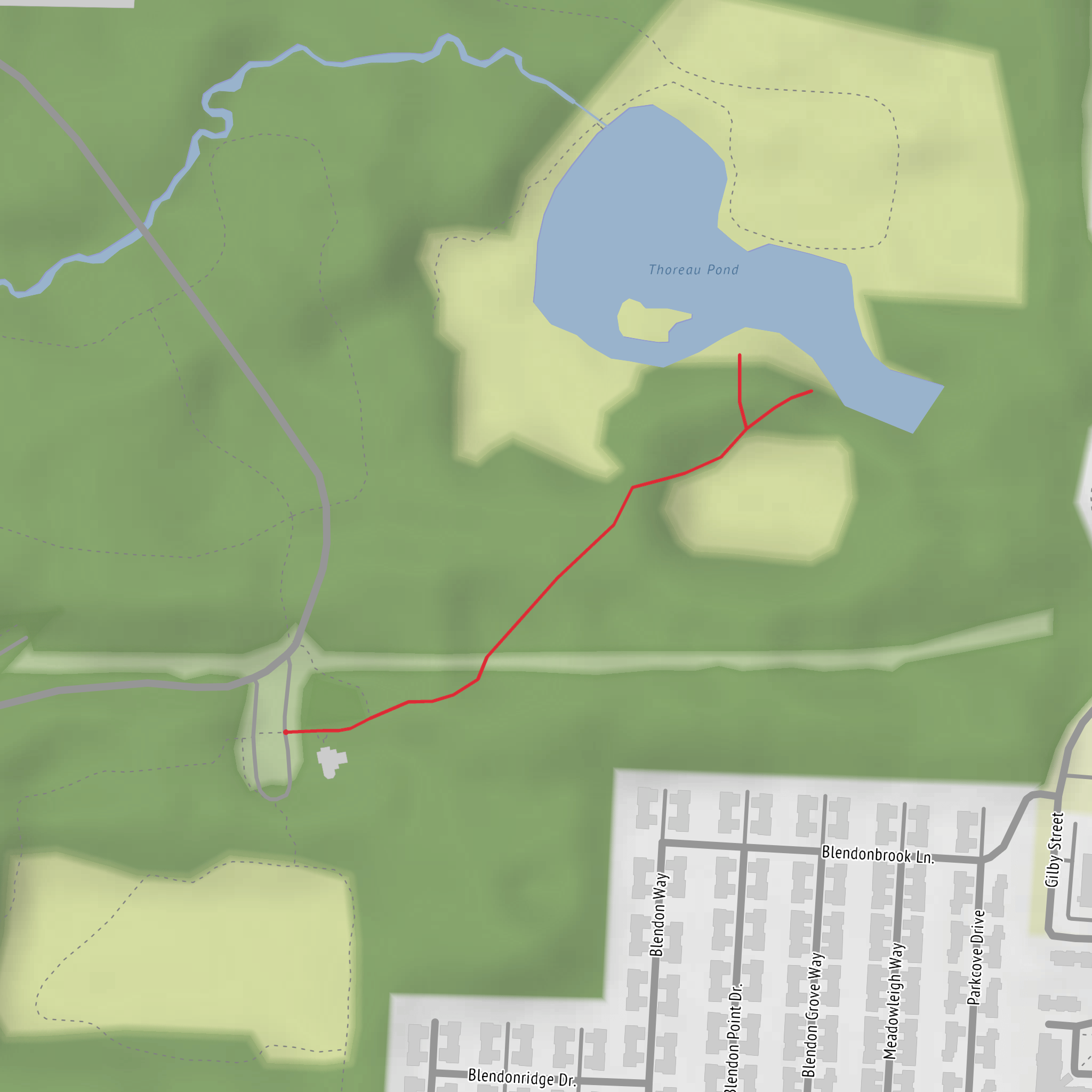
This is a short, low-effort lakeside walk—about 1 km / 0.6 mi total with ~0 m / 0 ft of climbing—ideal for a relaxed outing, families, or anyone looking for an accessible nature break. Expect mostly level footing, frequent views through the trees, and a quick payoff at the water.
Getting to the trailhead (car + public transport)
You listed the hike head as “near” but didn’t include coordinates or a place name. If you share a lon/lat (or even the nearest town/park name), I can convert it to the nearest recognizable address or landmark and tailor the directions precisely.
For now, here’s the practical approach that works for most “Lake Trail” access points: - By car: Search your maps for the closest signed “Lake Trail” parking area associated with Thoreau Lake (often a small gravel lot or a roadside pull-off). Arrive early on weekends—short lake walks tend to fill up quickly because they’re popular with casual visitors. - By public transport: If there’s a nearby town, the usual pattern is bus/train to the nearest town center, then a rideshare/taxi to the trailhead. Many lake access points are outside reliable transit coverage, so plan for a last-mile ride unless you already know there’s a park shuttle.
If you provide coordinates, I’ll also tell you the most likely parking situation (lot size, overflow, typical restrictions) and the most realistic transit option for that specific location.
What to expect on the walk - Distance & time: 1 km / 0.6 mi round trip is commonly 15–30 minutes at an easy pace, longer if you linger at the shoreline. - Elevation: Essentially flat (~0 m / 0 ft), though you may still encounter minor undulations (roots, small berms, or a short ramp down to the water). - Trail surface: Typically a packed dirt or fine gravel path with occasional roots and muddy patches in shaded low spots. After rain, the “flat” nature of the route can mean standing water where drainage is poor. - Navigation: Even on short trails, bring HiiKER so you can confirm you’re on the correct spur to the lake and find the best shoreline access without wandering onto social paths.
Along the Lake Trail: landmarks, scenery, and the feel of the route
From the trailhead, the path usually eases into a quiet, wooded corridor. Because the route is short, the “landmarks” tend to be subtle: - Trail junctions and spurs: You may see small side paths leading toward the water. Some are official access points; others are informal “social trails” that can be slick and eroded. If you’re unsure, stick to the main tread and use HiiKER to confirm the intended line. - Shoreline arrival: The lake edge is the main highlight—often a small opening in the trees, a natural bank, or a modest viewpoint. If there’s a designated viewing area, it’s usually the safest place to approach the water (more stable footing, less undercut bank).
Nature and wildlife you may encounter Because this is a calm, low-traffic-distance hike, wildlife sightings can be surprisingly good—especially early or late in the day. - Birdlife: Expect common lake-edge species—songbirds in the trees and water-associated birds near the shoreline. Listen for calls and watch for movement along the reeds or overhanging branches. - Amphibians and insects: In warmer months, lakeside trails often have mosquitoes and other biting insects, especially at dawn/dusk and after rain. A light layer and repellent can make the stop at the water much more pleasant. - Larger animals: In many North American lake-and-forest settings, it’s normal to share space with deer and other mammals. Store snacks securely and keep a respectful distance from any animal you encounter.
What to look out for (common issues on easy, flat lake walks) - Slippery edges: The most common hazard isn’t steep terrain—it’s the last few metres/yards to the water, where mud, algae-coated rocks, or undercut banks can cause slips. - Roots and trip hazards: Flat trails still trip people. Watch for roots and small step-ups where the path narrows or skirts wet ground. - Ticks (seasonal): In brushy or grassy margins, ticks can be present. Long socks/pants and a quick post-hike check are smart precautions. - Short trail, big crowds: Easy lakeside walks can feel busy. If you want a quieter experience, aim for weekday mornings.
Historical significance (what’s likely, and how to make it specific) With a name like “Thoreau Lake,” the area may be named in honor of Henry David Thoreau, whose writing helped shape American ideas about nature, simplicity, and conservation. Many places adopt “Thoreau” names to reflect that legacy rather than a direct visit by Thoreau himself. If you tell me the state/park (or provide coordinates), I can confirm whether: - the name is tied to a local historical dedication, - the lake sits within a protected area with a specific conservation history, - there are interpretive signs or a known cultural/Indigenous history associated with the site.
What to bring for a 1 km / 0.6 mi easy walk - Footwear: Comfortable walking shoes are usually enough; choose something with grip if it’s wet. - Layers: Lakes can feel cooler and breezier at the shoreline
Comments and Reviews
User comments, reviews and discussions about the Thoreau Lake via Lake Trail, Ohio.
average rating out of 5
0 rating(s)
