
Download
3D Flyover
Add to list
More
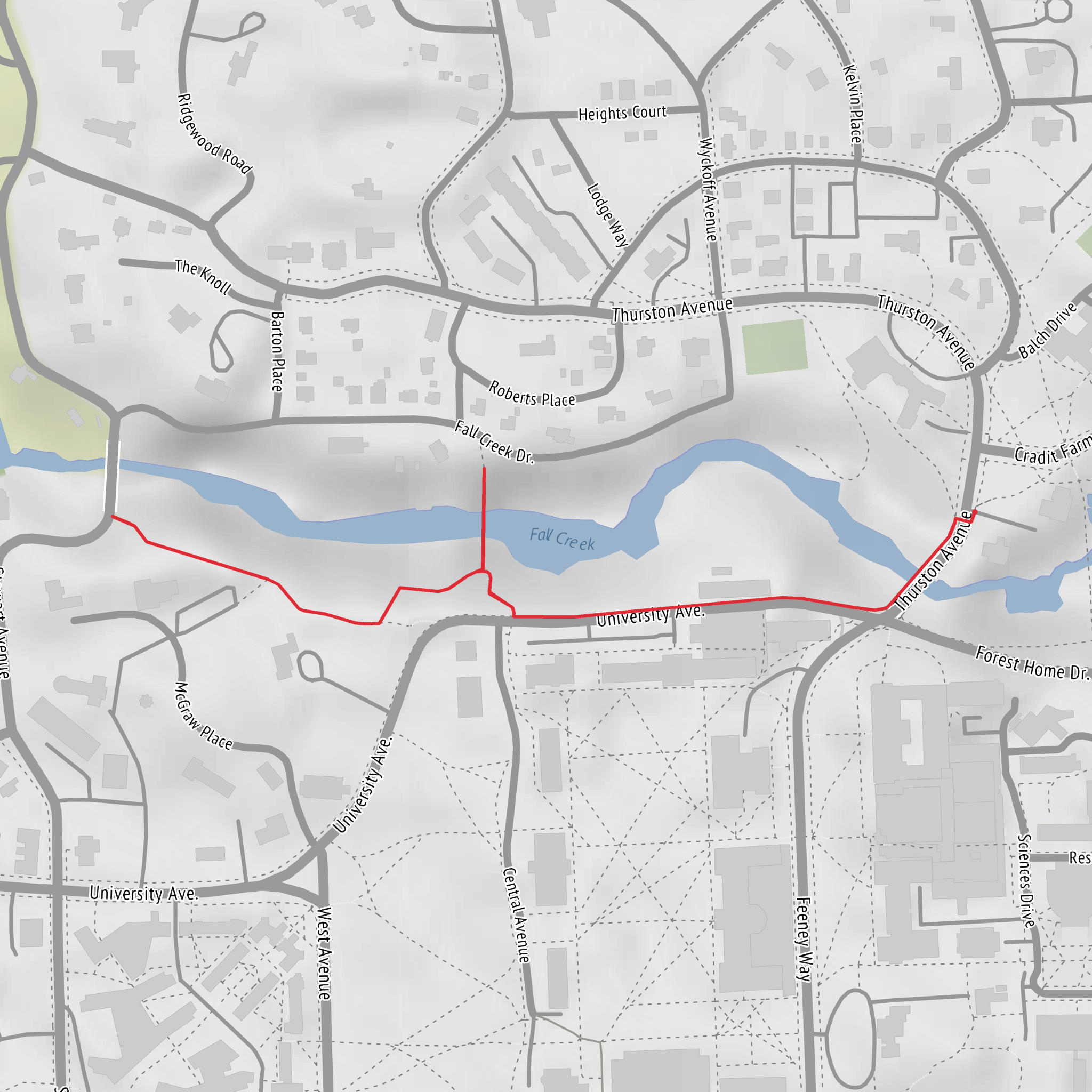
1.8 km
~27 min
58 m
Out and Back
“A pocket-sized waterfall wander—mossy, misty, and a touch scrambly—best for steady-footed explorers.”
A compact waterfall sampler with a bit of climbing: expect roughly 2 km (1.2 mi) total with about 100 m (330 ft) of elevation gain, mostly in short bursts as you move between viewpoints and drop into creek gullies. Even though the distance is short, the terrain can feel “medium” because you’re often on uneven rock, damp ground, and narrow footpads near water.
Getting to the trailhead (car + public transport)
You didn’t include coordinates or a specific town/park for “near …”, and there are multiple places with Horseshoe Falls / Rocky Falls / Forest Falls names in the U.S. and elsewhere. If you share a lon/lat (or a map pin), I can convert it to the nearest recognizable address/landmark and give exact access directions and parking.
Until then, here’s how to plan access once you confirm the location: - By car: Most waterfall clusters like this start from a small pull-off or day-use lot near a creek crossing. Arrive early on weekends—parking is often the limiting factor, not trail capacity. Bring cash/credit in case there’s a day-use fee. - By public transport: Waterfall trailheads are often reachable only if there’s a nearby town shuttle or a bus stop on a highway corridor. The usual pattern is bus/train to the nearest town, then rideshare/taxi the last few miles/km to the trailhead. If you tell me the nearest city, I can outline the most realistic transit chain.
What the hike feels like underfoot
You’ll typically start on a packed path or old access track, then transition to narrower trail as you approach the first falls. The 100 m (330 ft) gain is usually concentrated in:
- a short climb away from the trailhead to a bench or ridge above the creek, and/or
- a steeper descent/ascent into a gorge where the falls are tucked in.
Plan for 30–60 minutes moving time for most hikers, but 90 minutes+ is common if you linger at each falls, take photos, or wait your turn at viewpoints.
Waterfalls and landmarks (approximate spacing)
Because waterfall naming varies by region, the order can differ, but on a 2 km (1.2 mi) loop/out-and-back you’ll usually encounter them in quick succession:
- First waterfall viewpoint (often 0.4–0.7 km / 0.25–0.45 mi in): A partial view through trees, sometimes from a small footbridge or rock shelf. This is where the trail often starts to feel slick—mist and shaded rock encourage algae growth.
- Horseshoe Falls area (commonly around 0.8–1.2 km / 0.5–0.75 mi): Look for a curved lip or amphitheater-like plunge pool. The best views are often from a side angle rather than straight-on. Expect wet rock and a bit of crowding at the prime photo spot.
- Rocky Falls (often another 0.2–0.5 km / 0.1–0.3 mi beyond): Typically a stepped cascade over boulders. The “rocky” character usually means more informal scrambling opportunities—also more ankle-turn risk.
- Forest Falls (often near the turnaround or on the return line): Usually less about a dramatic drop and more about a shaded, mossy cascade in dense canopy. This section can feel cooler and damper, with more roots and leaf litter hiding rocks.
If the route is a loop, the return leg often climbs away from the creek to drier forest tread before dropping back to the trailhead. If it’s an out-and-back, the return is the same terrain in reverse—watch footing even more on the way back when legs are tired.
Navigation and staying on-route
Waterfall networks often have social trails (unofficial spurs) leading to risky ledges or “better views.” Use HiiKER to confirm the main line and any official viewpoints. If you see multiple boot paths, prioritize the one that: - stays set back from the lip of the gorge, - avoids steep, loose dirt chutes, - matches the track on HiiKER rather than the most eroded line.
Hazards to plan for (why it’s “medium”)
- Slippery surfaces: Mist, algae, and polished rock near falls can be slick even in dry weather. Treat every dark rock as low-friction.
- Undercut edges and unstable banks: Waterfalls erode from below; the ground near the rim can be hollowed out. Keep a safe buffer from drop-offs.
- Flashy creek levels: After rain or snowmelt, crossings and rock-hops can become unsafe quickly. If water is moving fast or above mid-calf, don’t force it.
- Falling rock/branches: Gorge walls and saturated soils can shed debris. Don’t linger directly under steep banks.
- Crowding at viewpoints: The most dangerous moments are often when people step aside to let others pass near an edge. Be patient and wait for a stable stance.
Nature and wildlife you’re likely to notice
Waterfall corridors concentrate life: - Riparian plants: Ferns, mosses, and moisture-loving shrubs thrive in the spray zone; you’ll often see brighter greens and thicker understory near the water. - Birdlife: Expect songbirds in the forested sections and, near water, species that hunt insects over the creek. - Amphibians/invertebrates: Damp leaf litter and seeps can host salamanders, frogs, and a lot of small invertebrates—watch where you place
Surfaces
Unknown
Concrete
Dirt
Asphalt
Comments and Reviews
User comments, reviews and discussions about the Horseshoe falls, Rocky Falls and Forest Falls, New York.
average rating out of 5
0 rating(s)

