
Download
3D Flyover
Add to list
More
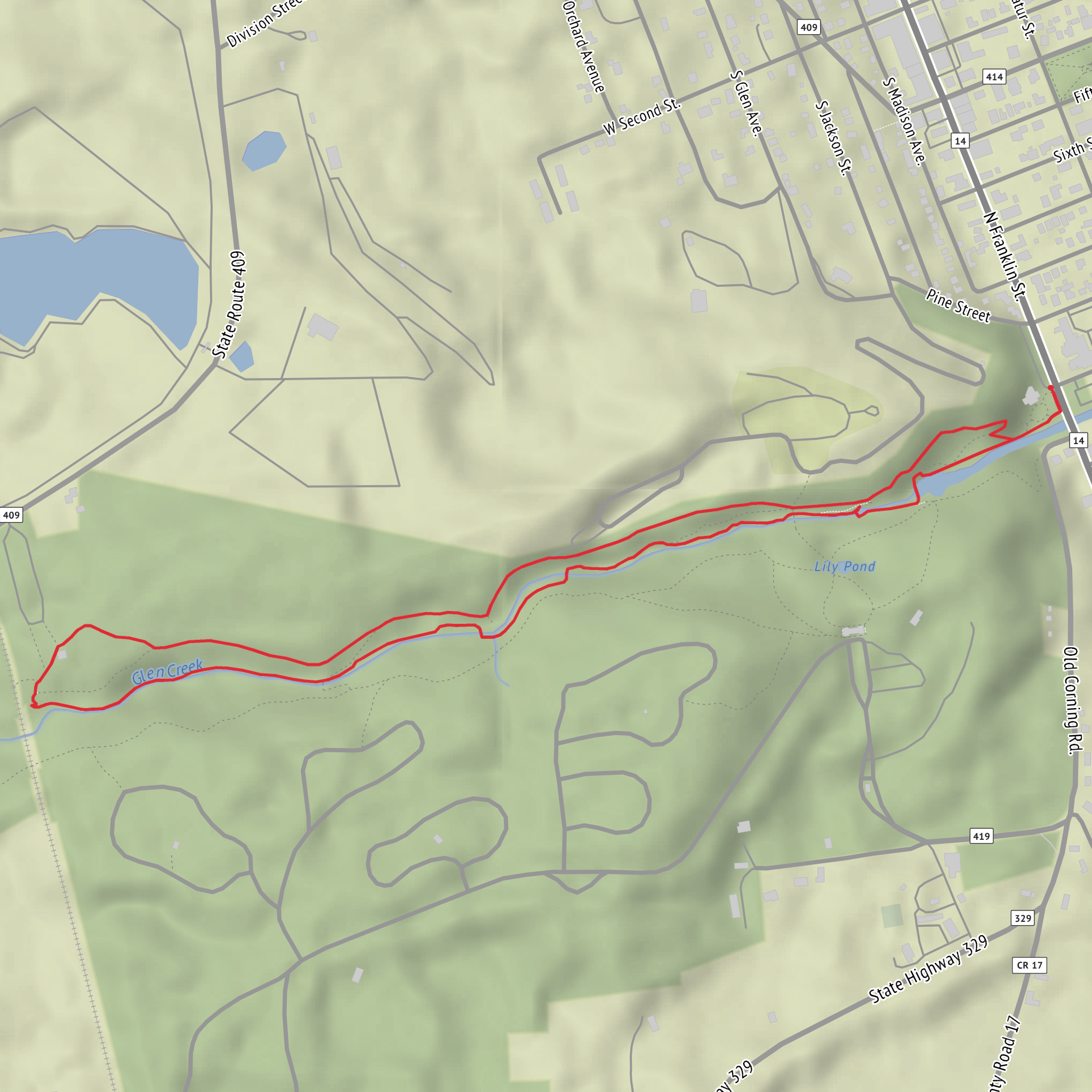
4.1 km
~1 hrs 6 min
175 m
Loop
“Misty gorge trails, punchy climbs, and Rainbow Falls spray—beautiful, but watch your footing.”
I’m missing a few key details needed to make this accurate (especially the trailhead location). Please paste either a HiiKER link or the trailhead coordinates (lat, lon) (and, if you have them, the end coordinates or a GPX). Once I have that, I’ll convert the coordinates to the nearest known address/landmark and write the full hike description.
To keep things moving, here’s what you can expect from a ~4 km / ~2.5 mi, ~200 m / ~656 ft gain medium waterfall loop/out-and-back in a Cascade Gorge–style setting, plus what I still need to tailor it to the correct “Central Cascade / Rainbow Falls” (there are multiple places with those names).
What the hike will feel like (pace, steepness, and footing)
Over 4 km (2.5 mi) with 200 m (656 ft) of gain, the climb is noticeable and often comes in short, punchy ramps rather than one long grind. Plan for 60–120 minutes moving time depending on stops at viewpoints and the falls.
Footing is typically a mix of: - Packed dirt and forest duff under canopy (can be slick with needles) - Rock steps / root lattices on steeper pitches - Wet stone and muddy pockets near the gorge and falls, especially after rain or snowmelt
If this route uses both a “Gorge Trail” and an “Indian Trail,” expect at least one section where the tread narrows along a slope above water—easy hiking, but you’ll want deliberate foot placement.
Landmarks you’ll likely hit in order
Because I don’t yet have the exact trailhead, I’ll describe the common structure of this kind of route; I’ll tighten the distances once you share coordinates or a HiiKER link.
- Trailhead to gorge entry (about 0.5–1.0 km / 0.3–0.6 mi, gentle gain): Usually a warm-up through mixed forest with the sound of water gradually building. This is where you’ll confirm you’re on the correct branch if multiple paths leave the parking area.
- Gorge section (about 1.0–2.0 km / 0.6–1.2 mi, most of the climbing): The trail often contours above the creek/river, then climbs in steps as the gorge tightens. Look for side spurs to viewpoints—some are worth it, some are social paths that end at unstable edges.
- Rainbow Falls area (often around the turnaround / high point): Expect a cooler, misty microclimate and slick rock. If there’s a main viewing platform, it’s usually the safest place to linger; if not, the best views are often from slightly downstream where the full drop is visible.
- Return via Indian Trail (variable, often drier and faster): These “alternate return” trails commonly run a bit higher, with fewer wet crossings and more consistent grade, making for a quicker exit.
Waterfall and gorge hazards to plan for
Waterfall hikes concentrate risk in small areas: - Spray zone traction: Rock can be algae-slick even on sunny days. Treat it like ice—short steps, no sudden pivots. - Undercut edges: Gorge rims can be deceptively fragile, especially where people have widened viewpoints. - High flow periods: After heavy rain or during spring melt, water levels rise fast; any stepping-stone crossings can become unsafe.
If you use navigation, keep HiiKER open and watch for the point where the route transitions between the Gorge Trail and Indian Trail—these junctions are where people most often add accidental distance.
Nature and wildlife you may see
In moist gorge corridors you’ll commonly find: - Mosses, ferns, and moisture-loving understory plants thriving in the shade - Nurse logs and dense groundcover where the forest floor stays damp - Songbirds concentrated near water (you’ll hear them before you see them)
Wildlife considerations: - Black bears are possible in many Cascade/temperate forest regions—carry food securely and give space. - Ticks can show up even on short hikes in brushy edges; long socks and a post-hike check help. - Amphibians (salamanders/frogs) near seeps—watch your step in wet leaf litter.
Historical significance (what I can cover once I know the exact location)
“Indian Trail” names are used widely and can refer to very different histories depending on the state/province. With the correct trailhead location, I can accurately describe: - Which Indigenous nations are connected to the area - Any known historic travel corridors, early settler routes, or logging/mining history - Whether the falls/gorge sits within a protected area (state park, national forest, etc.) and what that protection was created to preserve
Getting to the start (car + public transport)
I can’t responsibly give directions to “near ___” without the missing location, but here’s how I’ll format it once you provide coordinates: - By car: nearest major road access, typical parking situation, and any seasonal gate closures - By public transport: nearest bus/rail stop, last-mile options (walk, rideshare), and realistic time/distance for the final approach
What to bring for a 4 km / 2.5 mi medium waterfall hike
- Footwear: trail shoes with good wet traction (or light hikers if it’s muddy)
- Layers: gorge air is often cooler; bring a light shell even on warm days
- Water:
Surfaces
Unknown
Unpaved
Asphalt
Dirt
Gravel
Concrete
Comments and Reviews
User comments, reviews and discussions about the Central Cascade and Rainbow Falls via Gorge Trail and Indian Trail, New York.
average rating out of 5
0 rating(s)

