Download
3D Flyover
Add to list
More
1.0 km
~13 min
14 m
Out and Back
“A gentle out-and-back to Mineral Spring Falls, where mossy rocks glow with rusty mineral streaks—watch for slick footing.”
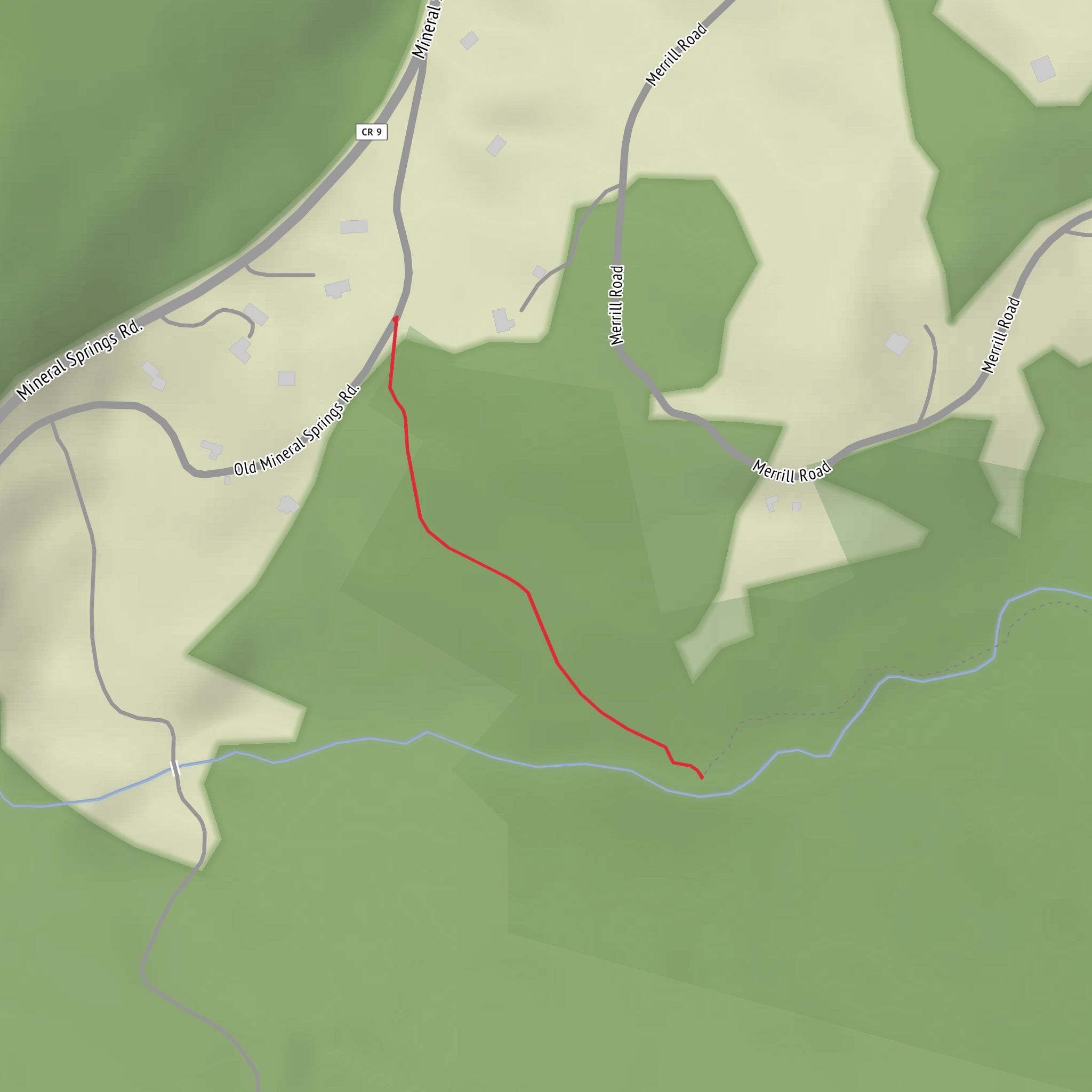
This is a short, mostly level out-and-back style stroll to a small waterfall viewpoint, ideal if you want something low-effort and family-friendly. At roughly 1 km (0.6 mi) total with about 0 m (0 ft) of climbing, expect more of a scenic nature walk than a workout—though footing can still be slick near the falls.
Getting to the trailhead (car + public transport)
Because the hike details you provided cut off at “Hike head: near” and don’t include coordinates, I can’t reliably convert a lon/lat to a nearest address or landmark yet. If you share either:
- a pin/coordinates, or
- the park/region/state, or
- a HiiKER link,
…I’ll translate that into the nearest practical “navigate-to” landmark (e.g., a named trailhead, parking lot, visitor center, or road junction) and give precise car and transit options.
In the meantime, here’s what typically applies to short waterfall access trails like this: - By car: look for a signed day-use parking area or a small pull-in near a trail kiosk. Arrive early on weekends—short waterfall walks often fill up first. - By public transport: if the falls are inside/near a town park, you may be able to bus close and walk the last 0.5–2 km (0.3–1.2 mi). If it’s in a more rural recreation area, transit may only get you to the nearest town, with rideshare/taxi needed for the final leg.
What the walk is like (surface, grade, and pacing)
From the start, the “Scenic Trail” name usually signals a well-defined path with frequent viewpoints or interpretive features. With essentially no net elevation gain, the grade should feel gentle—think packed dirt, fine gravel, or a narrow footpath with occasional roots.
Plan on 20–40 minutes round trip at a relaxed pace, longer if you’re stopping for photos or traveling with kids. Even on easy trails, the last approach to a waterfall often includes: - damp rock or muddy patches - short, slightly uneven steps - a narrow corridor where people pass each other near the viewpoint
Landmarks and natural features to watch for
The main landmark is the waterfall itself—Mineral Spring Falls—often fed by a small spring or seep that can keep it flowing even when nearby creeks drop in late summer. Depending on season and recent rain: - After wet weather, the falls can be louder and more forceful, with more spray (and slicker rocks). - In dry spells, it may reduce to a thin ribbon or a series of trickles, but the surrounding moss and mineral staining can still be striking.
Look closely at rock faces near the water: “mineral spring” areas commonly show orange, rust, or white mineral deposits where groundwater emerges and leaves trace minerals behind. These zones can be fragile—stay on the established tread to avoid trampling seep-fed plants.
Wildlife and seasonal considerations
On a short, low-elevation waterfall walk, wildlife encounters are usually brief but possible: - Birdlife: songbirds in the shrubs and canopy; listen for calls near the wetter corridor by the falls. - Amphibians/invertebrates: damp areas can host small frogs, salamanders, and plenty of insects—especially in spring. - Larger animals: in many North American parks, deer are common; in some regions, black bears or mountain lions are present even on easy trails (rarely seen, but worth practicing standard awareness).
Bring bug protection in warm months, and consider closed-toe shoes with decent tread year-round—waterfall mist and shaded ground can keep surfaces slick even when it hasn’t rained.
Safety notes (easy doesn’t mean risk-free)
- Stay back from the lip and edges: waterfall viewpoints often have undercut or crumbly margins.
- Watch for slippery algae: rocks near spray zones can be slick like ice.
- Keep kids close near water: the trail may be easy, but the hazard is concentrated at the viewpoint.
Navigation and planning
Even for a 1 km (0.6 mi) walk, it’s smart to confirm the correct spur to the falls and any seasonal closures. Use HiiKER to: - verify the exact start point and parking access - confirm whether the route is a loop or out-and-back - check recent notes about washouts, muddy sections, or viewpoint access
Historical significance (what’s typical for mineral spring / falls areas)
Once you share the exact location, I can tailor this precisely. Generally, mineral spring corridors have a few common historical threads: - Indigenous significance: springs and reliable water sources were often important travel and gathering points. - Early settlement and recreation: mineral springs were frequently promoted in the 1800s–early 1900s for “health” visits, small resorts, or local day trips. - Conservation history: many waterfall sites became early protected areas because they were scenic, accessible, and popular.
If you send the coordinates or the “near ___” location, I’ll pin it to the nearest named trailhead/landmark, add accurate local transit options, and tailor the geology, plants, wildlife, and history to the specific region.
Comments and Reviews
User comments, reviews and discussions about the Mineral Spring Falls via Scenic Trail, New York.
average rating out of 5
0 rating(s)