Download
3D Flyover
Add to list
More
109.3 km
7 days
2118 m
Multi Day
“Embark on New Jersey's Appalachian Trail: scenic vistas, rich history, and diverse habitats await.”
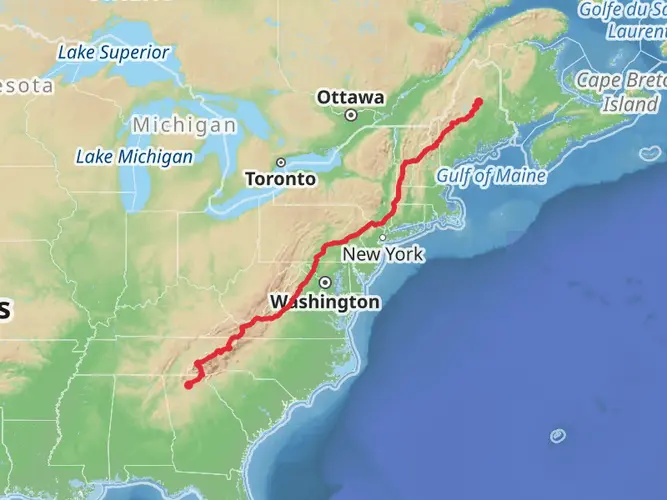
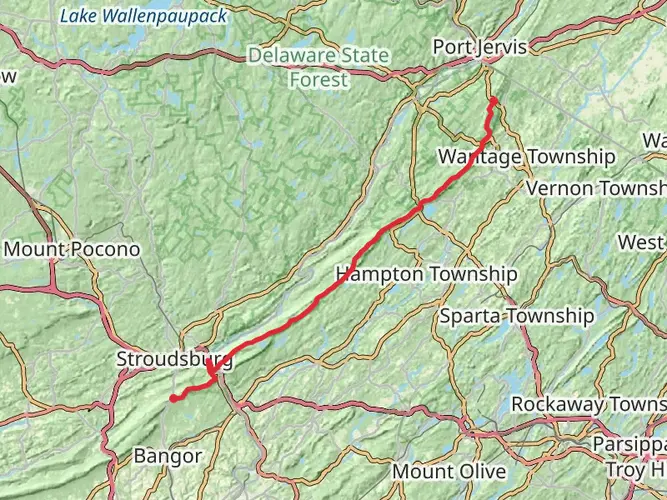
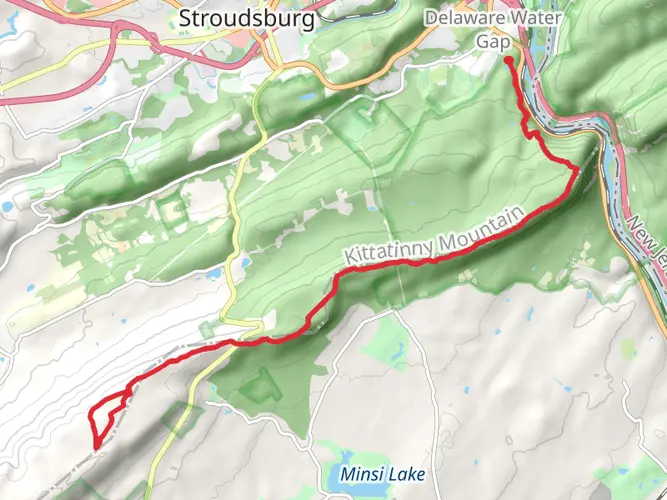
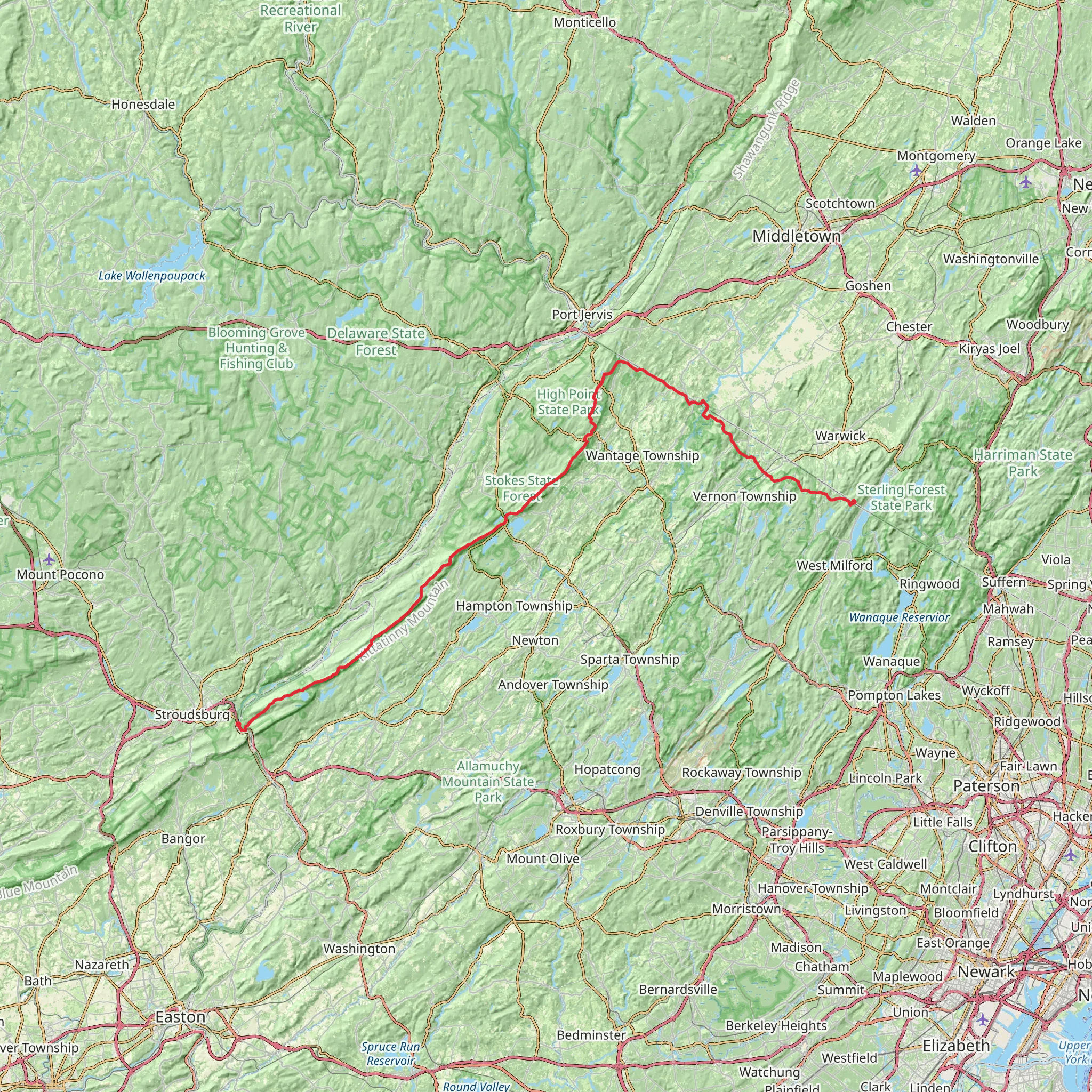
Spanning approximately 109 kilometers (68 miles) and with an elevation gain of around 2100 meters (6890 feet), the Appalachian Trail section in New Jersey offers a diverse hiking experience through rolling mountains, pastoral landscapes, and dense forests. This point-to-point trail begins near Warren County, New Jersey, and is rated as medium difficulty, making it accessible to hikers with some experience.
Getting to the Trailhead
The southern terminus of the New Jersey section of the Appalachian Trail is accessible by car, located near the Dunnfield Creek Natural Area in Warren County. For those relying on public transportation, options may be limited, but regional bus services can get you close to the trailhead, where you might need to arrange a taxi or rideshare for the final leg of the journey.
Trail Highlights and Landmarks
As you embark on the trail, you'll traverse through the Delaware Water Gap National Recreation Area, a highlight that offers stunning views of the Delaware River. The trail here is well-maintained with clear markings, and using the HiiKER app will help you stay on track without missing any significant viewpoints.
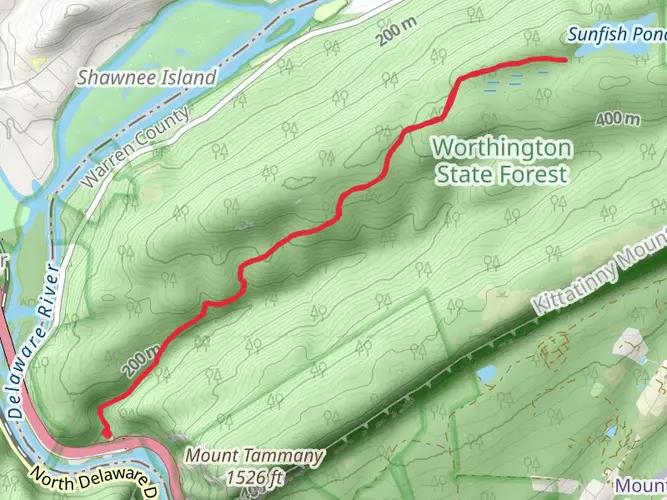
Continuing north, the trail climbs up to Sunfish Pond, an idyllic glacial lake and a perfect spot for a rest or a scenic lunch break. The surrounding hardwood forest is home to a variety of wildlife, including white-tailed deer, black bears, and numerous bird species.
The trail then leads to the highest point in New Jersey at High Point State Park, which sits at an elevation of 550 meters (1804 feet). The park's monument is a notable landmark and offers panoramic views of the surrounding landscape. The trail through this area is a mix of rocky terrain and forested paths, with wildflowers and wildlife sightings being common.
Historical Significance
The region is steeped in history, with the trail passing through areas that were once key in the early iron industry. Hikers will encounter remnants of this past, including old mines and historic villages. The trail also crosses the famous Kittatinny Ridge, known for its rich Native American history and significance during the colonial period.
Flora and Fauna
The Appalachian Trail in New Jersey is a haven for nature enthusiasts. The trail's diverse ecosystems support a wide array of plant life, from mountain laurel and rhododendron thickets to towering oak and maple forests. The changing seasons bring a dynamic display of colors, with vibrant fall foliage being a major draw for hikers.
Preparation and Planning
Before setting out, ensure you have adequate supplies, as resupply points are limited along the trail. Water sources are available, but it's advisable to treat or filter water before drinking. Weather can be unpredictable, so pack layers and be prepared for varying conditions. Check for any trail updates or closures, and plan your itinerary with the help of the HiiKER app to locate campsites and shelters along the route.
Navigation and Safety
While the trail is well-marked with the iconic white blazes, carrying a detailed map or using a navigation tool like the HiiKER app is essential for safety and to enhance your hiking experience. Always let someone know your plans and be bear-aware, storing food properly and knowing what to do in an encounter.
The Appalachian Trail in New Jersey offers a unique blend of natural beauty, wildlife, and history. With careful preparation and respect for the trail and its surroundings, hikers can enjoy a memorable journey through one of the most scenic sections of the Appalachian Trail.
AI Planner
Days planned around your pace, with somewhere to stay each night.
Frequently asked questions
How long does it take to hike the Appalachian Trail - New Jersey section?
The Appalachian Trail - New Jersey is 109.3 km, or about 68 miles, as a point-to-point route through Warren County and northern New Jersey. Most backpackers take around 5 to 7 days, depending on pace, weather, and overnight stops, while strong day hikers often tackle shorter sections such as Delaware Water Gap, Sunfish Pond, or the Pochuck Boardwalk.
Where does the Appalachian Trail - New Jersey start, and where can hikers park?
The southern end of the Appalachian Trail - New Jersey is commonly approached from the Dunnfield Creek Natural Area near Delaware Water Gap. That trailhead has a restroom, but the parking lot fills quickly on summer weekends. Farther north, one of the best-known access points is the Pochuck Boardwalk crossing on NJ 517, where curbside parking and a small dirt pull-off are available.
What are the main highlights on the Appalachian Trail - New Jersey section?
Major landmarks on the Appalachian Trail - New Jersey include Sunfish Pond in Worthington State Forest, the ridge walks above the Delaware Water Gap, the views from Sunrise Mountain, and the Pochuck Boardwalk in Vernon. The New Jersey section also reaches the highest elevation on the entire state route along Kittatinny Ridge and includes the 144-foot suspension bridge over Pochuck Creek.
Is the Appalachian Trail - New Jersey difficult?
The Appalachian Trail - New Jersey is generally rated medium, with 2,118 m of total elevation gain over 109.3 km. That means it is less relentlessly steep than some Appalachian Trail states, but it still includes rocky tread, sustained ridge walking, and longer multi-day mileage between access points. The climb from the Delaware Water Gap area toward Sunfish Pond is one of the more demanding early stretches.
Can dogs hike the Appalachian Trail - New Jersey?
Dogs are commonly seen on much of the Appalachian Trail - New Jersey, including popular access areas such as the Pochuck Boardwalk and Delaware Water Gap approaches, but rules can vary by managing agency and exact access point. Because this section passes through places such as Delaware Water Gap National Recreation Area, Worthington State Forest, and High Point State Park, leash control and park-specific regulations should be expected.
Is the Appalachian Trail - New Jersey good for a shorter day hike instead of the full route?
Yes. Although the full Appalachian Trail - New Jersey is a 109.3 km multi-day hike, several stretches work well as day hikes. Popular shorter options include the Dunnfield Creek approach to Sunfish Pond, the Pochuck Boardwalk and suspension bridge area near Vernon, and the Sunrise Mountain area, which is known for broad ridge views and relatively easy access by road.
What is the best time of year to hike the Appalachian Trail - New Jersey?
Late spring through fall is the most practical season for the Appalachian Trail - New Jersey. Summer brings full access to landmarks like Sunfish Pond and the Pochuck Boardwalk, but trailhead parking at Dunnfield Creek can fill quickly on weekends. In colder months, some nearby access roads in the Delaware Water Gap region have seasonal closures, and icy rock sections can make ridge travel slower and more technical.
Comments and Reviews
User comments, reviews and discussions about the Appalachian Trail - New Jersey, New Jersey.
4.77
average rating out of 5
13 rating(s)