
Download
3D Flyover
Add to list
More
10.1 km
~2 hrs 19 min
185 m
Loop
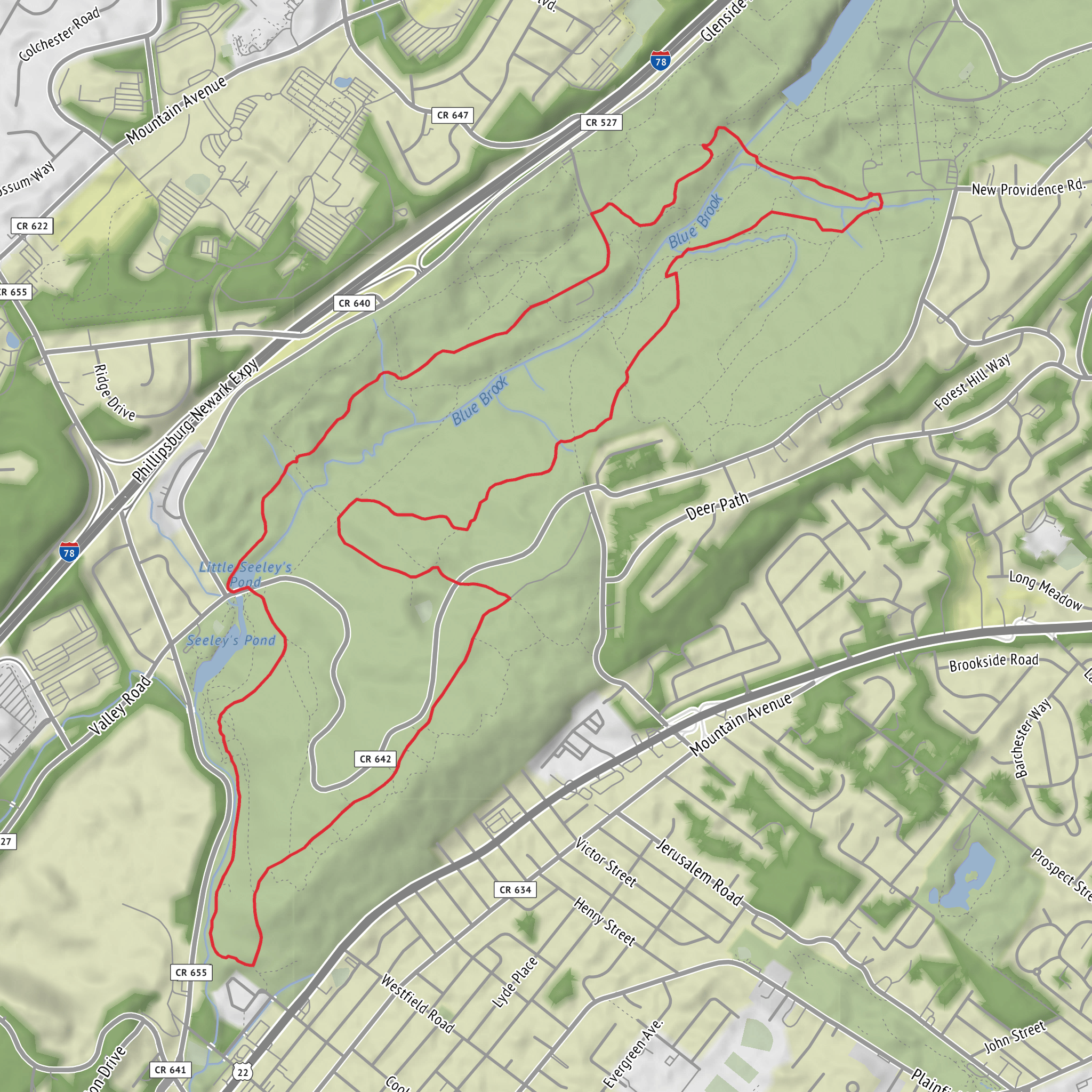
“Follow white blazes to Seeleys Pond’s quiet shimmer, then return on Sierra’s rooty, reflective rises.”
I’m missing a few key pieces needed to write this accurately (especially the start location). If you paste the trail’s start coordinates (lon/lat) or a HiiKER link, I’ll convert them to the nearest known address/landmark and tailor the route description precisely.
In the meantime, here’s a planning-ready description for an easy ~10 km / 6.2 mi loop with ~200 m / 656 ft of gain that follows a White Trail out to Seeleys Pond, then returns via the Sierra Trail—written in the way you’ll experience it on the ground.
You’ll typically start from a signed trailhead/parking pull-off near a local road or conservation access point. Expect a well-used footpath at the beginning, then a quieter feel as you approach the pond. The grade stays friendly overall, with the climbing coming in short, gradual rises rather than sustained steep sections.
Getting to the trailhead (car + public transport)
By car: Plan on arriving at a small trailhead lot or roadside parking area. If the lot is unpaved, it can get soft after rain and rutted during spring thaw—low-clearance cars usually still manage, but take it slow. Bring a small bill/coin just in case the area uses a day-use fee station (common at conservation parcels).
By public transport: If there’s a nearby town center, bus stop, or commuter rail station, the last leg is often the challenge—these trailheads are frequently 2–10 km (1–6 mi) from the nearest stop. The most reliable approach is public transit to the nearest hub, then a rideshare/taxi to the trailhead. Share the exact lon/lat and I’ll identify the closest stop and the most realistic last-mile plan.
For navigation, download the route in HiiKER before you go—cell coverage around ponds and lowland forest can be inconsistent.
From the trailhead, the White Trail usually begins as a clear corridor through mixed woodland. Underfoot is commonly packed dirt with scattered roots; after wet weather, expect slick patches where water collects in shallow depressions. Within the first 1–2 km (0.6–1.2 mi) you’ll likely gain your first 50–80 m (165–260 ft) in gentle rollers—enough to warm up, not enough to tax most hikers.
As you continue, watch for subtle junctions: “White” blazes/markers can be easy to miss when leaves are down or when multiple user paths braid together. If you see a widening tread with fewer blazes, pause and confirm in HiiKER rather than assuming it’s the main route.
Approaching the pond area—often around 4–5 km (2.5–3.1 mi) from the start on a 10 km loop—the forest tends to open slightly and the ground can become more saturated. Boardwalks or stepping-stone sections are common in pond-adjacent terrain; if there aren’t any, expect muddy margins and choose durable surfaces (rock, firm soil) to avoid widening the trail.
Seeleys Pond itself is the main landmark: a calm water body with shoreline vegetation and frequent bird activity. If there’s an obvious viewpoint, small clearing, or informal sitting spot, it’s usually near where the trail first meets the water. Give the shoreline a little space—pond edges are sensitive, and wildlife uses them as travel corridors.
What to expect on the Sierra Trail return
The Sierra Trail portion often feels slightly different in character—either a bit narrower, a touch rockier, or simply less traveled. Over the next 4–5 km (2.5–3.1 mi) back toward the trailhead, you’ll typically pick up the remainder of the day’s climbing in small increments, totaling about 200 m (656 ft) for the full loop.
Look out for: - Short, punchy rises (often 10–25 m / 30–80 ft at a time) that can be slippery if covered in leaf litter. - Rocky or rooty steps where erosion concentrates foot traffic—easy terrain, but a common place for ankle rolls. - Seasonal wet spots: even in summer, shaded low points can stay damp.
If the Sierra Trail crosses any small drainages, step carefully on rocks/logs—these are where people most often slip on otherwise easy hikes.
Nature, wildlife, and seasonal notes
Around pond-and-forest systems like this, you can reasonably expect: - Birdlife near the water (songbirds, waterfowl depending on region and season). - Amphibians in spring and early summer—watch the trail edges near wet areas. - Deer and small mammals in the surrounding woods, especially early/late in the day.
Bugs: Near still water, mosquitoes and black flies can be intense in late spring/early summer. Pack repellent and consider long sleeves even on warm days.
Ticks: If you’re hiking in the northeastern U.S. (common for “blazed” pond loops), tick checks are essential from spring through fall—especially after brushing past low vegetation.
Landmarks and points of interest to watch for
Even without exact coordinates, hikers should keep an eye out for: - Trail junction signage where White meets Sierra (often a post, blaze cluster, or small map board). - A pond access spur: sometimes a short side path leads to a better shoreline view—take it only if it’s clearly established. - Old stonework or remnants of past land use: in many U.S. forest parcels, you may see stone walls, old foundations, or legacy logging traces. These can
Surfaces
Unknown
Ground
Gravel
Comments and Reviews
User comments, reviews and discussions about the Seeleys Pond via White Trail and Sierra Trail, New Jersey.
average rating out of 5
0 rating(s)
