Download
3D Flyover
Add to list
More
10.9 km
~2 hrs 10 min
0 m
Point to Point
“A breezy Walcheren coastal stroll: dunes, dikes and wide skies, best savoured in calmer weather.”
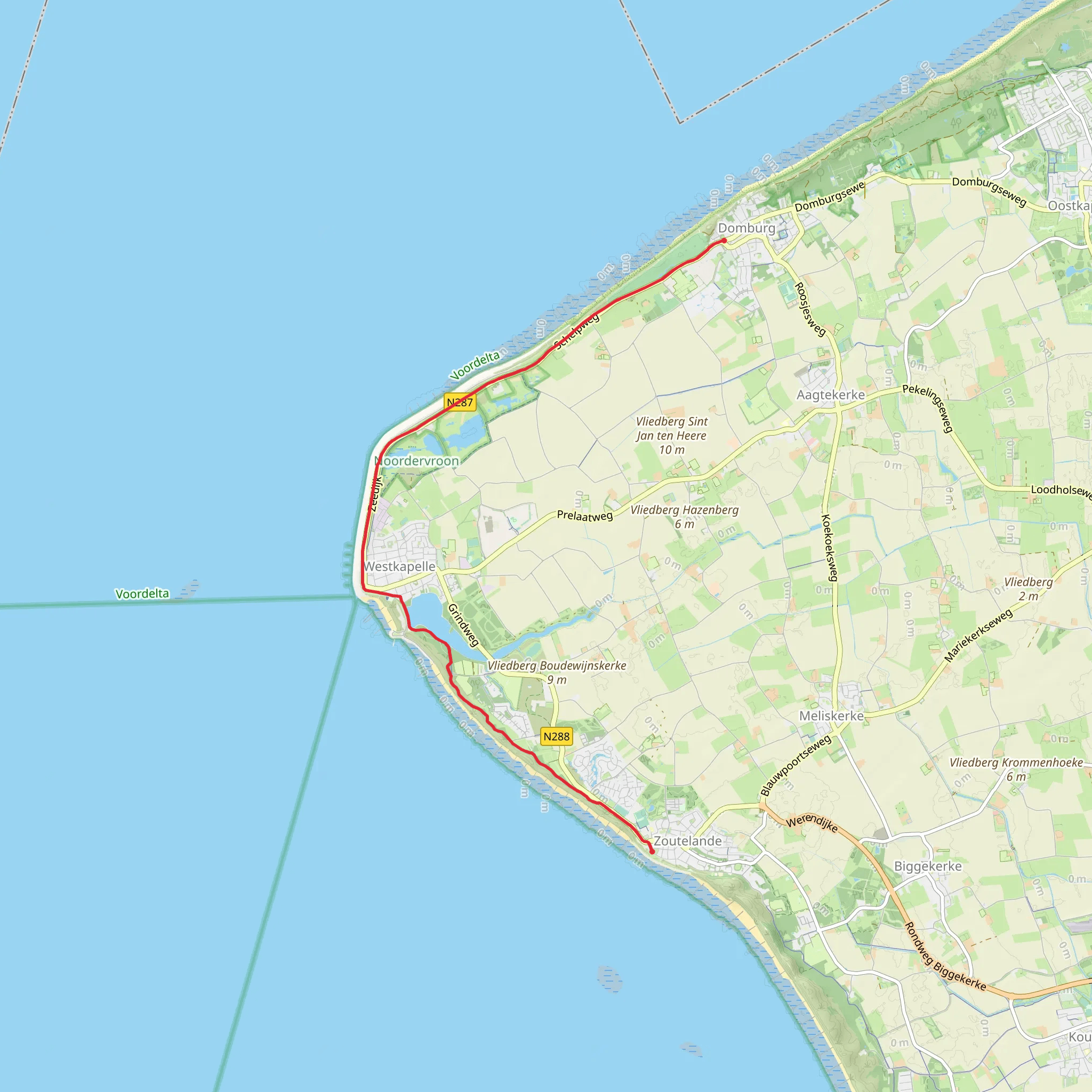
This is a flat, coastal Walcheren walk of about 11 km (6.8 mi) with essentially 0 m (0 ft) of sustained climbing—expect only gentle, short ups and downs where the route crosses dunes, dike approaches, and road overpasses. Underfoot is typically a mix of pavement/cycle path, hard-packed sandy paths, and occasional looser sand if you detour onto dune tracks. Wind is the main “difficulty multiplier” here: even on an easy profile, a strong North Sea breeze can make the exposed sections feel tougher and cooler than expected.
Getting to the start (Zoutelande)
By car
- Aim for parking around Zoutelande village near the main beach access points. A commonly used large lot for visitors is by Westkapelseweg in Zoutelande (signed parking areas near the edge of town). (zoutelande.info)
- In peak beach season, arrive early; Walcheren coastal villages can get busy on sunny weekends.
By public transport
- The usual pattern is train to Middelburg or Vlissingen, then bus onward to Zoutelande (local buses connect the coastal villages). (zoutelande.info)
- For exact departure times and stop locations on the day, plan and then navigate the walking portion with HiiKER (and cross-check live transit timing separately before you set off).
What the route feels like (km-by-km expectations)
0–3 km (0–1.9 mi): Zoutelande edges and dune-country atmosphere
Leaving the built-up area, you quickly get that classic Zeeland coast character: broad skies, salty air, and dune vegetation. Even if you’re not directly on the beach, the landscape is shaped by it—sandy soils, wind-pruned shrubs, and open views. Around Zoutelande, the coastal strip is known for dunes and planted coastal woods that were established to stabilize the landscape and create a recreational green belt. (zoutelande.info)
What to look for:
- Marram grass (the tough dune grass that holds sand in place) and sea buckthorn in scrubby sections (often with bright berries later in the year).
- Seabirds riding the wind; in migration periods you may notice increased bird activity along the coast.
3–7 km (1.9–4.3 mi): Westkapelseweg—open, exposed, and fast walking
As you pick up Westkapelseweg, the walking becomes straightforward and efficient—generally level, with long sightlines. This is where wind and weather matter most: there’s less shelter, and rain can come in sideways off the sea. If you’re using HiiKER, this is a good segment to keep an eye on any small turns where the route transitions between road verge, cycle path, and side lanes—easy terrain, but it’s also easy to “auto-pilot” past a junction.
Safety notes for this section: - Cycle traffic can be brisk on Walcheren’s excellent bike infrastructure—walk single file where needed and be predictable when crossing cycle lanes. - In wet or cold conditions, exposed stretches can feel significantly chillier than the temperature suggests.
7–11 km (4.3–6.8 mi): Schelpweg and the quieter lanes to the finish
Near the end, you transition onto Schelpweg (the name is also used locally in the area; you’ll see it referenced as a road/waypoint). This final portion tends to feel calmer and more rural, with fields, hedgerows, and drainage ditches typical of Zeeland’s managed lowland landscape. The walking remains easy and mostly flat, and you’ll often notice a shift from “coastal bustle” to “back-lane quiet.”
Landmarks, nature, and wildlife
Walcheren’s southwest coast is a meeting point of dunes, dikes, and reclaimed land, and the scenery reflects centuries of living with the sea.
- Dune systems and coastal vegetation: The dunes around Zoutelande are part of a broader coastal belt where you can see how dunes form and change, with a mix of sand, scrub, and wooded pockets in the wider region. (zeeland.com)
- Birdlife: Expect gulls and terns near the coast; inland edges and ditches can hold small waterbirds. Windy days often bring dramatic “soaring” behavior as birds use the airflow along dunes and dikes.
- Seasonal conditions: In summer, sun exposure is high and shade can be limited on road sections; in winter, the combination of wind + humidity can feel raw.
Historical context worth knowing while you walk
This part of Zeeland has a long history of coastal management—not just engineering, but also community rules to protect the dunes. Records describe late-medieval regulations around Zoutelande aimed at
Surfaces
Asphalt
Unknown
Cobblestone
Comments and Reviews
User comments, reviews and discussions about the Zoutelande to Schelpweg via Westkapelseweg, Netherlands.
average rating out of 5
0 rating(s)