
Download
3D Flyover
Add to list
More
20.8 km
~4 hrs 9 min
0 m
Point to Point
“Beneath vast Dutch skies, drift canal-side through reeds, bridges, and wind-swept polders.”
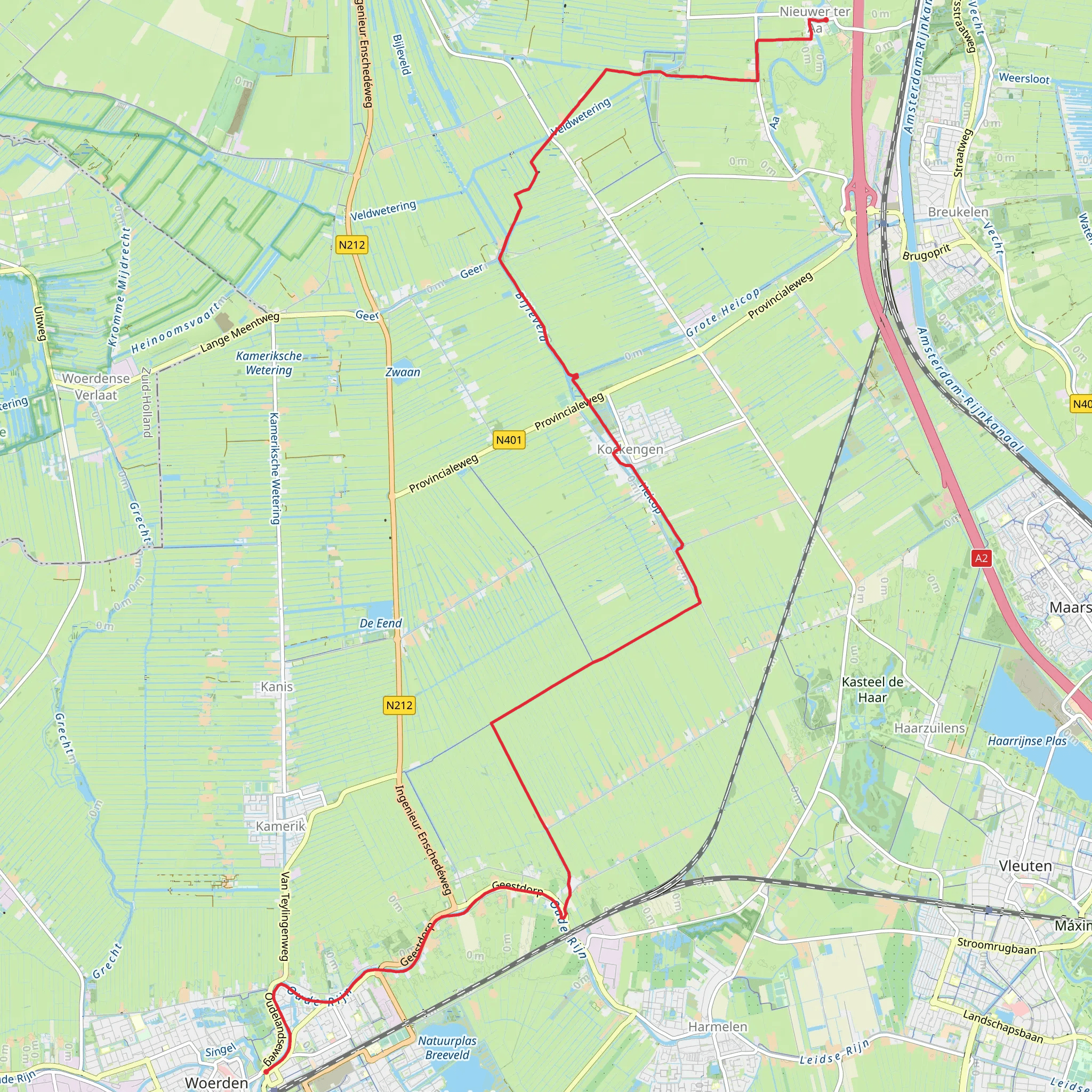
This is a flat, waterside walk through the Dutch “Green Heart” (Groene Hart): wide skies, reed-lined canals, long views across pasture, and a steady rhythm of bridges, towpaths, and quiet polder lanes. At around 21 km / 13.0 mi with roughly 0 m / 0 ft of climbing, it’s best planned as an easy, all-day ramble where wind and underfoot conditions matter more than hills.
Getting to the start (Woerden)
By train (public transport): - Aim for Woerden Station (Stationsplein, Woerden, Netherlands)—Woerden sits on frequent rail lines between major cities (commonly via Utrecht). From the station, it’s a short walk to the old town edge and the canal network where routes toward the polders begin.
By car: - Navigate to Woerden Station or Woerden city center (near Kerkplein and the canals) and use paid parking garages/lots. If you want a simple landmark to orient yourself, the historic center near Woerden’s canals and the area around the station is the most practical staging point for a long point-to-point walk.
If you’re doing this as a point-to-point, plan your return from Nieuwer Ter Aa in advance (bus connections can be less frequent in small villages). If you prefer a simpler logistics day, consider arranging a pickup or using public transport to loop back via nearby larger towns.
What the route feels like (terrain, surfaces, and pacing)
Expect a mix of: - Paved cycle paths and quiet farm roads - Gravel or compacted dirt towpaths beside canals and drainage ditches - Short stretches where the path can be muddy or slick after rain, especially near reed beds and along narrower polder tracks
Because the landscape is open, the biggest “difficulty” factor is often wind exposure. A calm day feels effortless; a headwind across open pasture can slow your pace noticeably.
A comfortable planning pace for most hikers is 4–5 km/h (2.5–3.1 mph) including brief stops, putting the walk in the 4.5–6 hour range depending on breaks and conditions.
Route breakdown with approximate distances
0.0–5 km (0.0–3.1 mi): Woerden out into the polders Leaving Woerden, the urban edges fade quickly into classic polder scenery: straight watercourses, low dikes, and long, narrow fields. You’ll likely pass small bridges and locks that manage water levels—an everyday reminder that this is engineered landscape. Even though the elevation gain is essentially nil, you’ll feel subtle rises and dips over dike crests and bridge approaches.
Look out for: - Canal-side vegetation: reeds, sedges, and willow - Waterfowl: mallard, coot, moorhen, and geese are common - Raptors over fields: kestrels and buzzards often hover or perch on posts
5–12 km (3.1–7.5 mi): De Meander and the quieter middle miles This is the most “Green Heart” portion—slow curves of water, reflective ditches, and a sense of moving through a living water-management system. The name “De Meander” hints at gentler bends compared with the ruler-straight drainage lines elsewhere; it’s a scenic change that makes the middle section feel less linear.
Underfoot, you may alternate between smooth pavement and narrower paths. After wet weather, expect: - Soft verges that can collapse toward the ditch edge - Slippery algae on bridge ramps and waterside concrete - Occasional standing water in low spots
Wildlife and nature notes: - In reedier stretches, listen for reed warblers in season. - Over open pasture, you may spot herons stalking ditches and egrets if they’re in the area. - Depending on time of year, the fields can host lapwing and other meadow birds—keep noise low and give wide berth if you see nesting activity.
12–18 km (7.5–11.2 mi): Portengen—farm lanes, ribbon development, and big-sky walking Portengen is a classic example of a lintdorp (ribbon village): homes and farms strung along a road or waterway, reflecting how settlement followed dikes and access routes in reclaimed land. The walking here is easy and steady, with frequent views across grazing land and drainage channels.
What to watch for: - Cyclists: these lanes and paths are often shared; stay predictable and keep right. - Farm traffic: tractors can appear suddenly on narrow roads. - Electric fences and livestock boundaries: stick to the path and close any gates if encountered.
This section can feel deceptively exposed—sun and wind have little to block them. On bright days, bring: - Sunglasses and sunscreen (reflection off water can be strong) - A light wind layer even in mild temperatures
18–21 km (11.2–13.0 mi): Into Nieuwer Ter Aa The final kilometers ease you toward the village atmosphere again—more houses, tidier verges, and a sense of arriving at a small, water-shaped community. Expect more paved surfaces and a few more road crossings as you approach the settlement.
If you’re timing daylight, this is a good place to build in buffer: even flat routes can run long if you’ve had wind, soft ground, or frequent photo stops.
Landmarks and historical context (why this landscape looks the way it does)
This walk sits in the **Groene
AI Planner
Days planned around your pace, with somewhere to stay each night.
Surfaces
Unknown
Asphalt
Grass
Ground
Concrete
Paved
Unpaved
Comments and Reviews
User comments, reviews and discussions about the Woerden to Nieuwer Ter Aa via De Meander and Portengen, Netherlands.
average rating out of 5
0 rating(s)

