Download
3D Flyover
Add to list
More
7.4 km
~1 hrs 28 min
0 m
Loop
“From Brandaris’ old beacon, wander flat yet ever-changing forest and wind-sculpted dunes.”
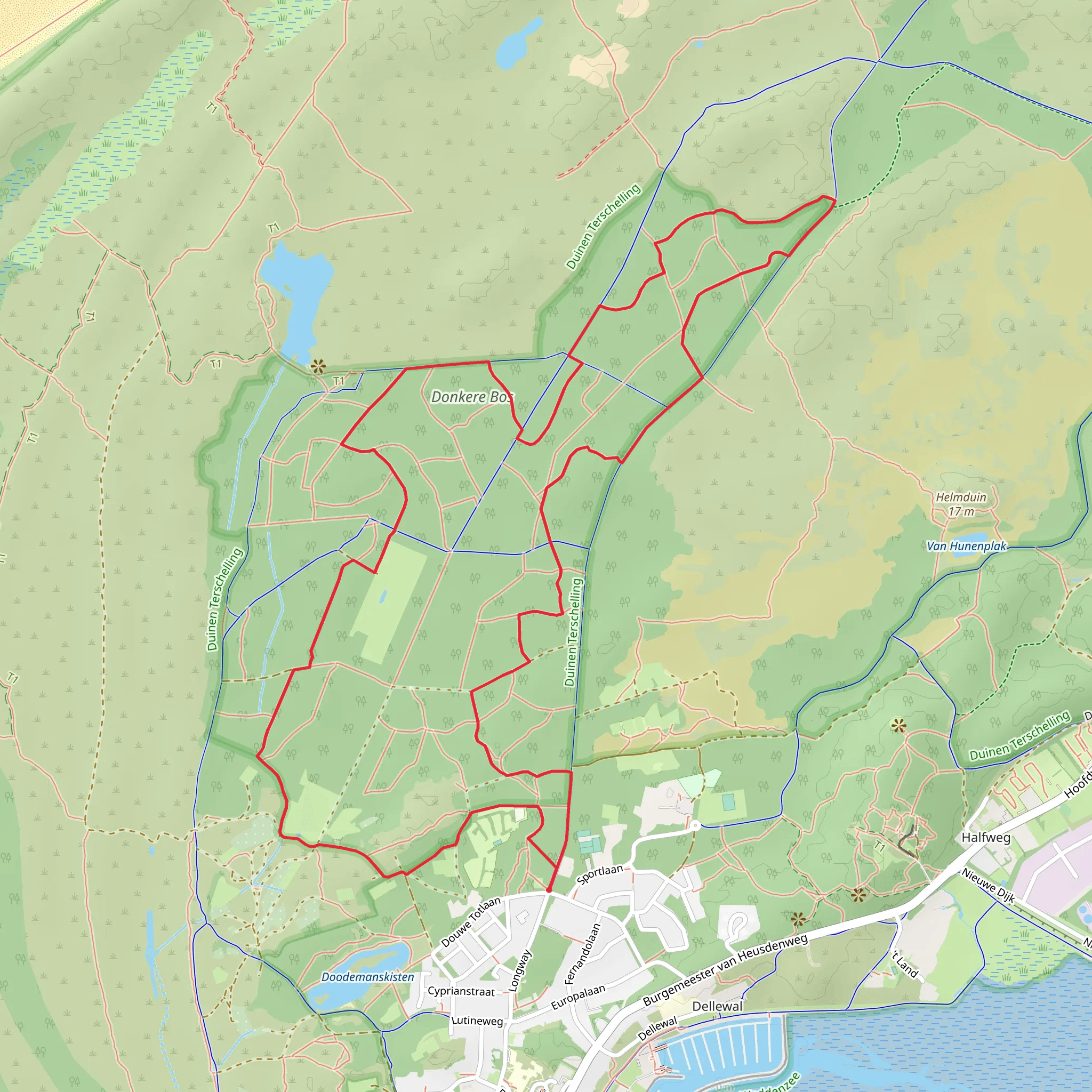
You’ll be walking a low-lying, sea-shaped landscape where forest, dune ridges, and open sand sit almost at the same height above the tide line—so the route feels varied even though the climbing is essentially negligible. Expect about 7 km (4.3 mi) total with ~0 m / ~0 ft of elevation gain overall (any “ups and downs” are short dune undulations rather than sustained climbs).
For planning purposes, a practical place to aim for as a start/finish is West-Terschelling, near the island’s main harbor area and village center. A very recognizable landmark nearby is the Brandaris Lighthouse, Brandarisstraat 2, 8881 AW West-Terschelling (the oldest lighthouse in the Netherlands, built in 1594). (terschelling.org)
Getting to the start (car + public transport)
- Public transport (typical approach): Travel by train/bus to the mainland ferry port at Harlingen Haven (Friesland), then take the ferry to West-Terschelling. From the ferry terminal, you can walk into the village and toward the dune/forest edge in minutes, or connect with local buses depending on where you want to begin.
- By car: Drive to Harlingen and park near the ferry terminal (paid long-stay parking is common around Dutch ferry ports), then continue as a foot passenger. Cars on the island are often restricted/limited for visitors, so check current ferry/island rules before you commit to bringing a vehicle.
Once on-island, open the route in HiiKER before you leave the village so you can confidently pick up the correct forest entrance and stay on the intended loop where paths braid together.
What the terrain feels like underfoot
This loop is “easy” mainly because it’s short and non-technical, but surfaces change frequently: - Village-edge paths: firm paving or compacted gravel as you leave West-Terschelling. - Forest tracks in Donkere Bos: springy needle-strewn singletrack and wider sandy lanes; after rain, some sections can feel damp or soft. - Dune paths: short sandy stretches where footing can be looser and pace slows slightly—especially if it’s windy and the sand is dry.
Because the island is exposed, wind is often the biggest “difficulty multiplier.” Even on a flat route, a headwind across open dune faces can make the walk feel more strenuous than the stats suggest.
Donkere Bos: birds, shelter, and wayfinding
The Donkere Bos (literally “Dark Forest”) sits just north of West-Terschelling and is laced with walking and cycling paths. It’s well known locally as a pleasant walking area and a strong spot for forest birds. Birders regularly note species such as Great Spotted Woodpecker, Coal Tit, Goldcrest, treecreepers, and—during migration—large movements of thrushes; with luck you may also encounter crossbills, bramblings, or woodcock. (birdingplaces.eu)
Practical things to watch for here: - Fast bikes on shared tracks: Many forest lanes are multi-use; keep right and listen for bells. - Path junction density: The forest has many intersecting options; check HiiKER at junctions so you don’t accidentally “shortcut” and miss the dune section. - Seasonal footing: In wetter months, shaded forest sand can hold moisture and feel heavier; in drier months, it can be powdery.
Dunes and open sand: the “Duinen” character
As you transition out of the trees, the landscape opens into classic Wadden-island dune scenery—low ridges, wind-shaped sand, and hardy dune vegetation. Even without big climbs, you’ll notice constant micro-relief: small rises, shallow bowls, and sheltered hollows. These open sections are where you’ll feel the weather most directly: - Sun exposure can be surprisingly strong with sea-reflected light. - Wind chill can be real even on mild days—pack a light shell. - Blowing sand is common; sunglasses help.
Landmarks and local history you’re walking through
West-Terschelling’s skyline is dominated by the Brandaris Lighthouse (again: Brandarisstraat 2), a major navigation landmark for centuries and a protected historic monument. (terschelling.org)
If you want to add a short, worthwhile historical detour (or simply
Surfaces
Ground
Unknown
Sand
Dirt
Asphalt
Unpaved
Comments and Reviews
User comments, reviews and discussions about the Duinen Terschelling and Donkere Bos Loop, Netherlands.
average rating out of 5
0 rating(s)