
Download
3D Flyover
Add to list
More
13.8 km
~2 hrs 45 min
0 m
Loop
“Winding past castle moats, wildflower meadows, and timeless villages, this gentle trail unveils Groningen’s tranquil heart.”
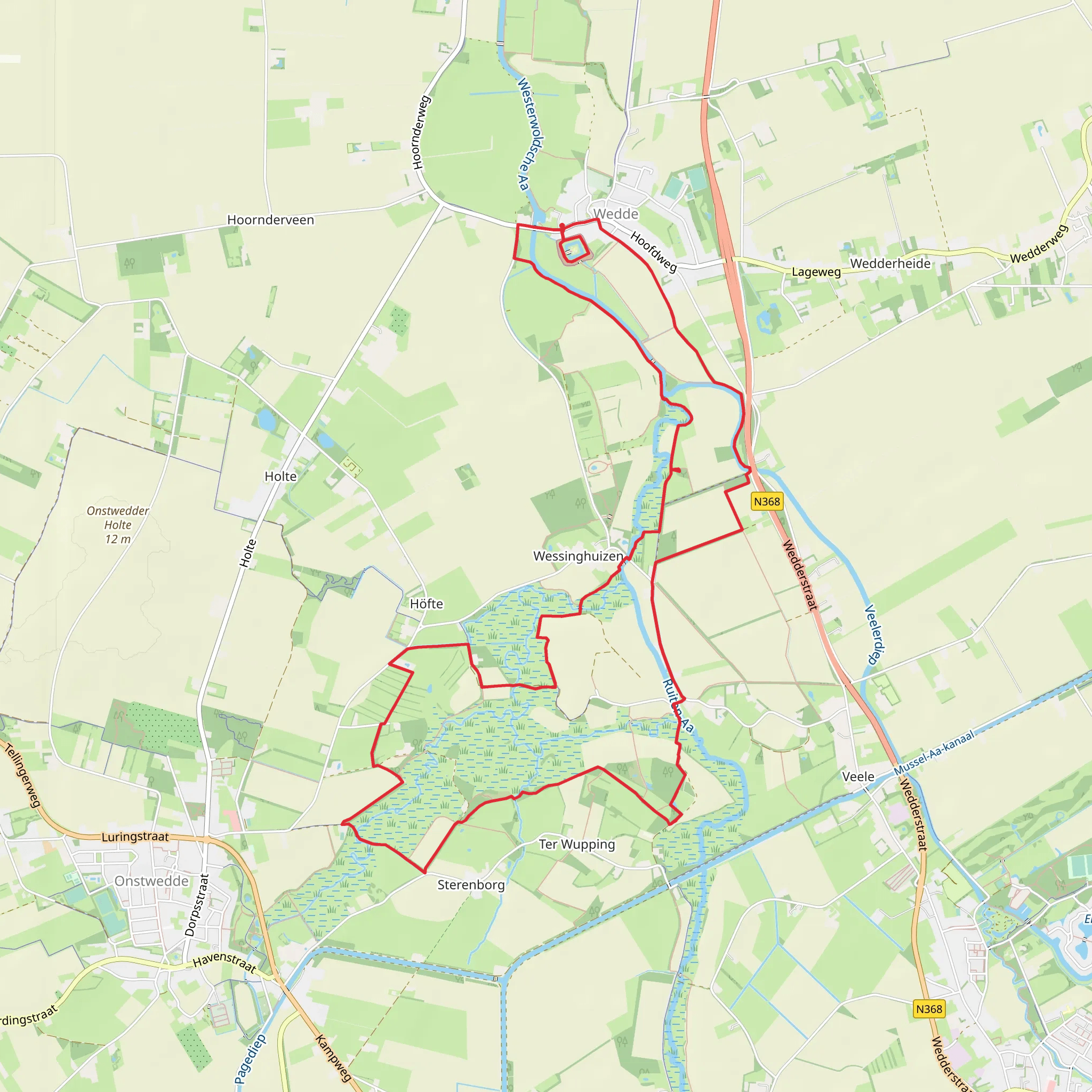
Starting near the historic Burcht Wedde, a medieval castle in the village of Wedde, this 14 km (about 8.7 miles) circular route follows the Noaberpad and Westerwolderpad through the tranquil landscapes of Groningen province. With virtually no elevation gain, this easy hike is accessible to walkers of all levels and is especially suitable for those seeking a relaxed day out in the Dutch countryside.
Getting There
Burcht Wedde is located in the village of Wedde, which is easily accessible by public transport. The nearest train station is in Winschoten, about 10 km (6.2 miles) away. From Winschoten, regular buses (such as Qbuzz line 12) connect to Wedde, with a stop close to the castle. For those arriving by car, parking is available at or near Burcht Wedde, which is situated at Hoofdweg 13, 9698 AA Wedde, Netherlands.
Route Overview and Navigation
The route combines sections of the Noaberpad, a long-distance trail that traces the Dutch-German border, and the Westerwolderpad, which explores the Westerwolde region. Navigation is straightforward, with well-marked paths and signposts at key junctions. For precise navigation and up-to-date trail conditions, HiiKER is recommended as the exclusive digital tool.
Landmarks and Points of Interest
Burcht Wedde: The hike begins at this 14th-century castle, which has played a significant role in regional history as a stronghold and administrative center. The castle grounds are open to visitors, and the moat and gardens provide a picturesque start to the walk.
Westerwolde Landscape: The trail meanders through the Westerwolde region, known for its patchwork of meadows, hedgerows, and small woodlands. The area is rich in birdlife, including storks, herons, and songbirds, especially in spring and summer. The tranquil Ruiten Aa river valley, with its restored natural banks, is a highlight around the halfway mark (approximately 7 km/4.3 miles in).
Historic Villages: The route passes through or near several small villages, such as Vriescheloo and Veelerveen, where traditional Dutch farmhouses and historic churches can be seen. These settlements reflect the agricultural heritage of the region.
Nature and Wildlife
The Westerwolde region is a haven for wildlife. Along the route, expect to see grazing cattle and sheep, as well as wildflowers in the meadows during late spring and summer. The wetlands and streams attract amphibians and dragonflies, while the wooded sections may offer glimpses of roe deer or foxes in the early morning or late afternoon.
Trail Conditions and Preparation
The paths are mostly flat and well-maintained, consisting of a mix of gravel, dirt tracks, and quiet country lanes. Waterproof footwear is advisable after rain, as some sections near the river can become muddy. There are benches and picnic spots along the way, particularly near the river and in village centers.
Facilities and Refreshments
Public toilets are available at Burcht Wedde and in some village centers. Cafés and small shops can be found in Wedde and Vriescheloo, but options are limited along the trail itself, so carrying water and snacks is recommended.
Historical Significance
The region’s history is closely tied to its strategic location near the German border. Burcht Wedde itself was a focal point in medieval power struggles, and the surrounding villages bear traces of centuries-old land reclamation and settlement patterns. The Noaberpad’s name, meaning “neighbor’s path,” reflects the cross-border connections that have shaped local culture.
This gentle, scenic hike offers a blend of history, nature, and rural charm, making it an ideal choice for a leisurely exploration of Groningen’s lesser-known landscapes.
Surfaces
Unknown
Grass
Ground
Sand
Gravel
Asphalt
Concrete
Wood
Unpaved
Comments and Reviews
User comments, reviews and discussions about the Burcht Wedde via Noaberpad and Westerwolderpad, Netherlands.
average rating out of 5
0 rating(s)
