
Download
3D Flyover
Add to list
More
22.3 km
~4 hrs 29 min
13 m
Point to Point
“A sky-wide borderland ramble from Sluis through wind-swept polders to heathy, wooded hush—flat yet testing.”
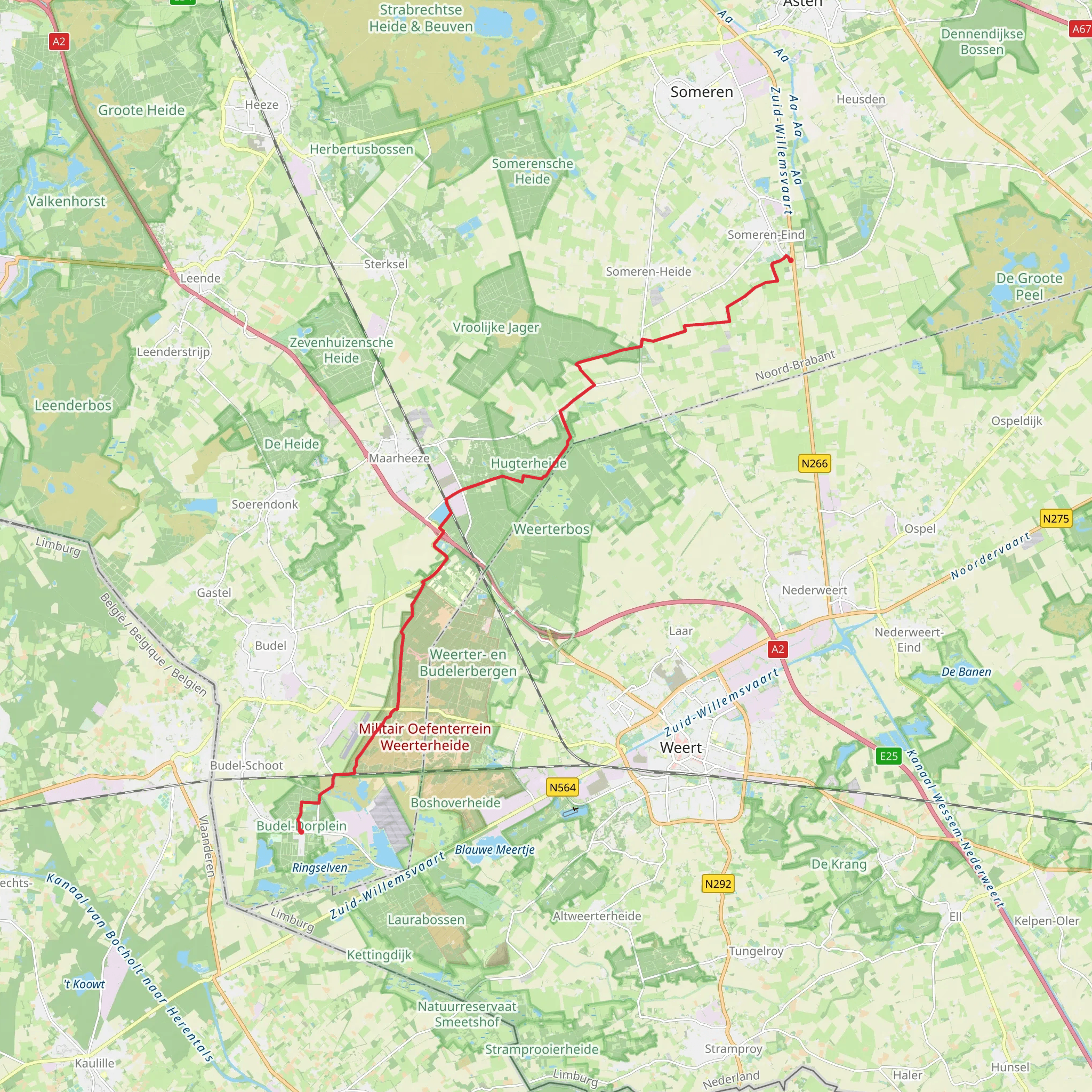
You’re looking at a very flat, lowland borderland walk of about 22 km / 13.7 mi with roughly 0 m / 0 ft of climbing—easy on the lungs, but it can be surprisingly demanding on the feet and patience if you hit long straight farm tracks, headwinds, or wet ground. Expect a mix of historic town edges, canal/ditch-lined fields, small wooded/heath patches, and quiet lanes typical of Zeeuws-Vlaanderen (Dutch Flanders) and the Belgian border fringe.
Getting to the start (Sluis) + practical start point
Nearest clear start landmark: the centre of Sluis (4524, Zeeland, Netherlands)—a convenient, easy-to-find meeting point is around Beestenmarkt (central square area) or near the small ring of streets by the old town core.
By car
- Sluis is straightforward to reach via regional roads from Breskens / Oostburg (NL) or Knokke-Heist (BE).
- A practical parking option close to the centre is Parking Biesbroeck, Sint Annastraat 4, 4524 JE Sluis (good for a “park-and-walk” start). (coparking.ch)
By public transport - Sluis itself is small; most public-transport approaches involve a bus connection from larger hubs (often via Oostburg on the Dutch side or Knokke/Bruges on the Belgian side). Because timetables change, plan the final approach in HiiKER and cross-check with the local operator on the day you travel.
What the terrain feels like (and why “0 m gain” still matters)
Even with essentially no elevation gain, this landscape has its own character: - Underfoot: paved village streets at the start/end, then farm tracks, field-edge paths, and possibly grassy or compacted earth. After rain, expect muddy margins and slick clay-like patches. - Exposure: the open polders can be windy with little shelter. A calm forecast can still feel brisk out here. - Drainage features: you’ll be walking alongside ditches, canals, and drainage channels—watch for narrow verges and soft edges.
Route flow and pacing (approximate breakdown)
Because the route name strings together multiple waypoints (“via Boksenberg and Hugterheide”), it typically walks like a sequence of legs rather than one continuous “trail corridor.” Use HiiKER to keep the line clean at junctions where farm tracks look similar.
0–4 km / 0–2.5 mi: Sluis out to the countryside You’ll likely leave Sluis on quiet streets and lanes, quickly transitioning to the polder grid—straight lines, wide skies, and long views. Early on, it’s worth settling into a steady pace and checking footwear comfort; the first hour is where hotspots (heel rub, toe pressure) show up.
4–12 km / 2.5–7.5 mi: Boksenberg area—field edges and small “higher” ground “Boksenberg” in this region usually refers to a subtle rise or sandy/firm patch rather than a true hill. The feel often changes here: slightly drier footing, occasional scrub or small woodland edges, and a break from the pure open-field monotony. If you’re lucky, you’ll get a bit more birdsong and less road noise.
12–18 km / 7.5–11.2 mi: Hugterheide—heath/woodland character “Heide” indicates heathland—expect sandy tracks, pine or mixed woodland margins, and more texture in the landscape. This is often the most “nature-forward” portion of a route like this: look for heather remnants (seasonal), gorse, and rough grass, plus the classic lowland wildlife mix—hares, pheasants, and raptors hunting over open ground. In wetter months, edges can hold standing water; gaiters can be useful if the route uses narrow, grassy lines.
18–22 km / 11.2–13.7 mi: Toward Liedekerkestraat—quiet lanes and settlement edges As you approach Liedekerkestraat (a street name rather than a single landmark), the walk often returns to lanes, farm access roads, and village fringes. Fatigue tends to show here because the terrain is easy but repetitive—keep an eye on posture and foot placement, especially if the verges are sloped toward ditches.
Navigation, wayfinding, and “look out for this”
- **Junction
AI Planner
Days planned around your pace, with somewhere to stay each night.
Surfaces
Unknown
Asphalt
Sand
Unpaved
Dirt
Ground
Concrete
Comments and Reviews
User comments, reviews and discussions about the Sluis to Liedekerkestraat via Boksenberg and Hugterheide, Netherlands.
average rating out of 5
0 rating(s)
