
Download
3D Flyover
Add to list
More
15.8 km
~3 hrs 10 min
7 m
Loop
“Meandering through farmland, woodlands, and wetlands, this tranquil loop celebrates Dutch countryside charm and vibrant wildlife.”
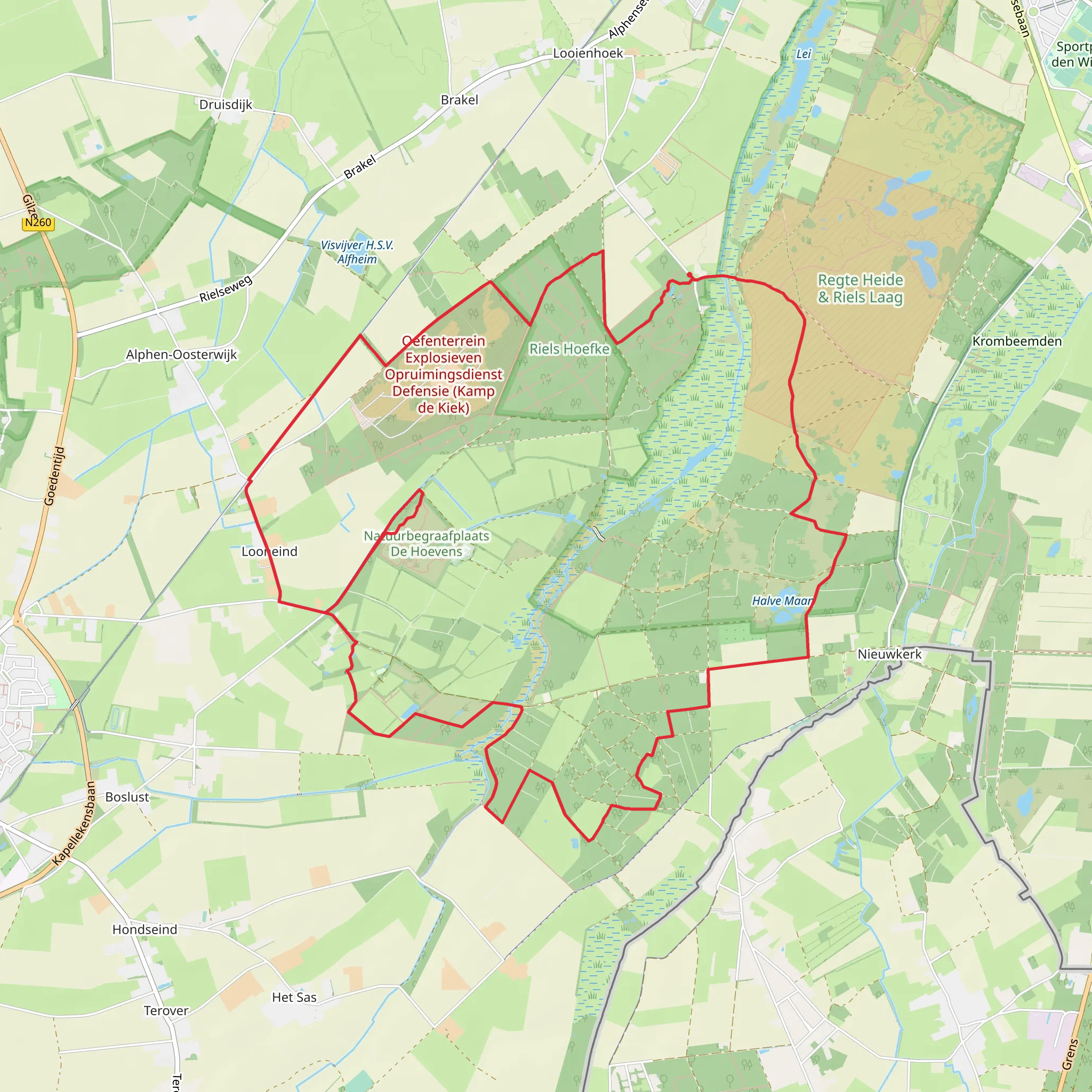
Starting from the outskirts of Riel, a small village in North Brabant, the loop trail of Hoeve Nuweleynde, Halve Maan, and Brakelsche Loop covers approximately 16 km (about 10 miles) with virtually no elevation gain, making it accessible for hikers of all levels. The trailhead is conveniently located near the intersection of Goirlesedijk and Nuwe Leyendaalseweg, just south of Riel. For those arriving by public transport, buses from Tilburg or Goirle stop in Riel, from where it’s a short walk to the starting point. Drivers will find parking available near the village center or along the quieter rural roads.
Landscape and Terrain
The route meanders through a quintessential Dutch landscape of flat, open farmland, interspersed with small patches of woodland and tranquil waterways. Expect well-maintained dirt and gravel paths, with occasional paved sections near farmsteads and hamlets. The absence of elevation gain means the trail is suitable for families, casual walkers, and anyone seeking a leisurely day outdoors.
Significant Landmarks and Points of Interest
- Hoeve Nuweleynde: Around 2 km (1.2 miles) from the start, you’ll pass Hoeve Nuweleynde, a historic farmstead typical of the Brabant countryside. The farm and its outbuildings reflect the agricultural heritage of the region, with some structures dating back to the 19th century.
- Halve Maan: At roughly the halfway mark, the trail skirts the Halve Maan, a nature reserve known for its wet meadows and reed beds. This area is a haven for birdlife, especially in spring and autumn when migratory species pass through. Look for herons, storks, and various waterfowl along the banks.
- Brakelsche Loop: The final section follows the Brakelsche Loop, a small stream that winds through the landscape. The banks are lined with willows and alders, providing habitat for kingfishers and dragonflies. In summer, wildflowers bloom along the water’s edge, adding color to the scenery.
Nature and Wildlife
The route is rich in biodiversity, with opportunities to spot roe deer in the early morning or late afternoon, as well as foxes and hares in the fields. The wetlands near Halve Maan support amphibians and a variety of insects, making it a lively spot for nature enthusiasts. The flat, open terrain also offers expansive views of the sky, ideal for cloud-watching or spotting birds of prey.
Historical Significance
The region around Riel has a long agricultural history, with evidence of settlement dating back to the Middle Ages. The farms and dikes you’ll encounter along the way are part of a centuries-old system of land reclamation and water management, essential in this low-lying part of the Netherlands. The Brakelsche Loop itself is a man-made watercourse, originally dug to drain the surrounding fields and prevent flooding.
Navigation and Preparation
The trail is well-marked, but carrying a digital map on HiiKER is recommended for precise navigation, especially at junctions where multiple paths intersect. There are few facilities along the route, so bring enough water and snacks for the day. Weather can be changeable, so pack a rain jacket and wear sturdy, comfortable shoes suitable for both dry and muddy conditions.
Getting There
From Tilburg, take bus 143 or 145 towards Poppel or Baarle-Nassau and alight at Riel, Dorpsstraat. From there, it’s a 10-minute walk south to the trailhead near Goirlesedijk. By car, follow signs to Riel from the N269, and park near the village center or along Nuwe Leyendaalseweg. The area is rural and quiet, making it easy to find a spot even on weekends.
This loop offers a peaceful escape into the Dutch countryside, with a blend of natural beauty, wildlife, and rural heritage.
AI Planner
Days planned around your pace, with somewhere to stay each night.
Surfaces
Dirt
Unknown
Sand
Ground
Asphalt
Concrete
Paved
Comments and Reviews
User comments, reviews and discussions about the Hoeve Nuweleynde and Halve Maan and Brakelsche Loop, Netherlands.
average rating out of 5
0 rating(s)
