
Download
3D Flyover
Add to list
More
9.9 km
~1 hrs 59 min
14 m
Point to Point
“From Plasmolen’s old watermill, wander spring-fed ponds and leafy estate woods with gentle calf-tickling rises.”
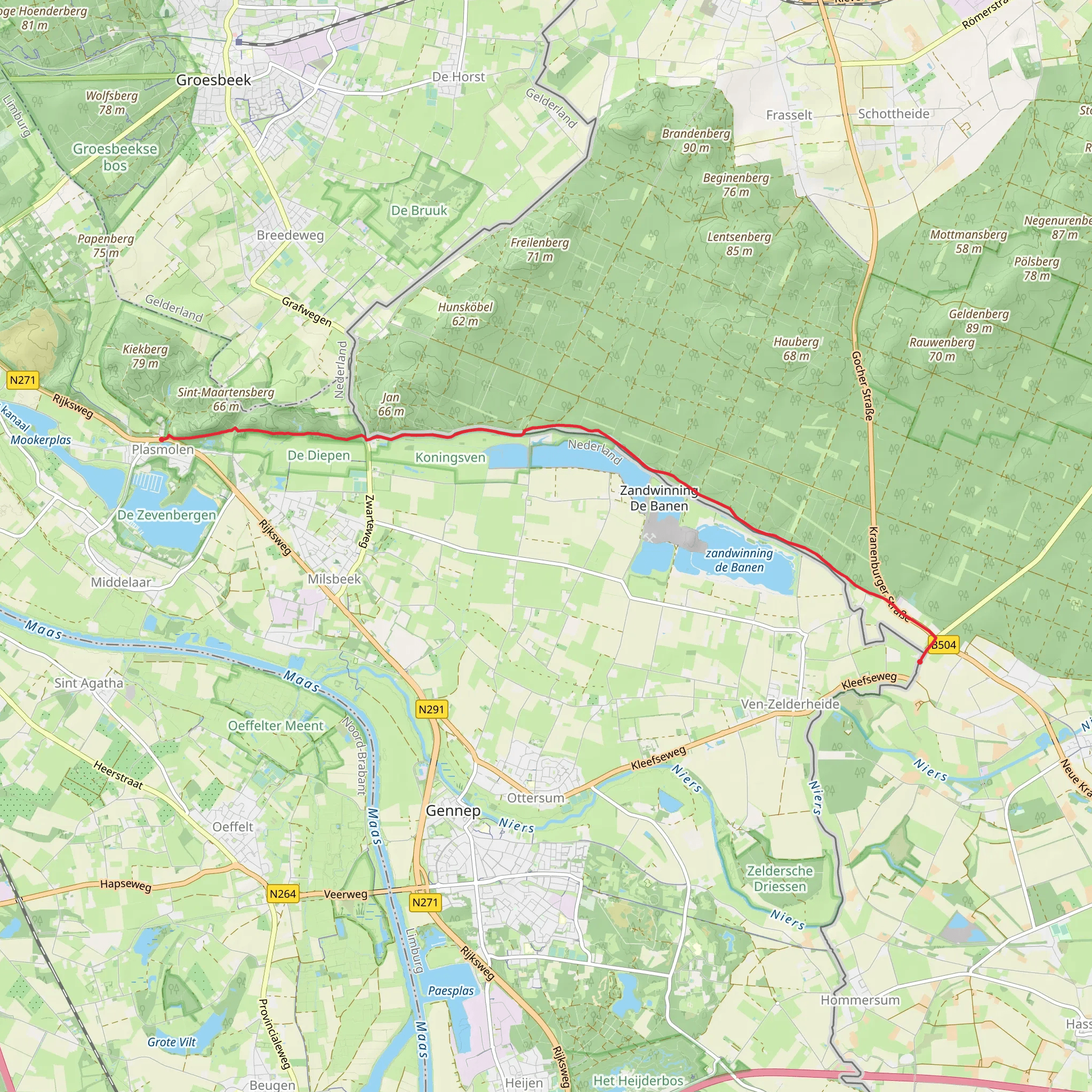
This easy, mostly level-to-gently-rolling walk of about 10 km (6.2 mi) links the village edge of Plasmolen with the wooded estate landscape around Sint-Jansberg, threading past spring-fed ponds (Drievijvers / “Three Ponds”) and the stream corridor associated with Kroonbeek. Even though the overall elevation gain is often described as “around 0 m,” expect a few short, low hills typical of the moraine landscape here—nothing sustained, but enough to notice in your calves on the forested slopes. Plasmolen itself sits low (around 21 m / 69 ft above sea level), and the route’s ups-and-downs are modest rather than mountainous. (en.wikipedia.org)
Getting to the start (Plasmolen area)
Best practical start landmark: the Bovenste Plasmolen (historic watermill) on/near Sint Maartensweg, Plasmolen—it’s a well-known, easy-to-locate trail anchor and a natural place to begin and end a loop or out-and-back. (bovensteplasmolen.com)
- By car: Aim for parking near the Plasmolen/Sint-Jansberg access points (signed for the estate/nature area). Plasmolen is in the municipality of Mook en Middelaar (Limburg), between the Meuse (Maas) and the Groesbeek area, so it’s straightforward to reach from the Nijmegen region. (en.wikipedia.org)
- By public transport: The most reliable approach is typically train/bus to the Nijmegen region, then a regional bus/taxi onward toward Plasmolen/Milsbeek. Because local bus patterns can change seasonally, check the day-of connections before you go.
For navigation, load the route in HiiKER and download it for offline use—tree cover and small valleys can make phone signal and GPS accuracy a bit inconsistent in places.
What the walk feels like underfoot
From Plasmolen you quickly trade village edges for mixed woodland paths and estate tracks. Surfaces alternate between: - Firm gravel/compacted tracks near access roads and popular entry points - Leafy singletrack and forest lanes on the Sint-Jansberg slopes - Damp, darker soil near springs, seepage zones, and pond margins—after rain, expect slick patches and occasional mud
Water is a constant theme here: small brooks, seepage lines, and mill-fed channels shape the route’s vegetation and the feel of the forest. The Bovenste Plasmolen is powered by water brought down from higher ground via ponds and channels—so you’ll often be walking “with” the same water system that historically drove the mill. (bovensteplasmolen.com)
Landmarks and nature highlights (Drievijvers, Kroonbeek, and the estate woods)
Bovenste Plasmolen (historic watermill) is the standout built landmark. The mill’s story stretches back centuries: it likely functioned as a paper mill in the 15th century, was rebuilt/altered in 1725, later served as an oil and grain mill, and is now protected as a national monument. If you time your hike for an open day, you may be able to step inside and see the mechanism. (bovensteplasmolen.com)
As you continue deeper into the estate landscape, the route’s character becomes more “park-forest”:
- Drievijvers (“Three Ponds”): a small cluster of artificial ponds created during the estate period, fed by springs/seepage. They’re scenic, quiet, and often rich in amphibian and insect life in warmer months. (europeana.eu)
- Kroonbeek corridor: around Milsbeek, the local brook historically tied to the village name is now associated with Kroonbeek. Streamside vegetation here tends to be lusher, and the ground can stay wet longer than surrounding ridges. (visitgennep.nl)
Wildlife you have a good chance of noticing (especially early/late in the day) includes songbirds and woodpeckers in the older woodland, and—importantly for hikers—this area is known for badgers (you’ll more often see signs like tracks or disturbed
Surfaces
Unknown
Asphalt
Unpaved
Paved
Concrete
Dirt
Comments and Reviews
User comments, reviews and discussions about the Plasmolen to Nergena via Drievijvers and Kroonbeek, Netherlands.
average rating out of 5
0 rating(s)

