Download
3D Flyover
Add to list
More
17.8 km
~3 hrs 37 min
30 m
Loop
“Wander through whispering dunes, sun-dappled forests, and lakes alive with birdsong in Noordhollands Duinreservaat.”
Starting from the outskirts of the coastal town of Castricum, this 18 km (about 11 miles) loop trail offers a gentle, flat walk through the heart of the Noordhollands Duinreservaat, one of the Netherlands’ most celebrated dune landscapes. With virtually no elevation gain, this route is ideal for those seeking a leisurely day out immersed in nature, suitable for most fitness levels and perfect for both seasoned walkers and families.
Getting There
The trailhead is conveniently located near the Castricum railway station, making it easily accessible by public transport from Amsterdam and other major Dutch cities. From the station, it’s a short walk or bike ride to the entrance of the Noordhollands Duinreservaat. For those arriving by car, parking is available at the Duiningang Oosterweg, just off the Zeeweg, which serves as a popular access point for the reserve.
Trail Overview and Navigation
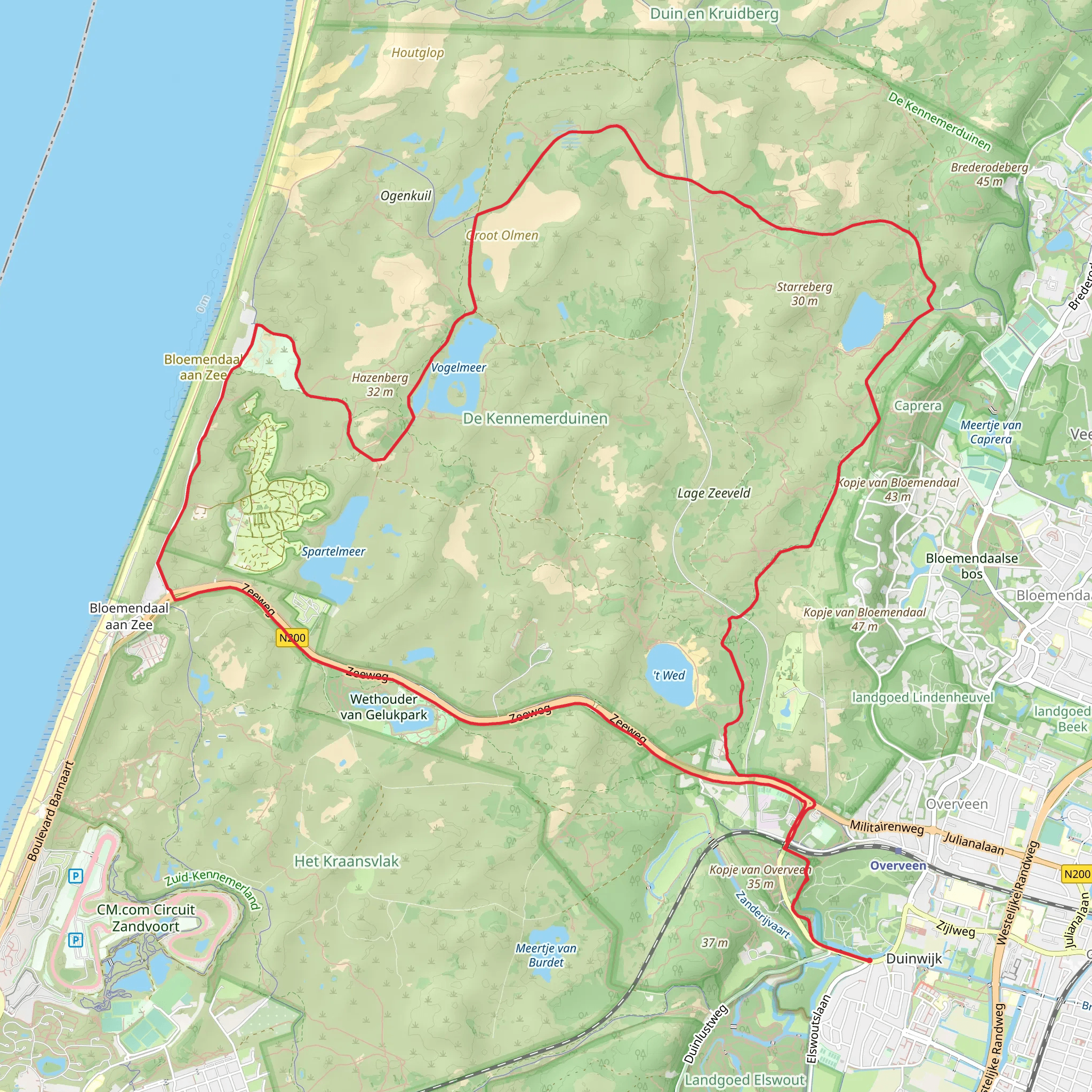
The route follows a well-marked circuit, beginning along the Oosterweg before weaving through the Wzelweg and Parnasslaweg. Hikers are encouraged to use HiiKER for up-to-date navigation and trail conditions, as the sandy paths and intersecting tracks can be confusing, especially in foggy or low-visibility weather.
Landscapes and Natural Highlights
The Noordhollands Duinreservaat is renowned for its rolling sand dunes, open heathlands, and tranquil woodland patches. Early in the hike, you’ll pass through stretches of open dune, where the wind shapes the landscape and the scent of sea air is ever-present. Around the 4 km (2.5 mile) mark, the trail skirts the Vogelmeer, a shallow lake that serves as a vital habitat for migratory and resident bird species. Bring binoculars—this is a hotspot for birdwatchers, with chances to spot spoonbills, herons, and various ducks.
Continuing along the Wzelweg, the scenery transitions to denser pine and oak forests, providing welcome shade and a change in atmosphere. The undergrowth here is rich with wildflowers in spring and summer, and deer are often seen grazing at dawn or dusk.
Cultural and Historical Context
This region has a long history of human interaction with the landscape. The dunes have been shaped not only by natural forces but also by centuries of water management and grazing. During World War II, parts of the reserve were fortified as part of the Atlantic Wall, and remnants of bunkers can still be found hidden among the dunes, offering a poignant reminder of the area’s strategic importance.
Wildlife and Conservation
The reserve is a protected area, home to a diverse range of flora and fauna. In addition to birds and deer, foxes and rabbits are common, and the ponds and wetlands support frogs and newts. The area is managed to preserve its unique ecosystems, so hikers are asked to stick to marked paths and respect seasonal restrictions, especially during bird nesting periods.
Facilities and Practical Tips
There are several rest areas and benches along the route, particularly near the Vogelmeer and at key junctions. Drinking water is not readily available on the trail, so bring enough for the day. The sandy paths can be soft in places, so sturdy walking shoes are recommended. Dogs are allowed but must be kept on a leash due to the sensitive wildlife.
For those interested in extending their visit, the nearby town of Castricum offers cafes, shops, and the interesting Huis van Hilde archaeological museum, which explores the region’s ancient past.
With its easy terrain, rich biodiversity, and fascinating history, this trail provides a rewarding exploration of one of the Netherlands’ most beautiful natural reserves.
AI Planner
Days planned around your pace, with somewhere to stay each night.
Surfaces
Unknown
Asphalt
Comments and Reviews
User comments, reviews and discussions about the Vogelmeer via Oosterweg, Wzelweg and Parnasslaweg, Netherlands.
average rating out of 5
0 rating(s)