
Download
3D Flyover
Add to list
More
16.7 km
~3 hrs 21 min
14 m
Loop
“Wander through a tapestry of wetlands, wildflowers, and history in the tranquil heart of De Groote Peel.”
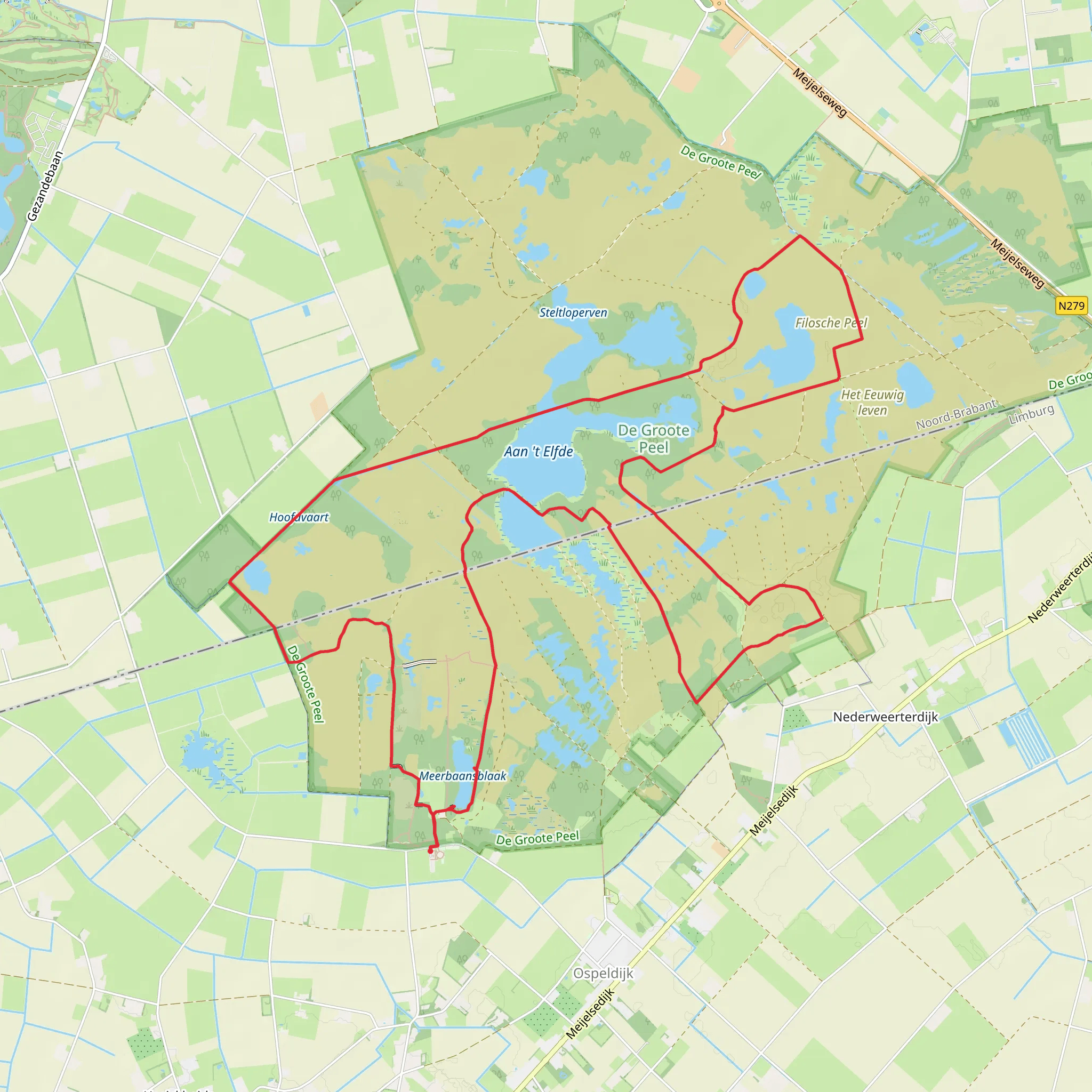
Starting from the vicinity of the De Groote Peel National Park visitor center, this loop hike covers approximately 17 km (about 10.5 miles) with virtually no elevation gain, making it accessible for most walkers and families. The trailhead is easily reached by car, with parking available at the visitor center (Moostdijk 15, 6035 RB Ospel, Netherlands). For those using public transport, buses from Weert or Deurne connect to Ospel, from where it’s a short walk or taxi ride to the park entrance.
Navigating the Route
The loop weaves through the heart of De Groote Peel, a renowned peat bog nature reserve straddling the Limburg and North Brabant provinces. The terrain is flat, with well-maintained paths, wooden boardwalks, and occasional sandy stretches. Navigation is straightforward, but for precise route tracking and waypoints, HiiKER offers a reliable digital map of the loop.
Landmarks and Points of Interest
- Meerbaansblaak: Early in the hike, you’ll encounter the Meerbaansblaak, a large open water expanse that was once part of the region’s extensive peat-cutting operations. This area is a haven for birdwatchers, especially during spring and autumn migrations, with chances to spot cranes, bitterns, and marsh harriers.
- Aan 't Einde: Around the halfway mark, the trail skirts the hamlet of Aan 't Einde, a quiet rural settlement that offers a glimpse into the agricultural traditions of the Peel region. Here, you’ll notice the transition from wetland to cultivated fields, with traditional Dutch farmhouses dotting the landscape.
- De Groote Peel: The core of the hike passes through De Groote Peel’s unique peat bog ecosystem. Raised wooden walkways protect both hikers and the fragile environment, leading you past pools, reed beds, and open moorland. Interpretive signs along the route explain the area’s history as a major peat extraction site, which shaped both the landscape and local communities.
Nature and Wildlife
De Groote Peel is one of the Netherlands’ most important bird reserves, supporting over 100 breeding species. The open water, marshes, and heathland attract rare birds, amphibians, and dragonflies. In spring and summer, look for blooming heather and orchids, while autumn brings spectacular colors to the birch and willow groves.
Historical Significance
The Peel region has a rich history tied to peat harvesting, which began in the Middle Ages and continued into the 20th century. The landscape you traverse is a direct result of centuries of human intervention, with remnants of old peat canals and extraction pits visible along the route. During World War II, the area’s remoteness made it a refuge for resistance fighters and those hiding from occupation forces.
Trail Logistics and Preparation
The loop is rated easy, with no significant climbs and a total elevation gain of less than 10 meters (about 33 feet). Most of the route is exposed, so bring sun protection and water, especially in summer. Boardwalks can be slippery after rain, so sturdy footwear is recommended. There are rest areas and benches at intervals, and the visitor center at the start/finish offers refreshments, toilets, and information about the park.
For up-to-date trail conditions and navigation, consult HiiKER before setting out.
AI Planner
Days planned around your pace, with somewhere to stay each night.
Surfaces
Unpaved
Unknown
Dirt
Grass
Gravel
Asphalt
Sand
Wood
Comments and Reviews
User comments, reviews and discussions about the Meerbaansblaak, Aan t Eifde and De Groote Peel Loop, Netherlands.
average rating out of 5
0 rating(s)



