
Download
3D Flyover
Add to list
More
29.4 km
~5 hrs 53 min
0 m
Loop
“Wander wind-sculpted dunes into hushy estate woods—an all-day coastal loop for steady walkers.”
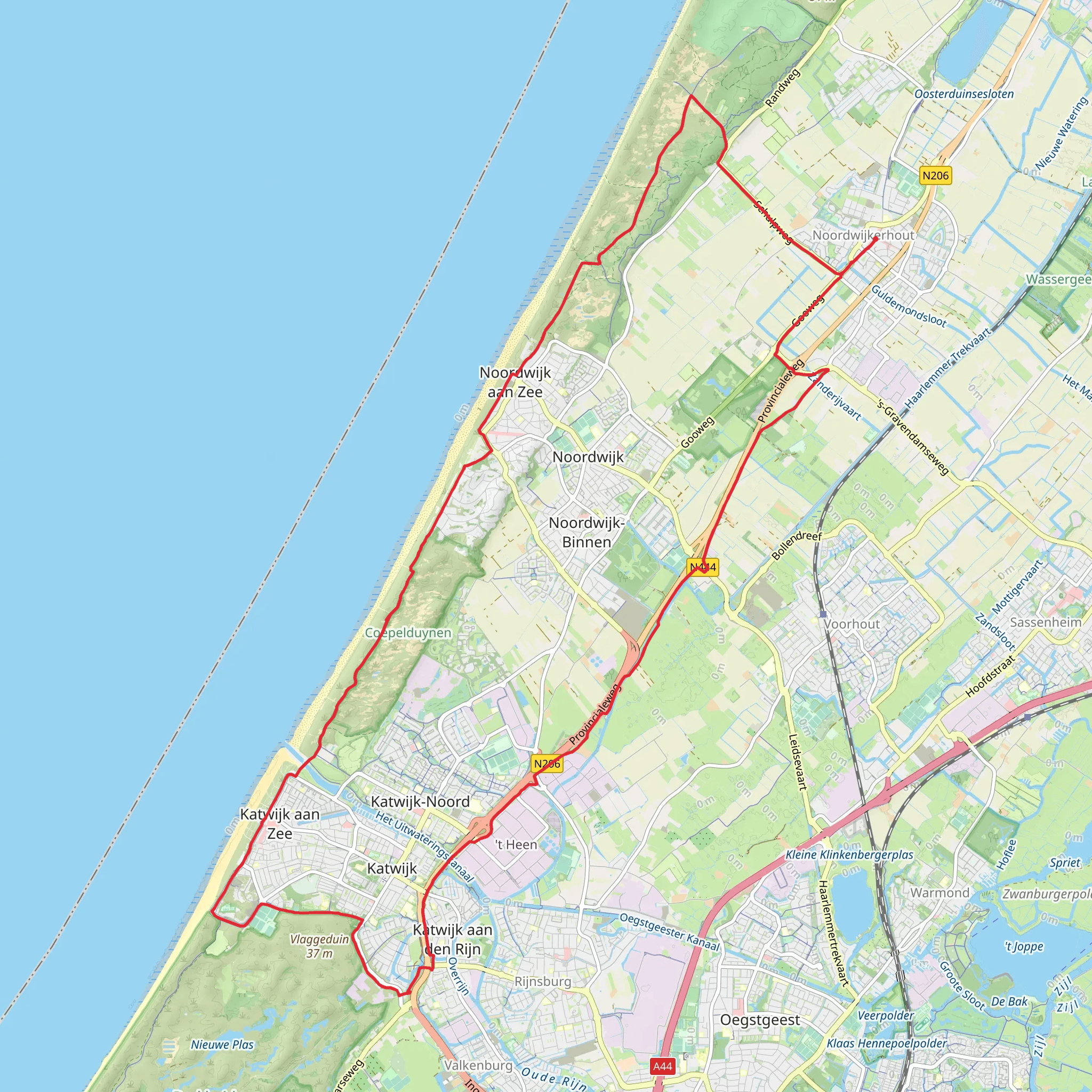
A flat, dune-and-woodland ramble through the Dutch coastal landscape where the “ups and downs” are more about shifting sand, narrow paths, and changing exposure to wind than any real climbing. At roughly 32 km / 20 mi with about 0 m / 0 ft of sustained elevation gain, it’s physically approachable for steady walkers—but the distance makes it an all-day outing, and soft sand can quietly add effort.
Where this loop starts (and what “near” usually means here)
This loop name points to the dune complexes and estates around Noordwijkerhout / De Zilk in South Holland, Netherlands—between the Amsterdamse Waterleidingduinen / Kennemer dunes to the north and the Noordwijk coastal dunes. The most practical “start area” for a loop linking Kachelduin, Coepelduynen, and Klein Leeuwenhorst is typically near the Leeuwenhorst / Noordwijkerhout side of the dunes—close to the Landgoed (estate) Leeuwenhorst area and the dune access points off the main roads connecting Noordwijkerhout, De Zilk, and Noordwijk.
If you share the route’s lon/lat (or a GPX), I can pin the start to the nearest exact landmark/address. Without coordinates, plan around a start near Noordwijkerhout (town center) or the Leeuwenhorst area, which are common gateways into these dune/estate paths.
Getting to the start
By public transport (from the Randstad):
- The easiest rail hubs are usually Leiden Centraal or Haarlem. From there, regional buses commonly run toward Noordwijk / Noordwijkerhout / De Zilk.
- Aim for a stop in or near Noordwijkerhout (town center) or the Leeuwenhorst area, then walk a short distance to the dune/estate access paths.
By car:
- Approach via the main roads serving Noordwijkerhout and Noordwijk. Look for public parking near established dune entrances or estate access points around Leeuwenhorst and the dune edge.
- Arrive early in peak season (especially spring tulip season nearby), when parking and roads can be busy.
What the terrain feels like over 32 km / 20 mi
Expect a mix of: - Firm, compacted paths through woodland and estate lanes (easy cruising). - Sandy dune tracks where pace drops and calves work harder. - Open dune sections exposed to wind—cooler than inland, even on mild days. - Occasional bike crossings and multi-use paths; stay alert at junctions.
Even with “0 m / 0 ft” of meaningful elevation gain, dunes create constant micro-undulations. Your effort level will depend heavily on how much of the route is on loose sand versus packed trail.
Landmarks, landscapes, and the character of each area
Kachelduin - “Duin” indicates dune; this section is typically open, sandy, and wind-shaped, with classic coastal vegetation: marram grass stabilizing dunes, low scrub, and hardy plants adapted to salt-laced air. - Visibility can be excellent on clear days, with long sightlines across dune ridges and hollows.
Coepelduynen - Often a transition zone where dunes meet more sheltered scrub and woodland edges. You’ll notice a shift from exposed sand to denser vegetation, and the trail may narrow with more twists. - Watch for fragile dune ecology: staying on the path matters here because off-trail footsteps can damage stabilizing plants and accelerate erosion.
Klein Leeuwenhorst - “Leeuwenhorst” is associated with historic estate land use in this region. The “Klein” portion suggests a smaller estate/area tied to the broader Leeuwenhorst landscape. - Expect estate-like lanes, tree lines, and managed woodland, sometimes with straighter tracks and a more “cultivated” feel than the wild dunes.
Nature and wildlife to look out for
This coastal belt is known for: - Roe deer in quieter woodland/edge habitats (most likely early/late in the day). - Foxes and small mammals, usually glimpsed briefly. - Birdlife: raptors overhead (buzzards/kestrels), songbirds in scrub, and seasonal migrants. Open dunes can be surprisingly lively with ground-nesting bird areas—respect any roped-off or signed zones. - In wetter hollows and low areas, you may encounter amphibians and insects; bring repellent in warm months.
Dogs are often regulated in dune reserves and sensitive habitats—check local signage at entrances.
Historical and cultural context (why this landscape looks the way it does)
These dunes aren’t just “natural hills of sand”—they’re a long-managed coastal system: - Dune stabilization (notably with marram grass) has historically been crucial to protect inland farmland and settlements from drifting sand. - The estate landscapes (like Leeuwenhorst-related areas) reflect centuries of land ownership, forestry, and managed hunting/wood production, which is why some sections feel park-like compared with the raw dunes. - Nearby, the wider region is famous for bulb cultivation (the “Bollenstreek”), which shaped settlement patterns and seasonal traffic—especially in spring.
Navigation and wayfinding (keep it simple)
This is the kind of area where paths braid and rejoin, and junctions can look similar—especially in dunes where landmarks shift with vegetation and
AI Planner
Days planned around your pace, with somewhere to stay each night.
Surfaces
Unknown
Asphalt
Paved
Concrete
Comments and Reviews
User comments, reviews and discussions about the Kachelduin, Coepelduynen and Klein Leeuwenhorst Loop, Netherlands.
average rating out of 5
0 rating(s)


